
Quick Read
- The U.S. Supreme Court has delayed its ruling on the legality of President Trump’s sweeping tariffs, with a decision expected by June.
- President Trump warns that a ruling against his tariff authority would be a ‘terrible blow’ to the U.S., potentially ‘screwing’ the nation.
- Treasury Secretary Scott Bessent assures the U.S. has funds for potential tariff refunds but doubts businesses will pass these savings to consumers.
- China recorded a record $1.2 trillion trade surplus in 2025 despite U.S. tariffs, while also facing new U.S. restrictions on Nvidia AI chip exports.
- European Union countries have approved the Mercosur trade deal, seeking to diversify trade and reduce reliance on the U.S. and China amidst tariff uncertainty.
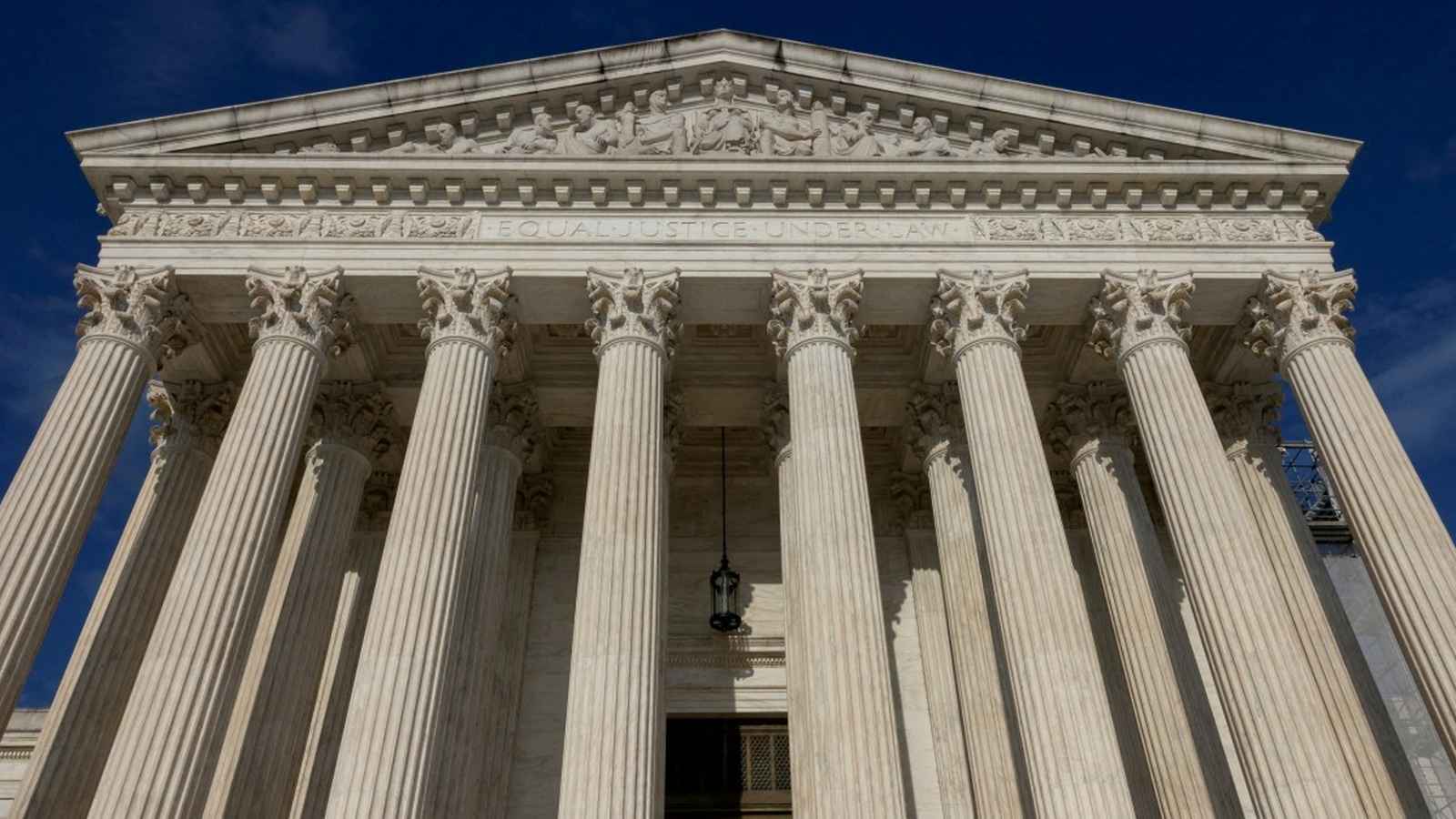
Wall Street and global markets continue to hold their breath as the U.S. Supreme Court once again deferred its highly anticipated ruling on the legality of President Trump’s sweeping tariffs. The decision, which has already been delayed through two potential verdict days this year, is expected to reshape the landscape of presidential power over trade and carry significant economic ramifications for the nation and its international partners.
At the heart of the matter is President Trump’s invocation of a 1977 law, the International Emergency Economic Powers Act, to impose duties on a vast array of imported goods. This law, originally intended for national emergencies, has been controversially applied to address issues ranging from fentanyl to perceived trade imbalances. Both conservative- and liberal-leaning justices expressed skepticism during arguments in early November, questioning the broad interpretation of the statute.
The Weight of a Verdict: Trump’s Dire Warnings and Economic Ripple Effects
President Trump has not shied away from vocalizing his concerns over the potential outcome. In recent weeks, he has frequently expressed that losing the ability to tariff other countries would be a ‘terrible blow’ to the U.S. On social media, his warnings escalated to an emphatic declaration: “If the Supreme Court rules against the United States of America on this National Security bonanza, WE’RE SCREWED!” This stark assessment underscores the administration’s view of tariffs as a critical tool for national security and economic leverage.
The financial implications of a ruling against the administration are considerable. Companies like Costco have already initiated lawsuits against the U.S. government, seeking refunds on import duties should the court invalidate Trump’s authority. Treasury Secretary Scott Bessent, while expressing skepticism about such an outcome, confirmed that the U.S. Treasury possesses ample funds to cover any potential refunds, which could be spread out over a year. However, Bessent also suggested that such payouts might amount to a “corporate boondoggle,” doubting that businesses would pass these refunds on to consumers. “Costco, who’s suing the U.S. government, are they going to give the money back to their clients?” he questioned in an interview with Reuters.
Beyond potential refunds, the tariffs have already cast a shadow over the U.S. economy, particularly impacting the job market. While the widely expected surge in consumer prices has largely been absorbed by businesses, job growth has slowed to its lowest in decades, with unemployment creeping higher. This chilling effect on hiring stems from the profound uncertainty tariffs create, making businesses hesitant to invest or expand. As University of Central Florida economist Sean Snaith noted, “There’s no compelling reason to be out there hiring en masse. That is a rational response when you’re dealing with this kind of uncertainty.”
Global Trade in Flux: China’s Resilience and Shifting Alliances
Despite the U.S. tariffs, China’s trade surplus hit a record $1.2 trillion in 2025, demonstrating remarkable resilience. Beijing, in turn, has consistently blamed the U.S. for growing global trade imbalances. This dynamic highlights the complex interplay between tariff policies and international economic realities.
The relationship with China remains a focal point of Trump’s trade strategy, marked by both confrontation and conditional cooperation. China’s exports of rare earth materials, critical for electronics and defense, reached their highest level since 2014 in 2025, fulfilling a promise made during a one-year trade truce with the U.S. However, this progress is often overshadowed by new tensions, such as China’s restriction of rare earth supplies to Japan following a diplomatic spat. This underscores the fragility of global supply chains and the ongoing need for countries to diversify their sourcing, a topic recently discussed at a G-7 meeting hosted by the U.S. to explore alternative critical mineral supplies.
A more recent flashpoint involves U.S. chip giant Nvidia. President Trump approved the export of Nvidia’s powerful H200 AI chips to China, albeit with stringent conditions, including third-party testing and limits on quantities for Chinese customers, and a 25% fee for the U.S. government. Nvidia lauded this as a “thoughtful balance” for American competitiveness. However, China’s customs department reportedly instructed agents not to permit the chips’ entry, and Chinese officials summoned domestic tech companies, instructing them to avoid purchasing the chips unless absolutely necessary. “The wording from the officials is so severe that it is basically a ban for now, though this might change in the future should things evolve,” one source told Reuters, illustrating Beijing’s pushback against perceived U.S. technological restrictions.
Adding another layer of complexity, President Trump recently announced a 25% tariff on goods from any country doing business with Iran, effective immediately. This move, intended to pressure Tehran, risks derailing the delicate trade truce with China, as China is the world’s largest buyer of Iranian oil. Such unilateral actions have led to criticism from Chinese officials, who question the connection between trade with Iran and U.S. security, potentially prompting “appropriate action” from Beijing, as stated by Zhou Mi, a senior researcher at a think tank affiliated with China’s Ministry of Commerce.
Europe and Beyond: Seeking Independence in a Tariff-Laden World
The uncertainty generated by U.S. tariff policies has spurred other global players to seek greater independence and diversify their trade relationships. European Union countries, for instance, have approved the Mercosur trade deal with Argentina, Brazil, Paraguay, and Uruguay. This massive free-trade agreement is explicitly aimed at countering the EU’s dependence on the U.S. and China for trade, particularly in critical raw materials. As Agathe Demarais of the European Council on Foreign Relations observed, “For Europeans, the finalization of free-trade agreements with new partners stands among the best responses to U.S. tariffs, growing protectionism and trade tensions with China.”
Europe is also actively defending its technological sovereignty. In a significant move, a Dutch court wrested control of chipmaker Nexperia BV from its Chinese owner, Wingtech Technology Co. This unprecedented intervention aims to retain valuable semiconductor manufacturing expertise within Europe, setting a precedent for what “de-risking” means in practice. This effort, as Benedetta Girardi of the Hague Centre for Strategic Studies explained, is about showing that Europe “wants sovereignty and autonomy as part of the conversation” over technology, even while maintaining trade relations with China.
Meanwhile, the Trump administration is also nearing a trade deal with Taiwan, which would lower American tariffs on Taiwanese goods and significantly expand Taiwan Semiconductor Manufacturing Co.’s (TSMC) investment in U.S. chip production. This move highlights a strategic effort to strengthen critical supply chains domestically and with key allies, particularly given Taiwan’s geopolitical vulnerabilities.
The Supreme Court’s delayed decision on tariffs isn’t just a legal footnote; it’s a pivotal moment that will define the boundaries of presidential economic power and significantly influence global trade dynamics for years to come. The stakes are immense, not only for American businesses and consumers but for the delicate balance of international relations, as nations worldwide recalibrate their strategies in response to an increasingly unpredictable trade landscape.