
Quick Read
- Middle East conflict led to widespread flight cancellations affecting Sydney Airport on March 1, 2026.
- Hundreds of passengers, including Australians, were stranded at Sydney Airport due to airspace closures over Gulf states.
- Major carriers like Emirates, Etihad, and Qatar Airways suspended operations after missile strikes damaged runways in Dubai and Doha.
- Over 200 passengers at Sydney Airport could not secure hotel rooms due to Mardi Gras bookings, forcing them to sleep in terminals.
- Travel insurance generally does not cover war-related events, leaving many travelers to bear unexpected costs.
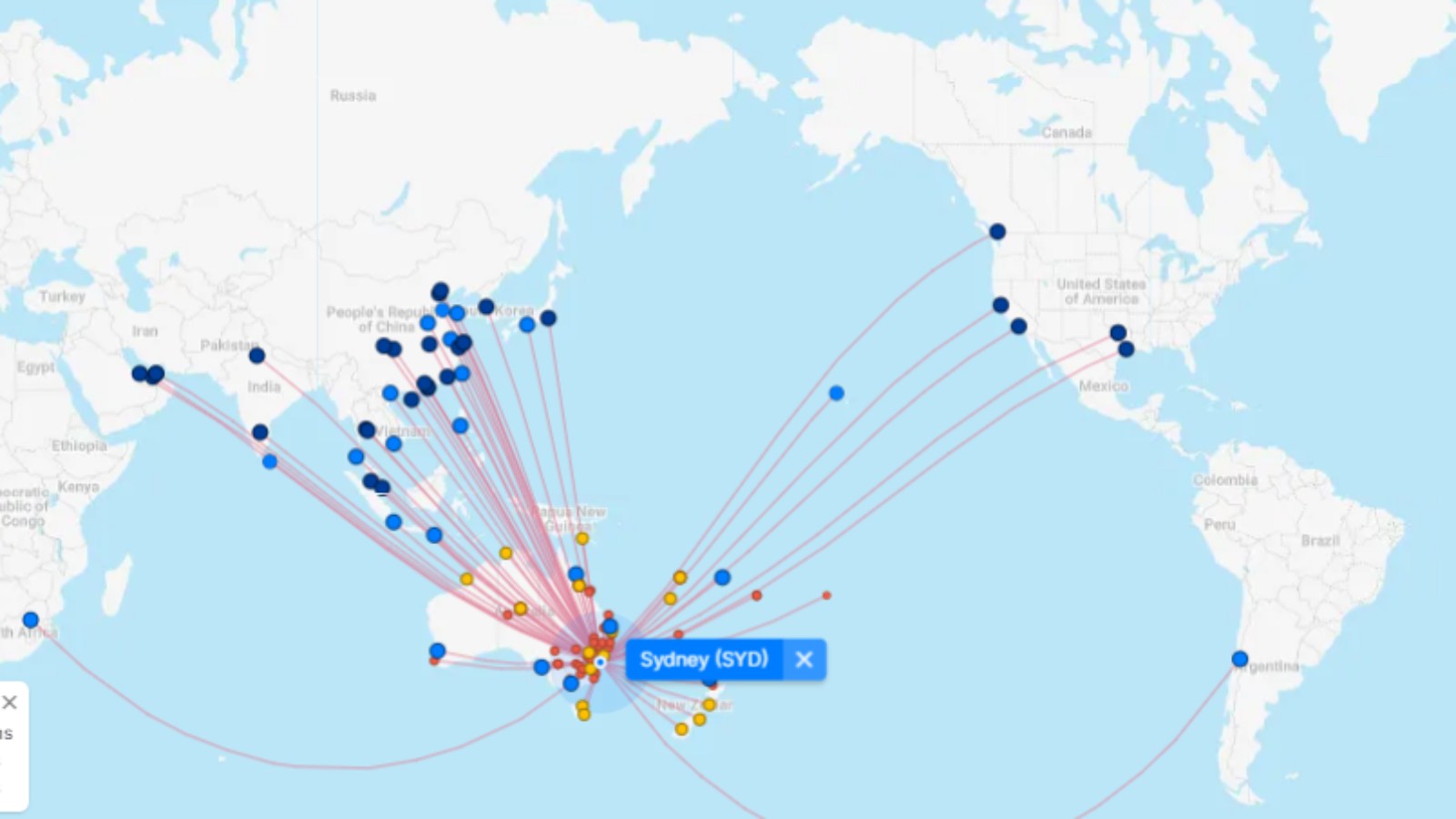
SYDNEY (Azat TV) – Hundreds of Australian travelers found themselves stranded at Sydney Airport over the weekend after escalating conflict in the Middle East led to widespread airspace closures and flight cancellations by major Gulf carriers. The sudden disruptions, which began on Sunday, March 1, 2026, left passengers scrambling for alternative routes and accommodation, highlighting the vulnerability of global aviation to geopolitical tensions.
The immediate cause of the chaos was missile strikes that reportedly damaged runways in key transit hubs like Dubai and Doha, prompting Gulf airlines such as Emirates, Etihad, and Qatar Airways to halt operations. Virgin Australia also confirmed the cancellation of seven Qatar-operated codeshare flights on Sunday, with an additional five cancelled on Monday, significantly impacting Australians traveling to or through the region.
Middle East Conflict Grounds Sydney Flights
The conflict-driven airspace closures across Gulf states triggered last-minute flight cancellations for travelers departing from Sydney, Melbourne, and Brisbane. Sydney Airport alone reported more than 200 passengers unable to secure hotel rooms overnight, largely due to accommodation being fully booked for the ongoing Mardi Gras celebrations. Many were forced to sleep on terminal floors, facing unexpected delays and expenses.
One such stranded traveler, Briton Nigel Howard, recounted being escorted off a fully boarded Emirates flight at 1 a.m. after the pilot announced, “Iran, airspace closed.” Mr. Howard then had to queue for emergency temporary visas before being ejected from the terminal until check-in reopened, according to ABC News. His experience underscored the sudden and disorienting nature of the cancellations.
Stranded Passengers Face Accommodation Shortages
The Australian Airports Association chief executive, Simon Westaway, warned of “significant disruptions” to global aviation in the coming days, noting that Australian airports were accommodating 30 aircraft from Middle Eastern carriers that had been grounded following diversions and flight cancellations. He emphasized that airports and airlines were implementing contingency arrangements, but the scale of the disruption remained fluid.
Beyond Sydney, Melbourne travelers faced similar accommodation shortages, and British tourist Chris Rayner, who was due to fly from Melbourne to London via Doha, expressed uncertainty about when he would return home and the need to self-fund extended stays. The Department of Foreign Affairs and Trade (DFAT) has advised all Australians booked through the region to monitor Smartraveller, register their itineraries, and consider alternate routings, even if their final destination is Europe or Africa.
Wider Impact on Australian Travel and Insurance
The ripple effects of the Middle East conflict extend beyond immediate travel plans. The Australian Travel Industry Association estimates that approximately one in nine international itineraries from Australia typically route through the Gulf, suggesting that the disruption could significantly impact upcoming Easter travel peaks if hostilities persist. This widespread reliance on Gulf hubs means that even travelers not destined for the Middle East may experience delays and rerouting.
Adding to the burden, the Insurance Council of Australia confirmed that most retail travel policies exclude war-related events, meaning passengers must self-fund extra accommodation and onward tickets. While some business-traveler policies with “all risks” riders may offer limited cover, this is generally only applicable if the journey was booked before DFAT issued its highest-level warnings. This leaves many travelers exposed to unforeseen financial costs.
The damage reports from major Middle Eastern airports further illustrate the severity of the situation. Dubai International Airport, typically the world’s busiest for international traffic, sustained minor damage to a concourse, injuring four staff members. Zayed International Airport in Abu Dhabi reported one fatality and seven injuries following an incident involving the interception of a drone, leading to falling debris. These incidents directly contributed to the extensive flight suspensions.
The ongoing Middle East conflict has underscored the interconnectedness of global air travel, demonstrating how regional instability can rapidly create substantial logistical and financial challenges for international travelers and major transportation hubs like Sydney Airport.