
Quick Read
- Sydney McLaughlin-Levrone set a new American 400m record of 48.29 seconds in Tokyo.
- The previous record (48.70s) was set by Sanya Richards-Ross 19 years ago.
- McLaughlin-Levrone is a two-time Olympic champion in 400m hurdles and six-time world record holder in that event.
- Her semifinal time is the fastest by any woman in the world this year.
- She will compete in the 400m final against past world champions Marileidy Paulino and Salwa Eid Naser.
McLaughlin-Levrone Redefines the American Standard in Tokyo
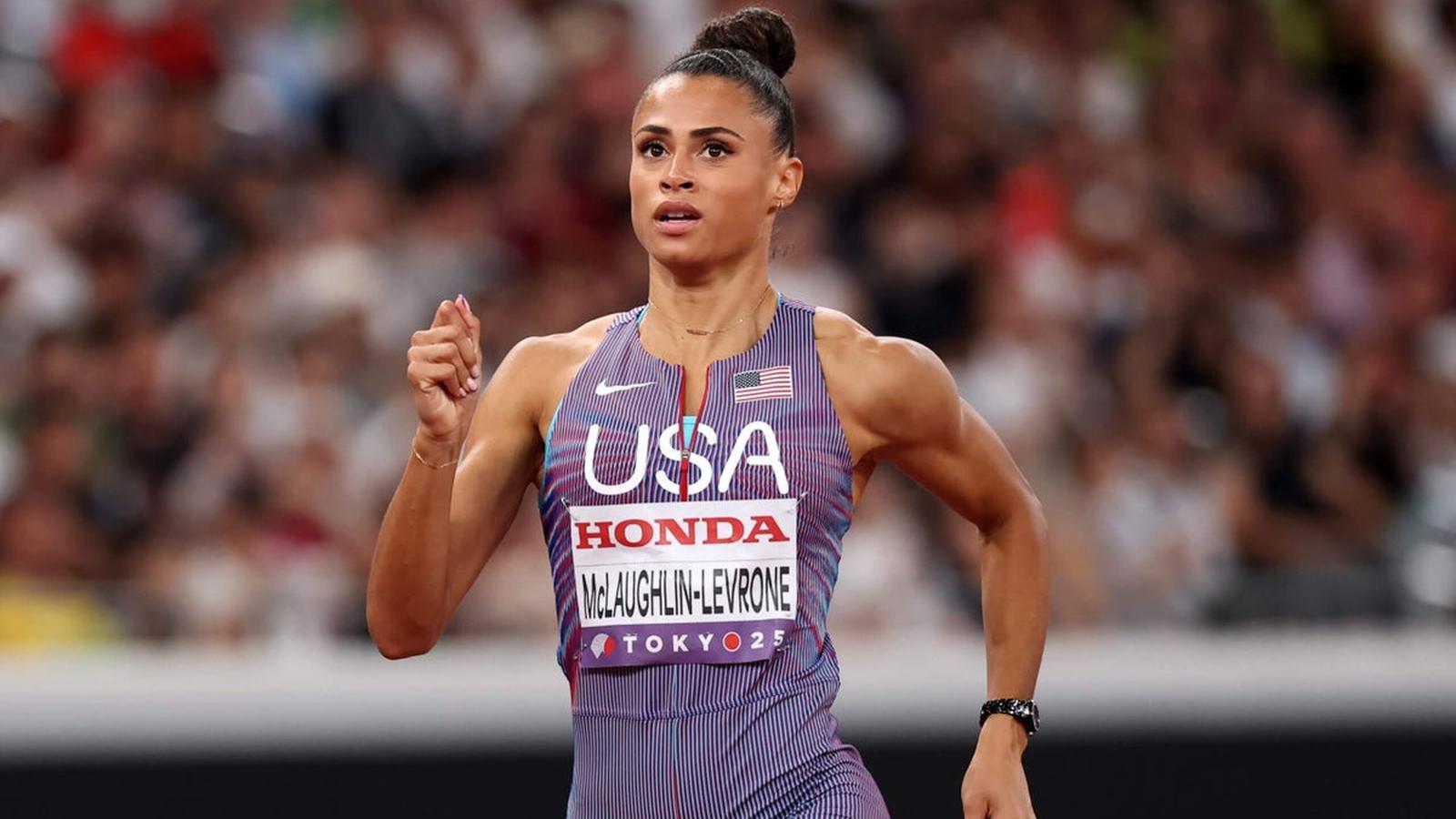
On a humid Tuesday night in Tokyo, Sydney McLaughlin-Levrone did more than just run fast—she rewrote history. In the semifinals of the World Athletics Championships, the American track star blazed around the 400-meter oval in 48.29 seconds, shattering the American record that had stood, untouched, for 19 years.
Until this moment, Sanya Richards-Ross’s mark of 48.70 was the gold standard for U.S. women. It was a record set in 2006, a benchmark so formidable that it had become almost mythic in American track circles. But as McLaughlin-Levrone powered down the home stretch, the clock ticked past that legendary figure, and a new era began.
From Hurdles Queen to 400m Flat Dominance
McLaughlin-Levrone is no stranger to breaking barriers. Her name is already etched in the annals of track and field as a two-time Olympic champion in the 400m hurdles and a six-time world record breaker in that event. But this season, she made a bold switch—opting to contest the flat 400m at the World Championships, seeking to make history as the first athlete to claim global titles in both the hurdles and the open quarter-mile.
Running from Lane 8, she started conservatively, trailing Great Britain’s Amber Anning by two-tenths at the halfway mark. Yet, her trademark speed endurance shone through. By the 300-meter split, she had surged ahead, more than three-tenths clear of her rivals, finishing over a second ahead of Anning (49.38s) and Jamaica’s Nickisha Pryce (49.46s). Remarkably, McLaughlin-Levrone seemed to have something left in the tank, winding down as she approached the line—a hint that the best may be yet to come in Thursday’s final.
Chasing Legends and Setting New Ones
McLaughlin-Levrone’s performance didn’t just break an American record; it catapulted her to seventh on the all-time global list. The world record, 47.60 seconds, still belongs to Germany’s Marita Koch, a mark that has stood since 1985. In recent years, only two women—Dominican Republic’s Marileidy Paulino and Bahrain’s Salwa Eid Naser—have run faster than McLaughlin-Levrone since the turn of the century. Both will line up beside her in the final, promising a showdown worthy of the sport’s greatest stage.
Her 48.29 is not only the fastest time by any woman this year; it is more than half a second swifter than her previous best (48.74, set in 2022) and miles ahead of her 48.90 at the U.S. Track & Field Championships just weeks ago. For context, Paulino won Olympic gold in Paris with a 48.17, the only faster time in the past five years. Yet, McLaughlin-Levrone’s effortless stride left the impression that she could go even quicker when it counts most.
Legacy, Pressure, and the American Sprint Tradition
The U.S. has a proud tradition in the women’s 400m, boasting more world champions than any other nation. Phyllis Francis, Allyson Felix, and Sanya Richards-Ross have all stood atop global podiums, but McLaughlin-Levrone’s achievement feels different—a generational leap, not just a passing of the baton.
Still only 25, she has already amassed four global relay medals and was a pivotal member of the gold-winning 4x400m teams at the Paris Olympics. Her career, though young, is decorated with accolades: NCAA champion at Kentucky, Hall of Fame inductee, and Kentucky Sports Figure of the Year—only the third woman ever honored with that title.
But the weight of expectation is immense. As McLaughlin-Levrone herself admitted, “I didn’t expect to run this fast today. I still have more to show. I feel strong and good, and have confidence in my fitness. I will give everything I have in the final.” Her humility is matched by resolve. The final awaits, and with it, the chance to chase down legends and perhaps, one day, the world record itself.
The Final Showdown: Rivals, Records, and Redemption
Thursday’s final promises drama. Paulino, the reigning Olympic champion, and Naser, a former world champion, have posted personal bests below McLaughlin-Levrone’s new mark, but neither has run that fast this season. All eyes will be on Lane 8, on the athlete who has already conquered hurdles and now stands poised to become the most versatile quarter-miler of her generation.
What’s striking is McLaughlin-Levrone’s composure. In interviews, she spoke of feeling “honored” and “grateful” to break a record held by “an amazing woman.” She described the last 30 meters as “a bit more reserved, just trying to maintain,” suggesting that her fastest race may yet be ahead. Her coach and support team now have just hours to ensure her recovery and readiness for the biggest race of her career.
Should she win, McLaughlin-Levrone would join an elite club—those rare athletes who redefined their sport by mastering multiple disciplines. The transition from hurdles to flat is not trivial; it demands a recalibration of strategy, pacing, and mental approach. But if anyone is equipped for that challenge, it is Sydney McLaughlin-Levrone.
Track and field fans around the world will be watching. The stakes are immense, the field formidable, and the promise of greatness hangs in the air.
McLaughlin-Levrone’s record-breaking run in Tokyo is more than just a fast time—it’s a statement of intent. By conquering the flat 400m, she has expanded the boundaries of what’s possible for American women in track and field. As she prepares for the final, her combination of humility, strength, and unyielding ambition signals that a new chapter is being written—not just for herself, but for the sport as a whole.