
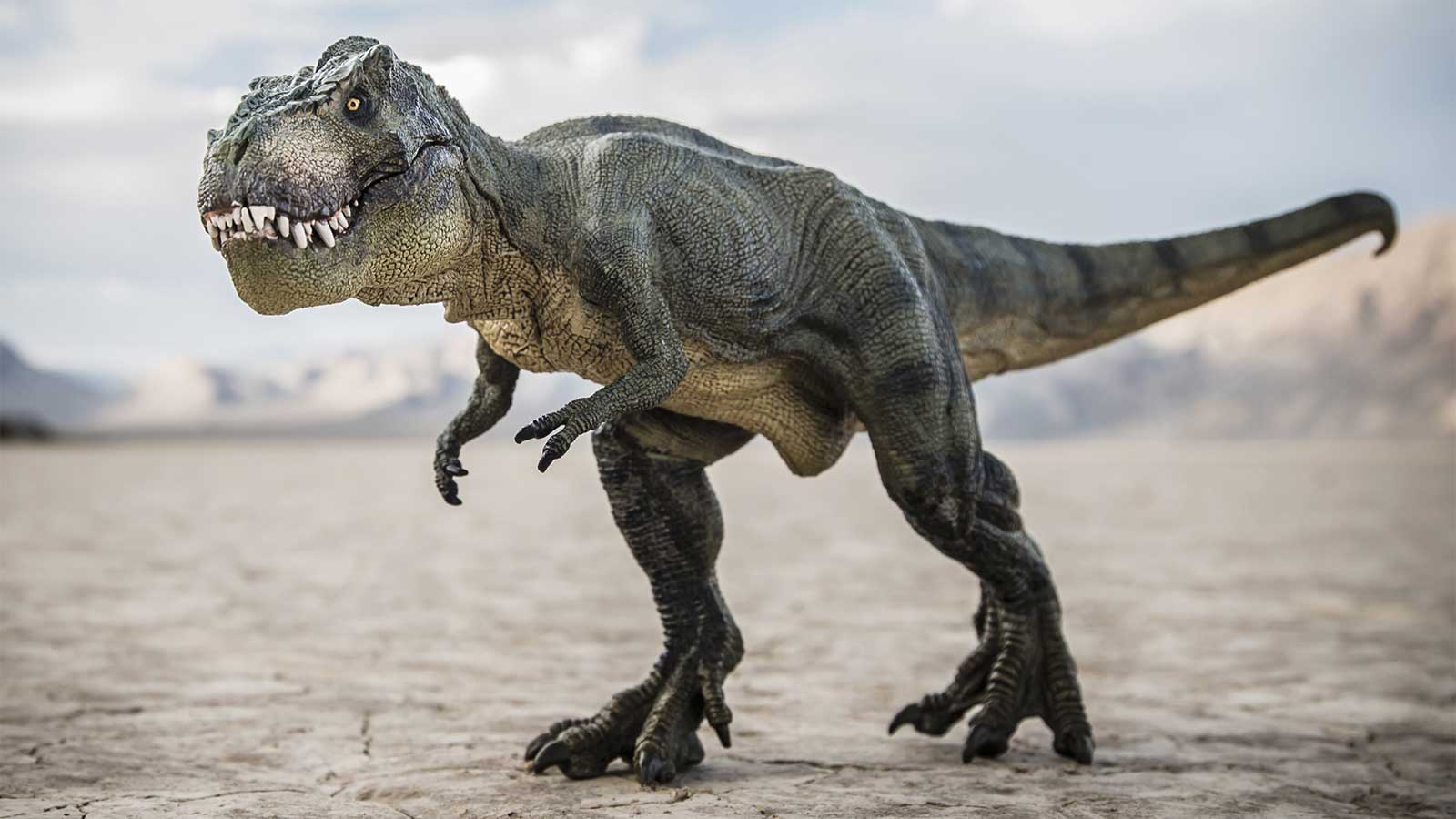
T. rex Ancestors: A Journey Across Continents
A groundbreaking study led by Cassius Morrison, a doctoral student at University College London (UCL), has unveiled new insights into the origins of the Tyrannosaurus rex. According to the research, the ancestors of T. rex likely migrated from Asia to North America approximately 70 million years ago via a land bridge that connected the two continents. This discovery sheds light on the evolutionary journey of one of the most iconic dinosaurs in history.
Tracing the Migration Path
The study, published in the journal Royal Society Open Science, utilized advanced mathematical modeling to address gaps in the fossil record. These models incorporated data from the T. rex family tree, climatic conditions, and existing fossil evidence. The findings suggest that T. rex’s ancestors crossed the Bering Strait, a land bridge that once connected modern-day Siberia and Alaska. At the time, this region was characterized by temperate rainforests, offering a suitable habitat for these prehistoric predators.
The research aligns with earlier studies indicating that T. rex shares a closer genetic relationship with the Asian carnivore Tarbosaurus than with North American predators like Daspletosaurus. This supports the theory that T. rex’s lineage originated in Asia before establishing dominance in North America.
Why Fossil Evidence Is Scarce
One of the challenges in studying T. rex ancestors is the scarcity of fossil evidence. As apex predators, tyrannosaurids were fewer in number compared to the herbivorous dinosaurs they preyed upon, making their fossils rarer. Morrison explained that the mathematical models used in the study account for these gaps, allowing researchers to make informed predictions about the evolutionary history of T. rex.
Interestingly, the study suggests that fossils of T. rex’s direct ancestors may still remain undiscovered in Asia, offering exciting opportunities for future paleontological research.
Adapting to a Changing Climate
The study also explored how global climate changes influenced the evolution of tyrannosaurids. Approximately 92 million years ago, during a period known as the Cretaceous Thermal Maximum, global temperatures peaked. However, as temperatures began to drop, tyrannosaurids experienced a rapid increase in size. This adaptation may have been facilitated by their warm-blooded physiology or the presence of feathers, which helped them thrive in cooler climates.
Another factor contributing to their growth was the extinction of carcharodontosaurids, a group of giant meat-eating dinosaurs, around 90 million years ago. This extinction created a vacuum at the top of the food chain, allowing tyrannosaurids like T. rex to evolve into the dominant predators of their ecosystems.
The Rise of the King of Dinosaurs
By the end of the Cretaceous period, T. rex had grown to massive proportions, weighing up to nine metric tons—comparable to a large African elephant. This rapid growth in size and ecological dominance underscores the adaptability and resilience of tyrannosaurids in the face of environmental changes.
Study coauthor Charlie Scherer, a master’s graduate in Earth sciences at UCL, noted that the findings provide valuable insights into how the largest tyrannosaurs emerged in North and South America. “They likely grew to such gigantic sizes to replace the equally giant carcharodontosaurid theropods that went extinct,” Scherer explained.
Implications for Future Research
The study’s innovative use of mathematical modeling offers a new framework for understanding dinosaur evolution. By accounting for gaps in the fossil record, the models can be updated as new discoveries are made, providing a dynamic tool for paleontologists.
Steve Brusatte, a paleontologist at the University of Edinburgh who was not involved in the study, praised the research as “fine scholarly work.” He emphasized that the findings highlight the interplay between climate and dinosaur evolution, noting that cooler temperatures likely played a significant role in the growth of tyrannosaurs.
As researchers continue to uncover the mysteries of T. rex’s ancestry, this study serves as a reminder of the complex factors that shaped the evolution of one of Earth’s most formidable predators.
Source: CNN, Royal Society Open Science