
Quick Read
- Super Typhoon Ragasa caused a barrier lake to burst in Taiwan, killing at least 14 and leaving 124 missing.
- Over one million people were evacuated in southern China ahead of Ragasa’s landfall.
- Hong Kong issued its highest typhoon warning; severe flooding and damage reported.
- Scientists warn that climate change is increasing the frequency and intensity of such superstorms.
Super Typhoon Ragasa Strikes: Taiwan’s Flood Crisis Deepens
In the early hours of September 24, Super Typhoon Ragasa’s unstoppable force swept across Taiwan’s eastern coast, unleashing what officials have called a “tsunami from the mountains.” The disaster was triggered when heavy rains from Ragasa caused the Matai’an Creek barrier lake in Hualien county to burst its banks. The lake itself had formed only months earlier, the product of a landslide from July’s Typhoon Wipha. But this time, the consequences were far deadlier.
According to BBC News, an estimated 15.4 million tonnes of water—enough to fill 6,000 Olympic-sized swimming pools—rushed down the mountainside. The torrent swept away entire bridges, submerged vehicles, and left the ground floors of homes underwater. The floodwaters rose to the height of a single-storey building in Hualien City. Scenes from the region show lorries floating in the streets and residents stranded on upper floors, anxiously awaiting rescue teams.
Death Toll Mounts, Hundreds Missing in Hualien
Local officials have confirmed that at least 14 people are dead, with 124 still missing and 18 injured, as reported by Reuters. The majority of casualties are concentrated in Guangfu township, where the lake’s sudden overflow unleashed a wall of water upon unsuspecting communities. Rescue operations have been complicated by thick mud, debris, and treacherous terrain—remnants of the earlier landslide that created the barrier lake.
The government has established a disaster response center in Hualien, deploying troops and specialized search teams to comb through the rubble. Still, for many families, the wait for news is agonizing. Social media across Taiwan has been flooded with messages of solidarity, fundraising campaigns, and calls for greater attention to infrastructure resilience.
Infrastructure Overwhelmed, Cities Paralyzed
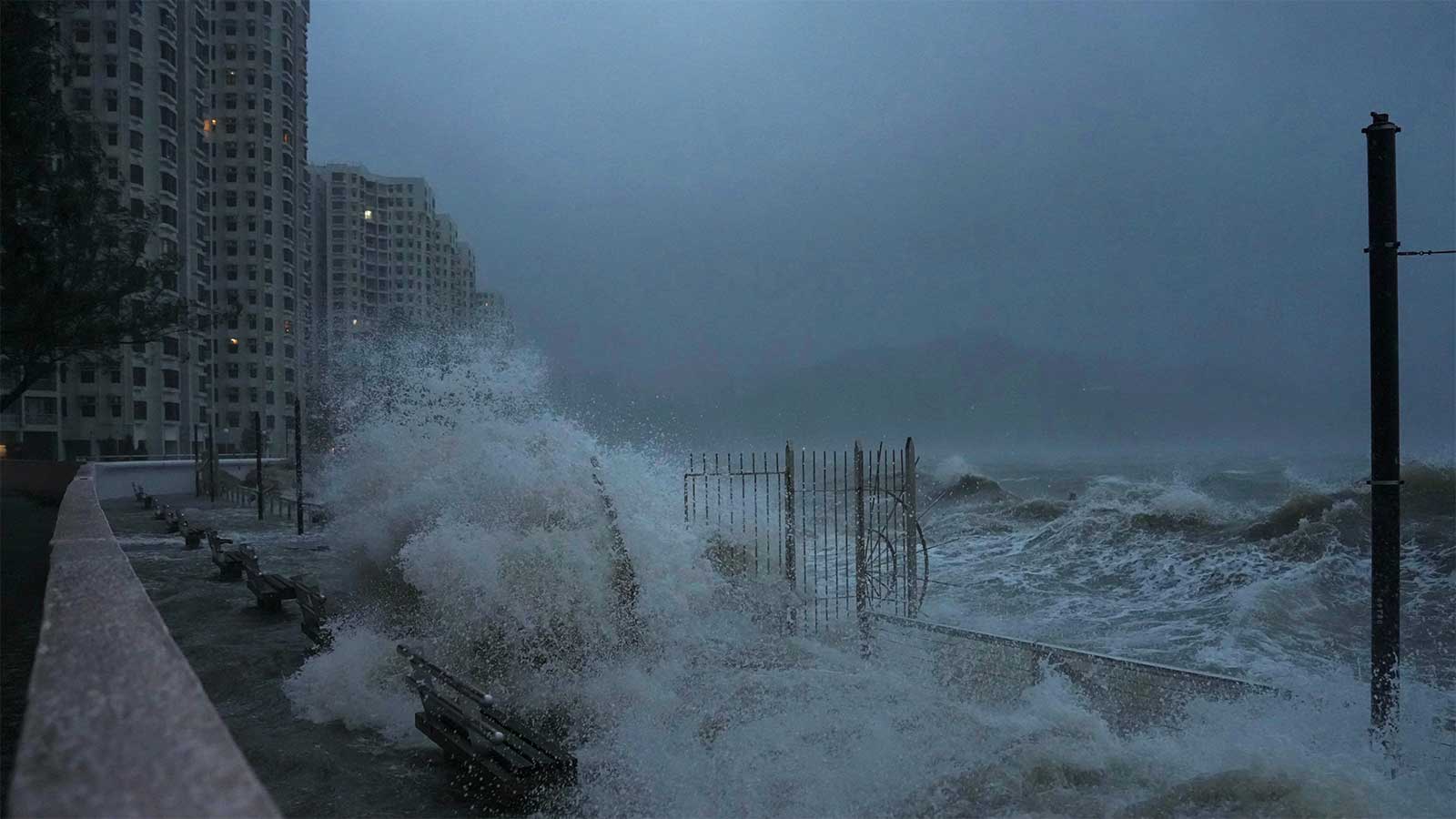
The devastation in Taiwan is mirrored by scenes across East Asia, as Ragasa’s path of destruction spreads. In Hong Kong, fierce winds and pounding rain battered neighborhoods, toppling trees and flooding streets. The city’s Observatory issued its highest typhoon warning, urging residents to shelter indoors. The storm surge smashed glass doors at the Fullerton Ocean Park Hotel, flooding the lobby—a stark image of Ragasa’s raw power. Macau suspended power supply to low-lying areas, and in China’s Guangdong province, more than one million people were evacuated as authorities braced for the typhoon’s landfall.
In Zhuhai, Shenzhen, and Guangzhou, police patrolled the streets with megaphones, their warnings barely audible over the howling winds. Shopkeepers taped up windows and stacked sandbags, hoping to fend off tidal surges. Schools and businesses closed in at least ten southern cities, and railway stations stood eerily empty. Supermarkets were wiped bare as residents stocked up, uncertain when normal life might resume.
Climate Change and the Rising Toll of Superstorms
Scientists and weather experts have described Ragasa as the “King of Storms”—the strongest typhoon of the year and, at its peak, one of the most powerful storms the world has seen in recent memory. With sustained winds reaching 260kph (162mph), Ragasa dwarfed previous typhoons in both scale and intensity. Meteorologists warn that such superstorms are becoming more frequent and severe as the planet warms.
Heavy rainfall was recorded across Taiwan’s east coast, with some areas receiving between 200 and 400mm in just 24 hours. The relentless downpour was enough to overwhelm natural and man-made barriers alike. Meanwhile, Hong Kong’s coastal neighborhoods saw waters rise more than three meters above normal, flooding courtyards and breaking through residential estates.
Human Stories Amid the Chaos
Amid the chaos, stories of resilience and heartbreak have emerged. In the Taiwanese village of Dama, home to about 1,000 people, the entire community was submerged. “It’s chaotic now,” said village chief Wang Tse-an to Reuters. “There are mud and rocks everywhere. Some flooding has subsided but some remains.” Residents trapped on upper storeys waited for rescue as authorities struggled to reach them through thick mud and blocked roads.
In Hong Kong, a five-year-old boy and his mother fell into the sea while watching the waves, both left in critical condition. Off-duty firefighters worked non-stop to clear debris, while residents nervously watched bamboo scaffolding swaying in the wind. At the Yangjiang train station, once bustling with travelers, silence reigned as rail services were suspended.
Local businesses scrambled to protect their livelihoods. Shopkeeper Da Xiong in Zhuhai taped up his restaurant’s windows and stacked sandbags by the door. “The city is used to typhoons, but we’re taking no chances,” he told The Guardian. Food deliveries were suspended, and families hunkered down as the storm raged outside.
Lessons and Calls for Change
The aftermath of Ragasa has exposed critical vulnerabilities in infrastructure and disaster response across Taiwan and the wider region. The Matai’an Creek barrier lake, formed by a previous landslide, was a ticking time bomb—one that authorities had little time or ability to defuse. The sheer volume of water released in the flood has prompted renewed debate over how best to strengthen communities against future storms.
For now, the focus remains on rescue and recovery. Thick mud and debris make every search a challenge, and the fate of the missing hangs in the balance. The storm’s legacy will endure long after its winds have faded, in the homes rebuilt and the policies reimagined.
As Ragasa continues its march into southern China, millions remain displaced, and the region braces for more flooding and damage. The storm’s impact has been felt from the remote islands of the Philippines to the crowded streets of Hong Kong, a stark reminder of nature’s unpredictable power.
Super Typhoon Ragasa’s devastation in Taiwan was not just a test of emergency response—it laid bare the urgent need for resilient infrastructure and proactive planning. The flood’s deadly toll, combined with the mass evacuations and widespread damage, underscores the growing threat of superstorms in a warming world. East Asia’s experience this week is a wake-up call: investing in disaster preparedness and climate adaptation is no longer optional, but essential for safeguarding lives and communities.