
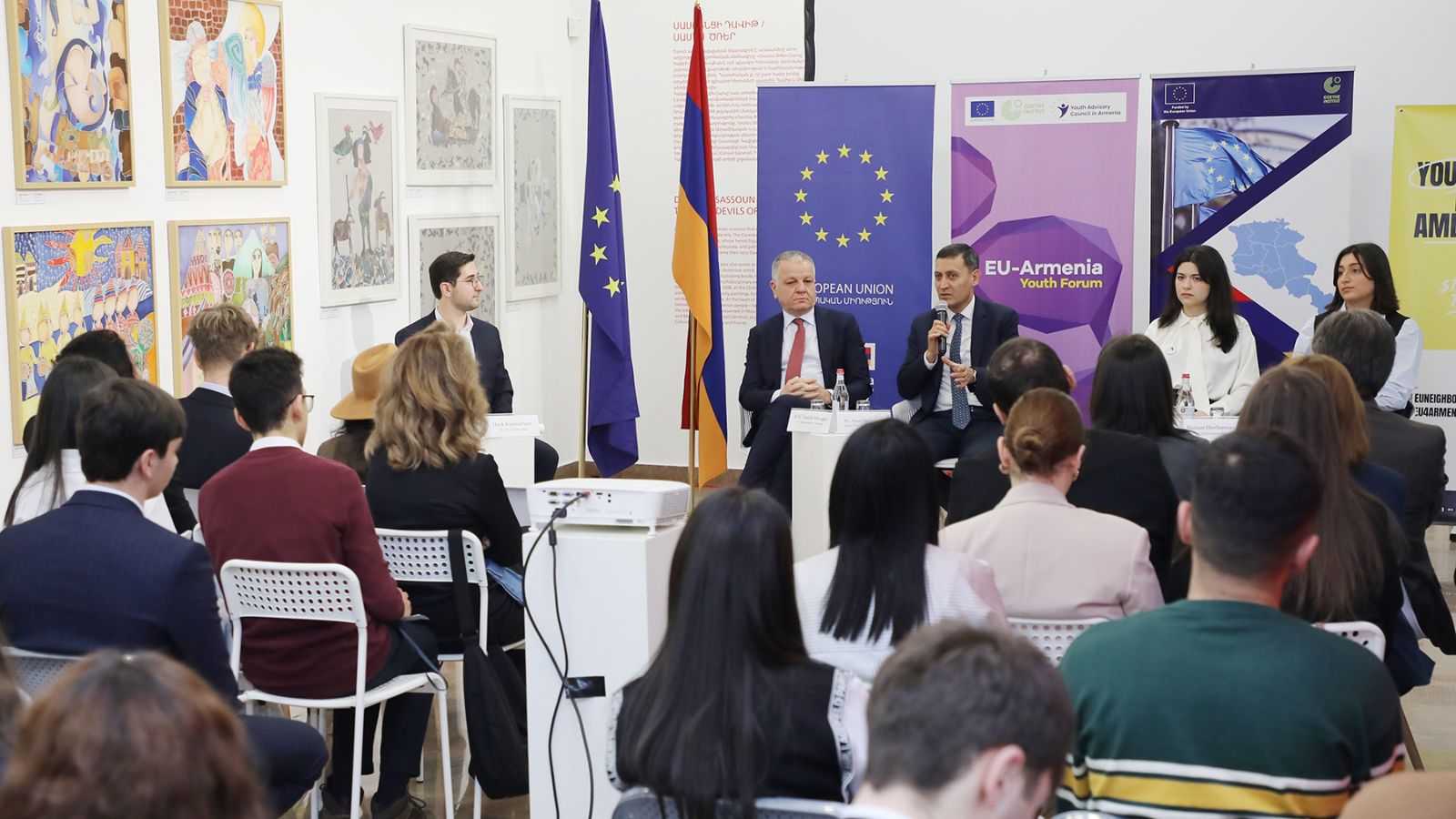
- The first Armenia-EU Youth Conference was held.
- Organizers include the EU Delegation to Armenia and the European Youth Council (YAC), with Goethe-Institut Armenia.
- Event focuses on youth engagement within EU-Armenia cooperation.
- Further details on the program and participants are forthcoming.
Armenia and the European Union marked a new chapter in youth outreach with the first-ever Armenia-EU Youth Conference. The event was staged in Armenia and organized by the EU Delegation to Armenia in partnership with the European Youth Council (YAC), with collaboration from the Goethe-Institut in Armenia. The organizers described the gathering as a milestone in the broader relationship between Armenia and the European Union, signalling an enhanced emphasis on youth participation within ongoing cooperation efforts.
According to the organizers, the joint initiative brought together a cadre of young people and stakeholders with an interest in EU-Armenia relations. The partnership with the Goethe-Institut Armenia illustrates a multi-faceted approach that blends diplomatic engagement with cultural and educational exchanges, underscoring the importance of youth voices in shaping future cooperation. While the initial release of information emphasizes the event’s inaugural character, it also points to a continuing agenda of engagement rather than a one-off gathering.
The conference was framed as a collaborative platform for dialogue among Armenian youth and EU institutions, with the aim of mapping out avenues for cooperation, sharing experiences, and exploring concrete steps where young people can contribute to bilateral initiatives. The presence of the EU Delegation to Armenia and YAC underscores a civil-society-driven approach to policy-relevant conversations, suggesting that youth-led perspectives are being integrated into the broader framework of Armenia-EU relations. The Goethe-Institut Armenia’s involvement adds a cultural and educational dimension to the proceedings, reflecting the distinctive role that cultural institutions can play in fostering cross-border understanding and mobility.
Observers note that such gatherings fit within a broader trend of diversifying channels through which Armenia engages with the European Union. The emphasis on youth reflects a recognition that the next generation will determine how Armenia and the EU collaborate on a wide range of matters—from education and culture to employment and innovation. In this context, the conference is positioned not only as a single event but as part of an ongoing effort to institutionalize youth participation within EU-Armenia dialogue. The initial communications from organizers suggest that subsequent details—such as a formal agenda, list of participants, and a schedule of sessions—will be released in the coming days, indicating a phased roll-out of information as planning proceeds.
The Goethe-Institut’s participation highlights the cultural and linguistic bridges that can accompany political and economic ties. By partnering with a European cultural institution, the organizers appear to be signaling an understanding that youth diplomacy benefits from opportunities beyond traditional policy forums. Cultural exchanges, language learning, and collaborative projects can help young Armenians and their European counterparts build networks, share best practices, and cultivate mutual understanding that supports long-term cooperation beyond government-to-government channels.
From a regional perspective, the conference arrives at a moment when Armenia’s ties with the European Union are evolving in response to shared global challenges and regional dynamics. While the Armenian source does not enumerate specific topics discussed during the event, the very act of convening a collective of young actors underlines a shift toward recognizing youth as a legitimate interlocutor in the process of shaping a future-oriented Armenia-EU partnership. In the absence of a detailed program in the initial report, analysts and participants alike will be watching for tangible outcomes—whether in the form of joint projects, cross-border exchanges, or commitments to establish ongoing forums that keep youth perspectives at the forefront of policy discussions.
Beyond the immediate participants, the conference’s implications extend to the broader ecosystem of Armenia’s international engagement. The partnership model—led by a national delegation, a European youth body, and a prominent cultural institution—offers a template for how civil-society actors can collaborate with official channels to amplify youth voices. If the event yields follow-up activities and longer-term initiatives, it could contribute to building a sustainable platform where young people become regular contributors to dialogues that shape Armenia’s future relations with the European Union and beyond. The initial emphasis on collaboration and inclusivity signals a conscientious effort to ensure that youth insights are not sidelined in the pursuit of bilateral objectives.
In sum, the first Armenia-EU Youth Conference represents more than a single gathering; it signals a deliberate strategy to elevate youth participation within Armenia’s ties to Europe. The collaboration among the EU Delegation to Armenia, the European Youth Council (YAC), and the Goethe-Institut Armenia reflects a holistic approach that combines diplomatic engagement, civil society participation, and cultural exchange. As organizers roll out the program details and map out subsequent steps, observers will be watching to see how this initiative translates into concrete programs, networks, and opportunities for Armenian youth to engage with European partners in meaningful, lasting ways.
FINAL ANALYSIS: Looking ahead, the Armenia-EU Youth Conference has the potential to become a recurring, influential platform that channels youth voices into policy and program development, fostering deeper people-to-people ties and sustaining momentum for wide-ranging cooperation between Armenia and the European Union while highlighting the essential role of culture and education in diplomacy.