
Quick Read
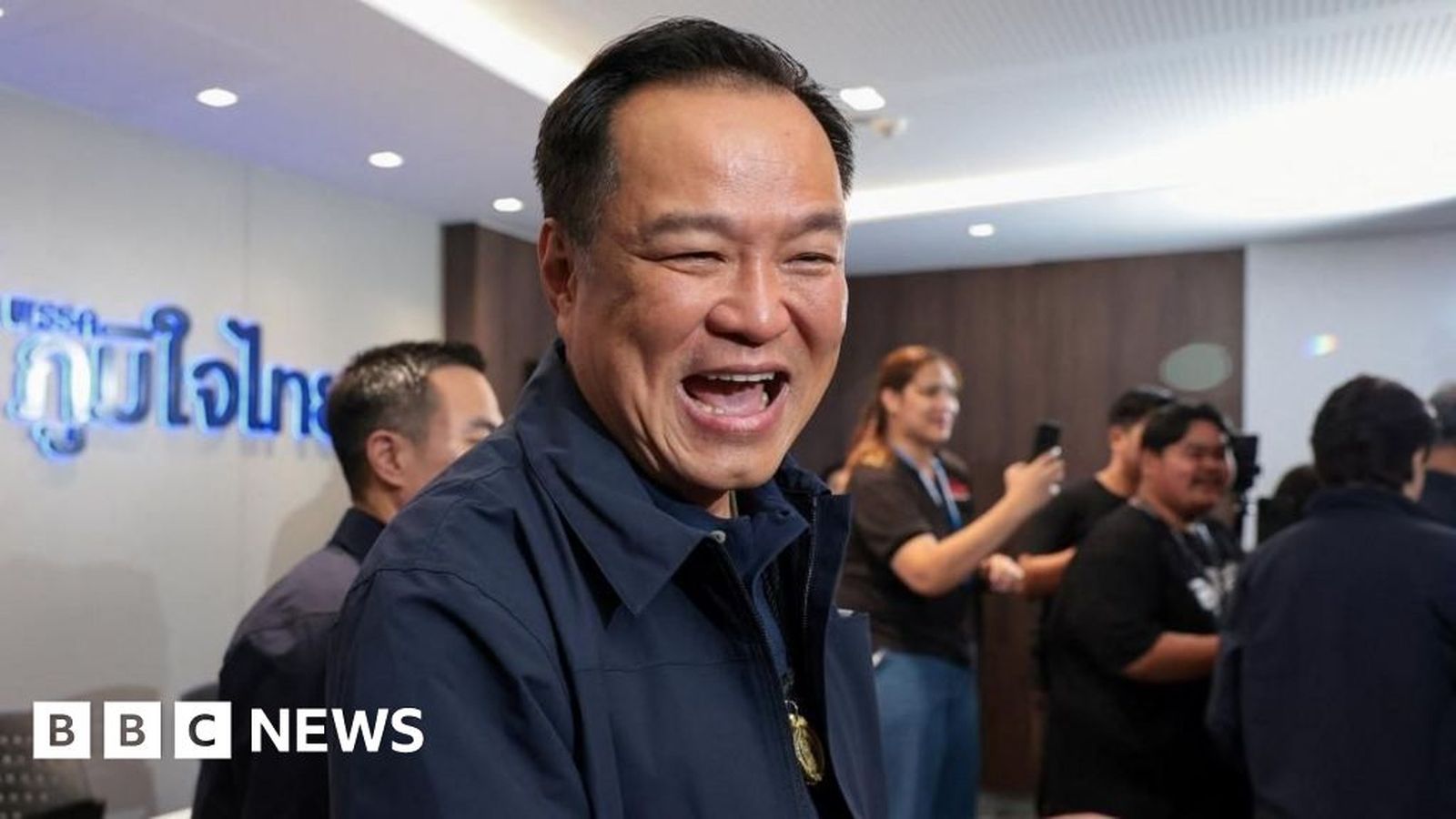
- Prime Minister Anutin Charnvirakul’s Bhumjaithai party claimed victory in Thailand’s general election.
- Early results showed Bhumjaithai projected to win 194 seats, ahead of the reformist People’s Party (115 seats).
- A simultaneous referendum saw approximately 65% of voters support replacing the 2017 military-drafted constitution.
- No single party secured an overall majority, necessitating coalition talks for government formation.
- The election took place amid ongoing political instability and economic concerns in Thailand.
BANGKOK (Azat TV) – Prime Minister Anutin Charnvirakul’s conservative Bhumjaithai party has claimed victory in Thailand’s general election, defying pre-election polls that favored reformist groups, while preliminary results from a parallel referendum indicate strong public support for rewriting the country’s military-drafted 2017 constitution. This dual outcome signals a complex future for Thailand, as the nation grapples with a power struggle between its elected government and powerful unelected institutions, even as citizens express a clear desire for systemic change.
With almost 90% of votes counted, Anutin’s Bhumjaithai party is projected to secure 194 seats in Bangkok’s 500-seat parliament, placing them well ahead of the reformist People’s Party, which is expected to win 115 seats. The People’s Party leader, Natthaphong Ruengpanyawut, appeared to concede the election, stating his readiness to serve in opposition if Anutin could form a government. The Bhumjaithai victory was unexpected, as opinion polls had previously placed the People’s Party in the lead. However, a predicted “orange wave” of support for the reformists did not materialize.
Conservative Victory Signals Continuity Amidst Instability
The election, held on Sunday, February 8, 2026, was called after a series of coalition government collapses, which led to the country having three prime ministers in as many years. Prime Minister Anutin, who only took office last September, dissolved parliament in December after facing a no-confidence threat. His campaign successfully leveraged heightened nationalist sentiments following recent border clashes with Cambodia, portraying his Bhumjaithai party as the defender of traditional Thai institutions, including the monarchy and military.
Anutin’s strategy also relied on populist giveaways and a robust network of local power-brokers, particularly effective in an electoral system where 80% of seats are decided on a first-past-the-post basis. While the People’s Party performed strongly in proportional votes, its lack of local grassroots networks proved to be a significant disadvantage. The third major contender, the Pheu Thai party, associated with the Shinawatra family, is projected to win 86 seats, marking a decline from its past dominance. Pheu Thai also offered populist pledges, including cash handouts and a daily national prize draw.
Voters Back Constitutional Overhaul
Alongside the parliamentary election, Thai citizens also participated in a referendum on whether to replace the 2017 constitution, which was drafted under military rule. Preliminary tallies, with over 90% of votes counted, indicate that approximately 65% of voters cast their ballots in favor of constitutional reform. Critics argue that the current charter grants excessive power to unelected bodies, such as the military-appointed Senate, thereby constraining the country’s democratic development.
A “Yes” vote in the referendum does not immediately institute a new constitution. Instead, it provides the incoming parliament with a public mandate to initiate a multi-stage drafting process. This process would require two additional referendums before a new national charter could be officially adopted, signifying a prolonged path toward fundamental systemic change.
Thailand’s Enduring Power Struggle and Economic Concerns
The election outcome, particularly the People’s Party’s inability to secure a commanding victory, temporarily defers a potential political crisis. In the past, reformist parties, including two previous incarnations of the People’s Party, have faced dissolution by courts and their leaders banned from politics. The military-appointed Senate also blocked the People’s Party from forming a government after their victory in 2023. This historical pattern underscores the deep-seated influence of powerful, unelected conservative institutions in Thai politics, which have repeatedly intervened to maintain the status quo.
Voters went to the polls amid concerns about Thailand’s sluggish economic growth, rising costs, and political instability that has deterred foreign investors. While the People’s Party promised sweeping changes, from curbing military and big business power to streamlining bureaucracy, the electorate ultimately leaned towards the more pragmatic and stability-focused approach offered by Anutin’s conservatives.
The election results, coupled with the clear mandate for constitutional reform, highlight a nation at a crossroads. While the immediate political landscape shows a continuation of conservative leadership, the strong public desire for a new constitution suggests an ongoing, albeit gradual, push for a redistribution of power away from traditional unelected institutions towards a more democratically accountable system. This election, therefore, represents not a final decision, but a significant phase in Thailand’s long-term struggle to redefine its governance and political future.