
Quick Read
- Deadly clashes between Thailand and Cambodia erupted on July 24, leaving 33 dead.
- Over 150,000 people have been displaced due to the escalating violence.
- Cambodia calls for an immediate ceasefire, while Thailand demands sincerity in peace efforts.
- UN and ASEAN urge both nations to de-escalate and resolve the dispute peacefully.
- The conflict is rooted in a long-standing border dispute and political tensions.
Introduction
The long-standing border dispute between Thailand and Cambodia erupted into deadly violence on July 24, 2025, marking the most intense conflict between the two nations in over a decade. As of July 26, the clashes have claimed over 33 lives, displaced nearly 150,000 people, and drawn calls for an immediate ceasefire from both regional and international bodies. This article delves into the unfolding crisis, its historical roots, and the efforts being made to de-escalate the situation.
Renewed Violence Along a Contested Border
The renewed hostilities broke out on July 24, 2025, along the heavily contested 800-kilometer border shared by Thailand and Cambodia. According to The Manila Times, the fighting has involved heavy artillery, tanks, and ground troops, leaving dozens dead, including civilians and soldiers on both sides. Thailand reported 20 fatalities, while Cambodia confirmed 13, bringing the total death toll to 33.
One of the most alarming incidents occurred in Cambodia’s Oddar Meanchey province, where Thai artillery reportedly struck civilian areas, including a pagoda and a hospital. Meanwhile, Thailand has accused Cambodia of using cluster munitions, further complicating the already volatile situation. The conflict has triggered the evacuation of over 130,000 people in Thailand and 35,000 in Cambodia.
Calls for Ceasefire Amid Escalating Tensions
As the clashes entered their third day, Cambodia called for an “immediate and unconditional ceasefire,” as reported by Indian Express. Cambodia’s UN Ambassador, Chhea Keo, emphasized the need for a peaceful resolution during an emergency UN Security Council meeting on July 25. Malaysia, chair of the ASEAN bloc, has offered to mediate discussions between the two nations.
Thailand, however, has expressed skepticism over Cambodia’s intentions. Thai Foreign Minister Maris Sangiampongsa urged Cambodia to demonstrate “genuine sincerity” in seeking peace, emphasizing that any resolution must respect Thai sovereignty. Both nations have accused each other of initiating the conflict, further complicating diplomatic efforts.
Honoring the Fallen
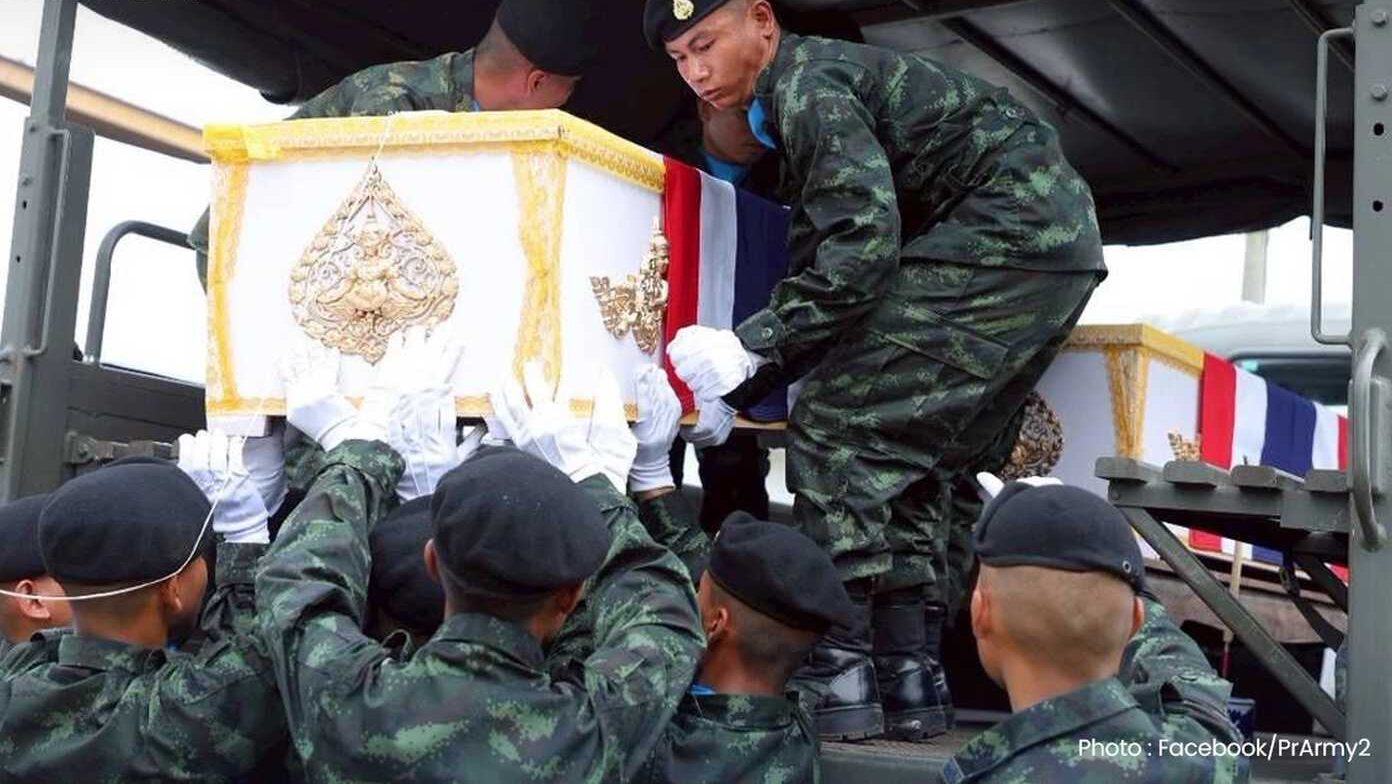
In Thailand, ceremonies were held to honor the soldiers who lost their lives in the clashes. On July 26, a solemn event took place at Weerawatyothin Camp Hospital to pay tribute to three members of the 6th Long Range Reconnaissance Company. According to The Nation Thailand, the ceremony was attended by high-ranking officials, including Maj Gen Chainakorn Kijkana, and grieving family members. The soldiers were hailed as heroes who made the ultimate sacrifice in defending their nation.
Historical Context and Rising Stakes
The current conflict is rooted in a long-standing territorial dispute that has flared intermittently over the years. Between 2008 and 2011, similar clashes resulted in 28 deaths and displaced tens of thousands. A 2013 UN court ruling temporarily eased tensions, but relations soured again in May 2025 after a Cambodian soldier was killed in a border skirmish.
Adding to the strain, a leaked conversation between Cambodian leader Hun Sen and Thai Prime Minister Paetongtarn Shinawatra last month sparked political turmoil in Thailand. The recording led to accusations that Shinawatra had failed to defend Thailand’s interests, further inflaming nationalist sentiments.
International Reactions
The crisis has drawn international attention, with the UN Security Council urging both sides to exercise restraint. India, a key regional player, has also voiced concern. As noted by The Hindu, the Indian Ministry of External Affairs has issued travel advisories and called for the cessation of hostilities. India’s diplomatic missions in Bangkok and Phnom Penh have advised citizens to avoid border areas and stay updated on local developments.
Meanwhile, former Thai Prime Minister Thaksin Shinawatra has weighed in, urging the military to “complete its operations” before engaging in dialogue. His remarks underscore the deep divisions within Thai politics, which may further complicate efforts to resolve the conflict.
The situation remains fluid, with both nations under immense pressure to de-escalate. As regional and international actors push for a peaceful resolution, the coming days will be crucial in determining whether diplomacy can prevail over violence.