
Quick Read
- Deadly clashes erupted between Thailand and Cambodia over a disputed border area, leaving 19 dead and thousands displaced.
- Thailand declared martial law in eight districts near the border as the violence entered its second day.
- The conflict has drawn international attention, with China and the UN urging immediate de-escalation.
- The decades-long dispute centers on colonial-era boundary maps and ancient temples.
- Experts warn of regional instability if tensions are not resolved diplomatically.
The decades-long border dispute between Thailand and Cambodia has erupted into deadly clashes, leaving at least 19 dead and prompting international calls for restraint. The violence, which began on Thursday, July 24, 2025, has seen both sides exchange heavy artillery fire, leading to widespread displacement and fears of a prolonged conflict.
Historical Context of the Border Dispute
The origins of the Thailand-Cambodia border dispute date back to 1907, during the French colonial rule of Cambodia. A map drawn at the time marked a boundary that Cambodia continues to recognize, but Thailand disputes, particularly over areas housing ancient Khmer-era Hindu temples like Preah Vihear. Despite two International Court of Justice rulings favoring Cambodia, tensions over the demarcation have persisted for decades.
According to Newsweek, the border has been a flashpoint in broader geopolitical struggles, including during the Cold War, when Thailand aligned with U.S. anti-communist efforts, while Cambodia experienced upheaval under the China-backed Khmer Rouge regime. The latest escalation highlights the enduring sensitivities surrounding this contested region.
Recent Escalation: Clashes Erupt
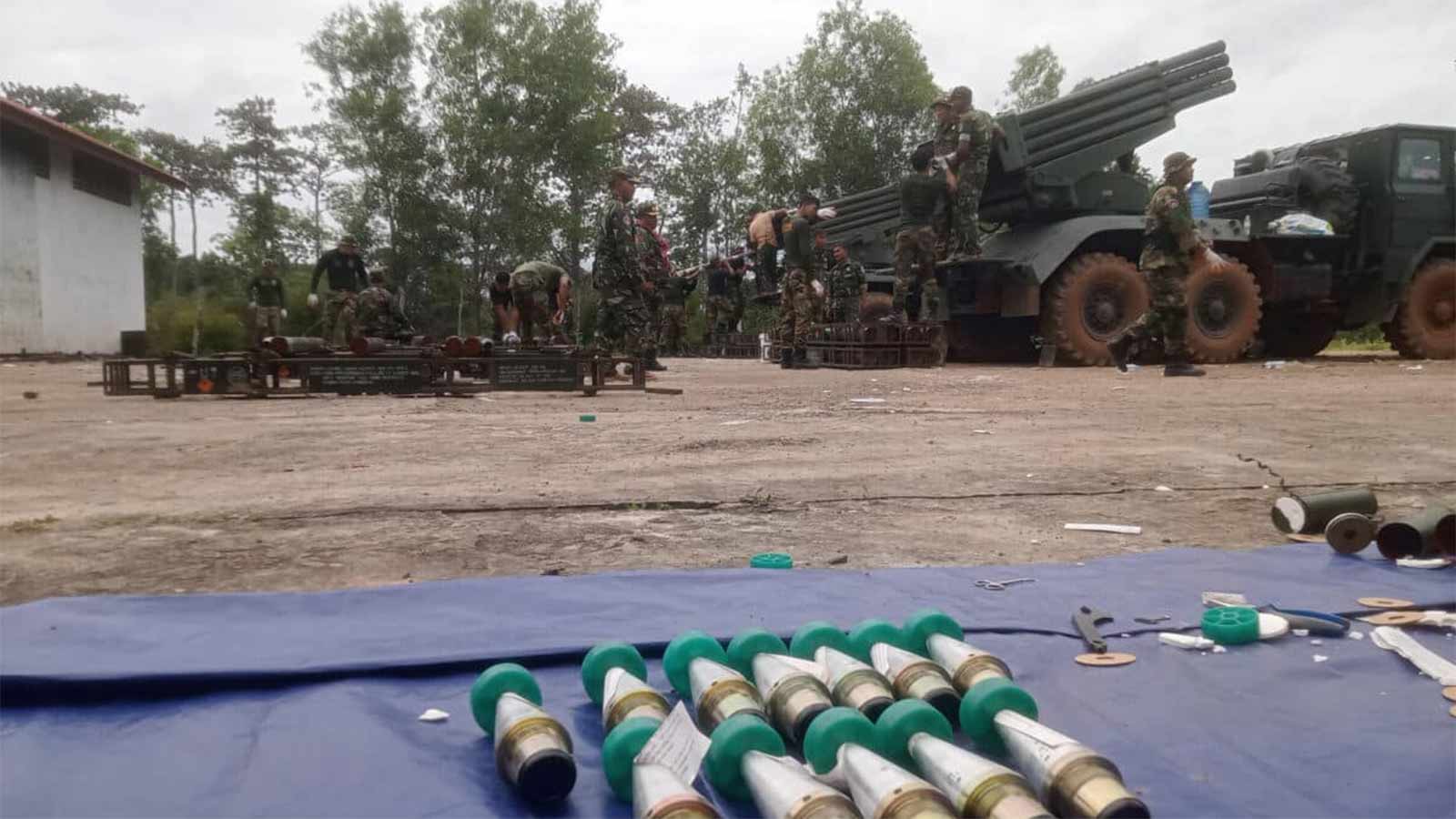
On Thursday morning, tensions boiled over when Cambodian troops reportedly deployed drones near the border, prompting Thai soldiers to attempt negotiations. According to Thailand’s National Security Council, these efforts failed, and Cambodian forces allegedly initiated heavy fire using rocket launchers and artillery. In response, Thailand launched airstrikes on Cambodian military targets. Cambodia, however, accused Thailand of advancing on a temple and firing preemptively.
The violence has been devastating. Thai officials confirmed 12 deaths, mostly civilians, including a child and a teenager. Meanwhile, Cambodia reported its first casualty on Friday. As BBC noted, the clashes have caused significant damage to homes, schools, and public facilities in Thailand’s border provinces, with smoke rising from destroyed petrol stations and residential areas.
Humanitarian Impact and Martial Law
The ongoing violence has forced tens of thousands to flee their homes. Thailand’s Health Ministry stated that over 58,000 people have sought refuge in temporary shelters, while Cambodian authorities reported evacuations of more than 23,000 residents from border areas. The Thai Education Ministry has closed 582 schools in affected regions and repurposed some as shelters, ensuring students’ safety amid the crisis.
In response to the escalating conflict, Thailand declared martial law in eight border districts on Friday. According to DW, this measure aims to enhance military control and protect civilians in the provinces of Chanthaburi and Trat. However, fears of an extended conflict loom large, with both nations continuing to mobilize troops and artillery.
International and Regional Reactions
The international community has expressed deep concern over the crisis. China, a significant player in the region, called for immediate de-escalation, with Foreign Minister Wang Yi emphasizing the need for dialogue. Wang also noted the colonial-era roots of the dispute, urging both sides to resolve the issue peacefully. Meanwhile, the United Nations Security Council convened an emergency meeting on Friday to address the situation.
The conflict also underscores the growing geopolitical rivalry between the United States and China in Southeast Asia. As Newsweek highlighted, Thailand and Cambodia are key players in this dynamic, with Thailand being a longstanding U.S. ally and Cambodia closely aligned with China under its Belt and Road Initiative. Analysts warn that prolonged instability could deepen these global tensions, though both Washington and Beijing have thus far refrained from direct intervention.
Outlook and Risks
While both sides have called for restraint, the risk of further escalation remains high. Thai Prime Minister Paetongtarn Shinawatra has threatened intensified self-defense measures, while Cambodian Prime Minister Hun Manet stated that his country had “no choice but to respond” to Thai aggression. Observers fear that missteps could lead to a broader regional conflict, with devastating consequences for both nations and the wider Southeast Asian region.
*As the crisis unfolds, the world watches closely, hoping for a diplomatic resolution to prevent further bloodshed and instability in an already volatile region.*