
Quick Read
- Northern Lights are caused by solar wind interacting with Earth’s atmosphere.
- Colors of auroras depend on the type of atmospheric gas and collision altitude.
- Solar activity, such as coronal mass ejections, intensifies auroral displays.
- Best viewing spots are in high-latitude regions like Alaska and Scandinavia.
- Auroras hold cultural significance and contribute to understanding space weather.
The Northern Lights, or aurora borealis, are one of nature’s most stunning spectacles. These shimmering displays of light, typically visible in high-latitude regions near the Arctic, have fascinated humanity for centuries. While their beauty is undeniable, the science behind the phenomenon is equally intriguing.
What Causes the Northern Lights?
The Northern Lights occur when charged particles from the sun collide with atoms in Earth’s atmosphere. These particles are carried toward Earth by the solar wind—a stream of plasma released from the sun’s outer layer. As the solar wind approaches our planet, it interacts with Earth’s magnetic field, funneling the particles toward the poles. This interaction excites the atmospheric gases, causing them to emit light.
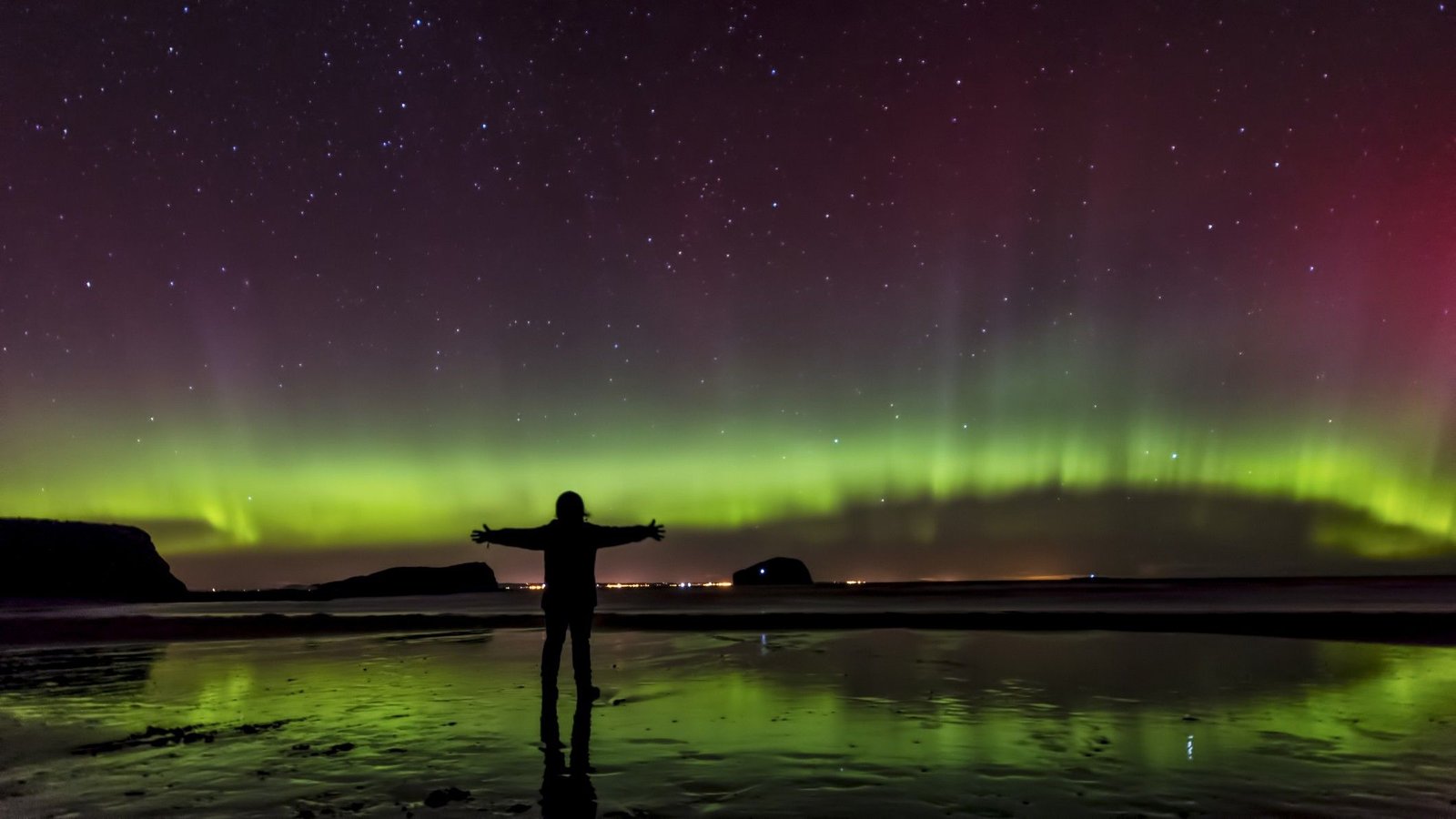
The colors of the aurora are determined by the type of gas and its altitude. Oxygen produces green and red hues, while nitrogen creates blue and purple tones. The altitude of the collision also affects the colors; for example, oxygen at higher altitudes often emits red light, while at lower altitudes it produces green.
The Role of Solar Activity
Solar activity plays a crucial role in the intensity and visibility of the Northern Lights. During periods of heightened solar activity, such as solar flares or coronal mass ejections (CMEs), more charged particles are released, increasing the likelihood of auroral displays. These solar events can also cause geomagnetic storms, which amplify the auroras and make them visible at lower latitudes.
Scientific models, such as NASA’s ENLIL model, help predict the arrival of CMEs and the potential impact on Earth’s magnetic field. Predictions are essential for aurora chasers, as they provide insights into when and where the lights might appear.
Where and When to See Them
The best places to witness the Northern Lights are regions within the auroral zone, such as Alaska, Canada, Scandinavia, and Russia. These areas are close to Earth’s magnetic poles, where the solar particles are most concentrated. The optimal time for viewing is during the winter months, when nights are longer and skies are darker.
Auroras can also be visible at lower latitudes during strong geomagnetic storms. For instance, during G2 (moderate) storm conditions, the lights can be seen as far south as New York or Idaho. This makes solar forecasts crucial for planning aurora-viewing trips.
Cultural and Historical Significance
The Northern Lights have inspired countless myths and legends across cultures. Indigenous peoples in the Arctic often regarded them as spiritual phenomena, believing they were manifestations of ancestors or spirits. In Norse mythology, auroras were thought to be reflections from the shields of Valkyries, warrior maidens serving Odin.
Modern fascination with the Northern Lights continues to grow, with astrotourism becoming increasingly popular. Travelers flock to destinations within the auroral zone, hoping to capture the perfect photograph or simply marvel at the natural wonder.
Why Do They Matter?
Beyond their aesthetic appeal, the Northern Lights serve as a reminder of the dynamic relationship between the sun and Earth. Studying auroras helps scientists understand space weather and its effects on our planet, including satellite operations, power grids, and communication systems.
The Northern Lights are more than just a visual delight; they are a gateway to understanding the complexities of our universe. Their beauty and scientific significance continue to captivate humanity, making them one of Earth’s most cherished natural phenomena.