
Quick Read
- Benny Safdie’s solo directorial debut follows the true story of MMA fighter Mark Kerr.
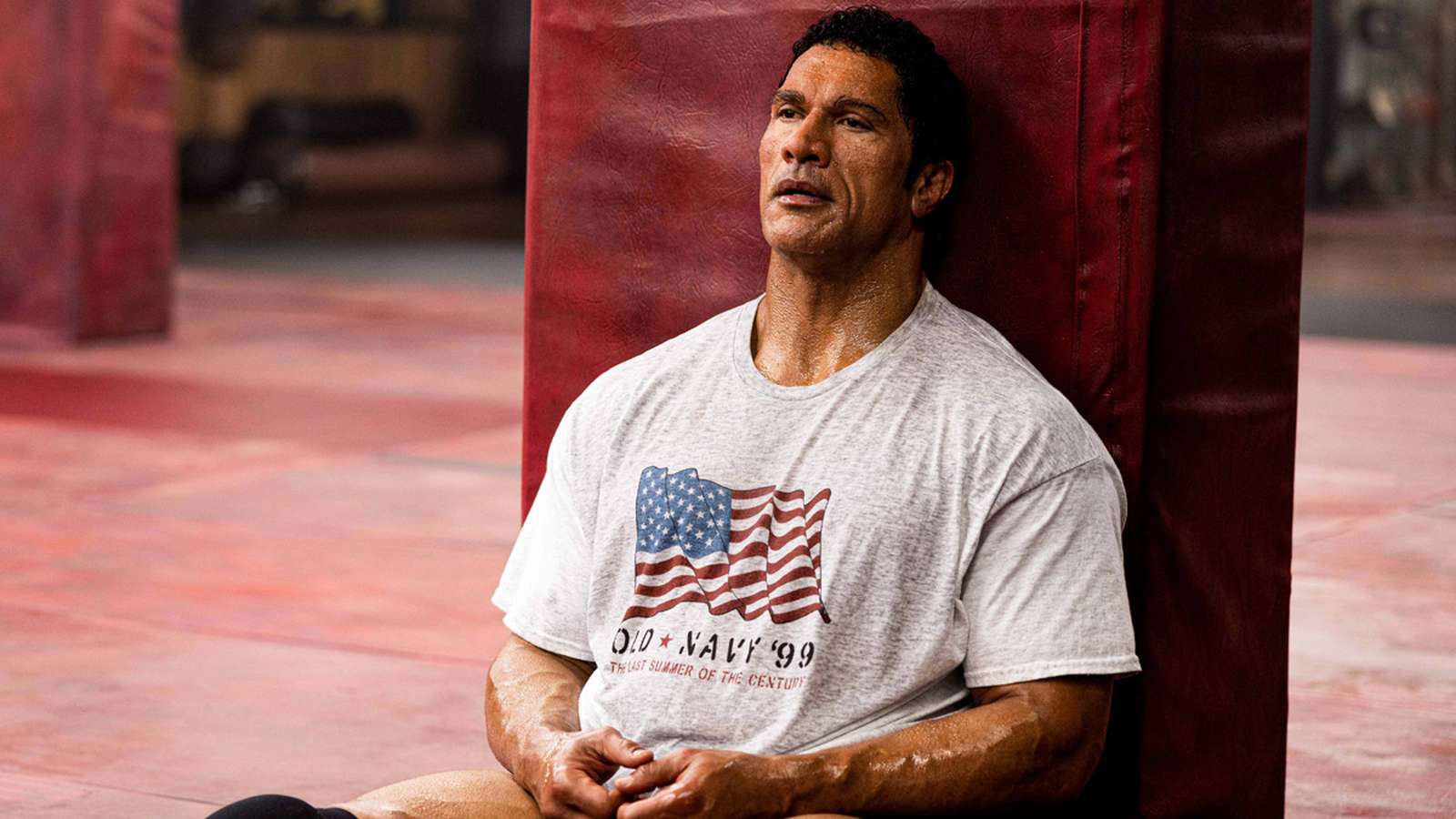
- Dwayne Johnson undergoes a dramatic transformation, both physically and emotionally.
- The film premiered at Venice, earning Safdie the Silver Lion for Best Director.
- Emily Blunt and Ryan Bader deliver standout performances in supporting roles.
- The movie explores themes of addiction, vulnerability, and finding beauty in brokenness.
Dwayne Johnson Steps Into Prestige: The Smashing Machine’s Bold Transformation
Every so often, a film comes along that shatters expectations—both for its audience and its stars. The Smashing Machine, Benny Safdie’s highly anticipated solo directorial debut, is exactly that kind of movie. For Dwayne Johnson, a man whose career has been defined by muscle, charisma, and blockbuster spectacle, this is the moment he steps into the ring not as an action figure, but as a deeply flawed human being. He plays Mark Kerr, the legendary mixed martial artist whose bruises extend far beyond the skin.
Benny Safdie’s Solo Vision: From Mumblecore to Gritty Sports Drama
Before diving into Johnson’s metamorphosis, it’s worth tracing the path that led Benny Safdie here. Safdie, once part of an inseparable filmmaking duo with his brother Josh, built his reputation on raw, kinetic storytelling in films like Good Time and Uncut Gems. When the brothers parted ways in 2023, each sought new ground: Josh with Marty Supreme, Benny with the sprawling, emotionally charged The Smashing Machine. Premiering at the Venice Film Festival and earning Safdie a historic Silver Lion, the film marks a new chapter in American cinema’s embrace of fractured, real-life narratives. (The Hollywood Reporter)
Safdie’s approach is unmistakable—combining verité realism with moments of poetic metaphor. The camera lingers on the sweat, the pain, and the silence between punches. Cinematographer Maceo Bishop, making his first feature collaboration with Safdie, uses shifting film formats—from VHS to 16mm to IMAX—to make late-90s MMA feel visceral and immediate. The grain, the bruises, the light flickering on battered faces: it’s all there, demanding to be felt, not just seen.
Dwayne Johnson’s Dramatic Leap: Becoming Mark Kerr
For Johnson, playing a real person isn’t new—but never like this. His physical transformation is staggering, aided by Kazu Hiro’s meticulous makeup and 30 pounds of added muscle. Yet it’s not just the body that changes; it’s the spirit. Johnson’s performance as Kerr is haunted by vulnerability. He’s not just a fighter—he’s a man wrestling with addiction, with fame, and with the slow erosion of self-worth. The role asks Johnson to strip away the myth of “The Rock” and reveal a soul battered by more than just opponents.
Emily Blunt’s Dawn Staples, Kerr’s girlfriend, is both anchor and storm. Their relationship, marked by tempestuous arguments and moments of quiet tenderness, is brought to life with sharp emotional clarity. Blunt and Johnson share a natural ease—sometimes, the friction between them is more electric than any fight scene. Ryan Bader, in his breakout role as Mark Coleman, completes the triangle, offering camaraderie and a sense of lived-in brotherhood that rings true to anyone who’s ever stepped into a locker room after defeat.
The film refuses to glamorize the toll of fighting. Substance abuse is presented matter-of-factly—Kerr’s battle with opioids predates the national crisis, and his struggle for sobriety is neither sanitized nor sensationalized. Even when he finds help, the scars remain. As the movie unfolds, what emerges isn’t just a story about MMA, but about the kind of pain that seeps into every corner of a life lived at the edge.
Finding Beauty in Brokenness: Metaphors, Music, and Memory
Safdie knows how to layer meaning. One scene sees Kerr purchasing a kintsugi bowl—an obvious but effective metaphor for a man piecing himself back together. The cracks are highlighted, not hidden. Through grainy film stock and fractured relationships, Safdie finds beauty in the imperfections. The score, composed by Nala Sinephro, is haunting and ethereal, floating above the gritty reality like hope at the edge of despair. Chiptune textures and experimental jazz merge, underscoring the film’s emotional highs and lows.
What’s remarkable is how Safdie resists the easy allure of sports-movie clichés. The third act, in particular, avoids the predictable redemption arc. Instead, it lingers on defeat, on acceptance, on the quiet moments when Kerr sits with his own brokenness. The fights outside the ring—especially those with Dawn—are just as bruising as anything in the cage. It’s a story about learning to bear what cannot be fixed, and about finding the courage to keep going anyway.
Legacy, Craft, and the Weight of Vulnerability
Johnson’s star persona sometimes glimmers through—especially in scenes where Kerr’s bravado is at its peak. But the film’s greatest achievement is its willingness to let him be small, to let him lose, to let him cry. There’s a moment when the camera lingers on Johnson’s bare back, then pans slowly to his face. The physical weight he can bear is impressive; the emotional weight he cannot is devastating. (Consequence)
The supporting cast never fades into the background. Blunt’s Dawn is given space to be more than a stereotype, while Bader’s Coleman brings a sense of loyalty that feels earned. Safdie’s script, based on John Hyams’s documentary The Smashing Machine: The Life and Times of Extreme Fighter Mark Kerr, weaves together real events with cinematic poetry, refusing to simplify or sensationalize. The movie’s documentary roots are evident, but its heart beats with narrative urgency.
As the credits roll, what lingers is not just Johnson’s transformation or the rush of PRIDE-era MMA recreated with loving detail. It’s the sense that beauty can be found in the cracks, in the battered bodies and fractured relationships, in the act of rebuilding after everything has fallen apart. Safdie’s solo debut proves he can stand on his own, delivering a portrait that is gripping, deeply felt, and ultimately, hopeful.
While The Smashing Machine may not fully escape the shadow of Johnson’s larger-than-life persona, it marks a turning point for both actor and director—a powerful reminder that vulnerability, not invincibility, is the real measure of strength. The film’s craft, its honesty, and its refusal to flinch in the face of pain make it a landmark in sports drama, and a testament to the beauty of what’s broken.