
Quick Read
- Minnesota Governor Tim Walz is reportedly expected to withdraw from the 2026 gubernatorial race.
- The decision comes amidst intense national scrutiny over alleged Medicaid fraud in the state.
- Walz has faced significant internal pressure from his Democratic-Farmer-Labor (DFL) party colleagues.
- Political insider Blois Olson first reported the likely withdrawal, following a meeting between Walz and Senator Amy Klobuchar.
- Senator Amy Klobuchar and Secretary of State Steve Simon are potential contenders if Walz steps aside.
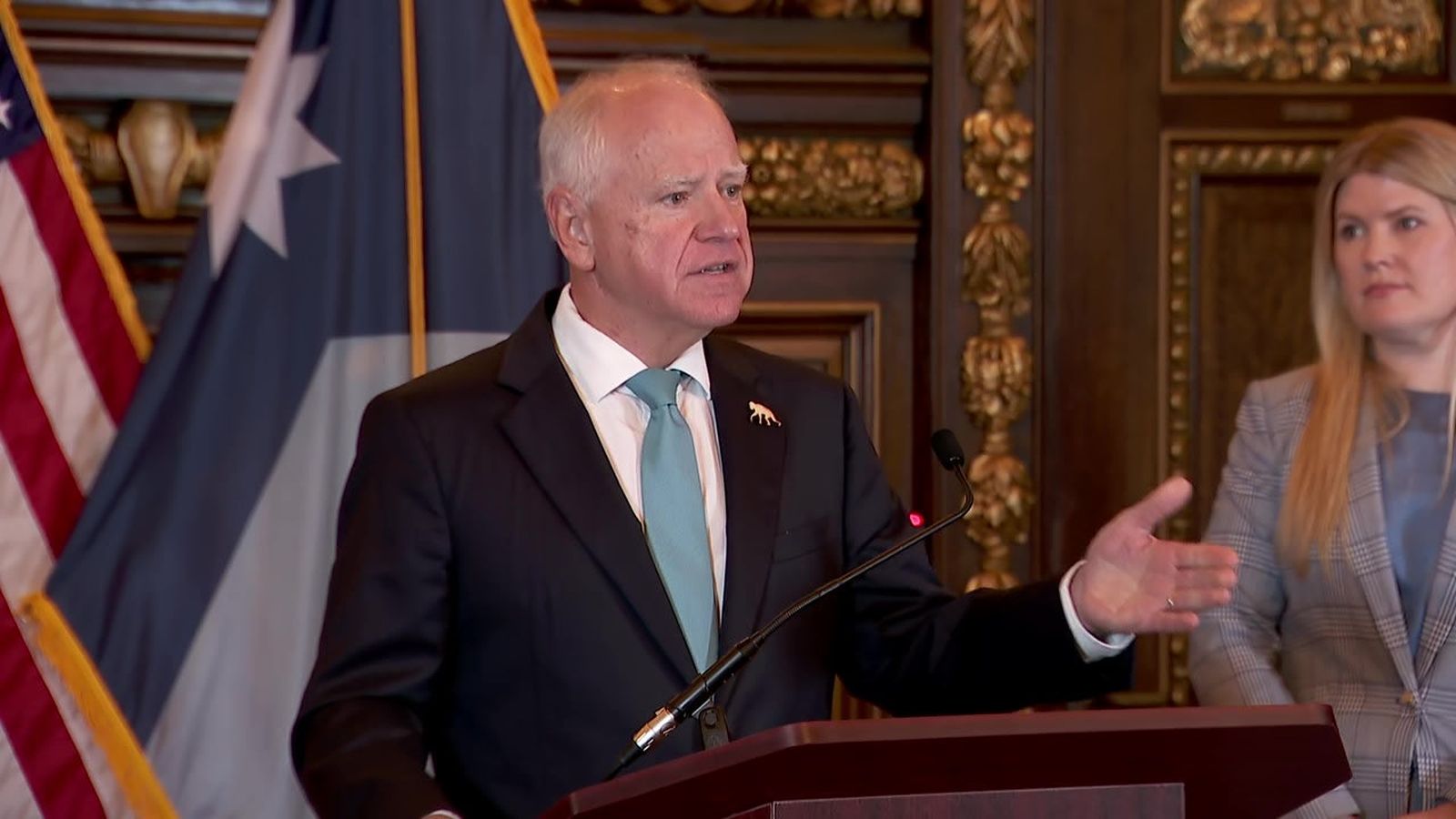
ST. PAUL, Minn. – The political landscape of Minnesota was dramatically reshaped this week as Governor Tim Walz, a prominent figure on both state and national stages, reportedly signaled his intent to withdraw from the 2026 gubernatorial race. The abrupt development unfolded amidst a cloud of speculation, an unusually vague press conference announcement, and mounting pressure from both political adversaries and, more tellingly, within his own party.
On a quiet Sunday, a spokesperson for Governor Walz announced an 11 a.m. news conference, cryptically stating the governor would address ‘the news of the day.’ The lack of detail immediately ignited a firestorm of conjecture, but it was political insider Blois Olson who, later that evening, delivered the bombshell: Walz was ‘likely to drop out of the 2026 race,’ a decision reportedly discussed with Senator Amy Klobuchar just hours before, as reported by FOX 9.
This sudden pivot marks a significant turning point for a governor who, just last September, had declared his intention to seek a third consecutive term, buoyed by comfortable victories in 2018 and 2022. Yet, the past year has seen a convergence of challenges that have seemingly eroded his political footing, culminating in what appears to be a strategic retreat.
The Weight of Allegations: Medicaid Fraud Under Scrutiny
At the heart of Governor Walz’s recent troubles lies an escalating scandal involving widespread fraud within Minnesota’s state-run social service programs, particularly Medicaid. For months, the issue has cast a long shadow over his administration, drawing fierce criticism from Republican opponents and, notably, from President $1 Trump. Accusations of a slow and insufficient response to the fraud have become a relentless drumbeat, amplified across national media.
The scale of the alleged fraud is staggering. While Walz’s administration has recently intensified anti-fraud measures, prosecutors have estimated that cases during his tenure could eventually reach into the billions of dollars. This figure, though disputed by the governor in late December, has fueled public outrage and provided ample ammunition for his detractors. President Trump, in particular, has seized upon the crisis, leveraging his platform to intensify efforts to weaken Walz. His administration reportedly pushed federal agencies to investigate Minnesota on multiple fronts, even threatening to withhold crucial federal funds for daycare, nutrition, and transportation programs if the governor’s office did not comply with data demands or policy changes. Such federal pressure, rarely seen at this level, placed Walz in an unenviable spotlight, forcing him to defend his state’s integrity while navigating complex political attacks.
The criticism wasn’t confined to policy; it also delved into deeply personal and, at times, baseless attacks. Over the weekend preceding the news conference, Trump circulated unsubstantiated claims that Walz had a role in the assassination of Democratic state Representative Melissa Hortman. These claims, which were quickly refuted and drew sharp backlash, including a public call for an apology from Hortman’s children, underscored the intensely polarized and often ruthless nature of the political environment Walz found himself in, as reported by MPR News.
Internal DFL Discontent: A Party Divided on Walz’s Third Term
While the external pressures were immense, perhaps more damaging to Walz’s re-election prospects was the growing unease within his own Democratic-Farmer-Labor (DFL) party. What began as ‘gossip and rumblings,’ as Sen. Jen McEwen, DFL-Duluth, described it, quickly escalated into serious private concerns among elected officials and activists regarding Walz’s viability for a third term. This internal dissent gained momentum, especially after President Trump’s administration brought Minnesota’s fraud crisis into the national conversation.
Several Democrats, speaking anonymously to the Minnesota Star Tribune in recent weeks, expressed a clear sentiment: Walz should not seek re-election. Some went as far as to compare his potential bid for a third term to President Joe Biden’s ‘doomed 2024 campaign,’ a stark and unflattering parallel that highlighted deep-seated anxieties about electability and public perception. This comparison suggests a fear that Walz, despite his previous successes, might become a liability in a challenging political climate, potentially endangering other DFL candidates down the ballot.
The concerns weren’t just whispered; they led to concrete actions. A group of DFL state senators had been actively seeking a meeting with Governor Walz in the weeks leading up to the announcement. Their intention was clear: to voice their concerns directly and initiate a private discussion about the party’s path forward. While Sen. Matt Klein, DFL-Mendota Heights, declined to comment specifically on the meeting request, he did not dismiss that such an effort was underway, indicating a significant internal push for a reassessment of Walz’s political future.
From Statehouse to National Stage: The Double-Edged Sword of Prominence
Governor Walz’s journey from a relatively quiet state leader to a national figure created a unique set of circumstances that ultimately contributed to his current predicament. During a summer shakeup for Democrats in 2024, which notably saw President Joe Biden ending his re-election campaign, Walz’s profile rose dramatically. He landed the Vice Presidential nomination under Kamala Harris, a move that solidified his status as a key player in the national Democratic Party.
This increased stature, however, proved to be a double-edged sword. While it brought him greater influence and recognition, it also made him an attractive and high-profile target for conservatives. No longer just a state governor, Walz became a symbol, a representative of the Democratic establishment, making him particularly vulnerable to the kind of intense, often personal, attacks that characterized the national political discourse. The spotlight that once illuminated his accomplishments now magnified his challenges, making it harder to manage state-level issues without them being politicized on a grander scale.
The Road Ahead: What Walz’s Decision Means for Minnesota’s Political Landscape
If Governor Walz indeed steps aside, his decision will undoubtedly trigger a scramble within the DFL party to identify and coalesce behind a new candidate for the 2026 gubernatorial race. The political vacuum created by his departure would immediately draw attention to other prominent DFL figures who have long been considered potential contenders. Among the names frequently mentioned are Senator Amy Klobuchar, whose national profile and extensive experience make her a formidable candidate, and Secretary of State Steve Simon, another seasoned politician with a strong base of support.
The timing of the political calendar adds another layer of complexity. The official filing period for Minnesota campaigns is set for mid-May to early June, with both state parties holding endorsing conventions in late May. However, the possibility of August primaries looms large, especially if multiple strong candidates emerge, making for a potentially protracted and hard-fought nomination battle. Walz’s withdrawal would not only redefine the DFL’s strategy but also embolden the more than a dozen Republicans who have already entered the race, sensing a rare vulnerability in the DFL’s stronghold on the governorship.
The confluence of a major fraud scandal, intense national political targeting by a $1, and significant internal dissent within his own party has created an almost insurmountable challenge for Governor Walz. His reported decision to withdraw, if confirmed, reflects a pragmatic assessment of a political landscape too fraught with peril to navigate successfully for a third term. It underscores the immense pressure faced by governors in today’s hyper-polarized environment, where local administrative challenges can quickly escalate into national political battlegrounds, forcing even popular incumbents to reconsider their political futures for the sake of party unity and broader electoral strategy.