
Quick Read
- Total War: Warhammer 40K was announced at the Game Awards 2025 and will release on PC, Xbox Series X|S, and PlayStation 5.
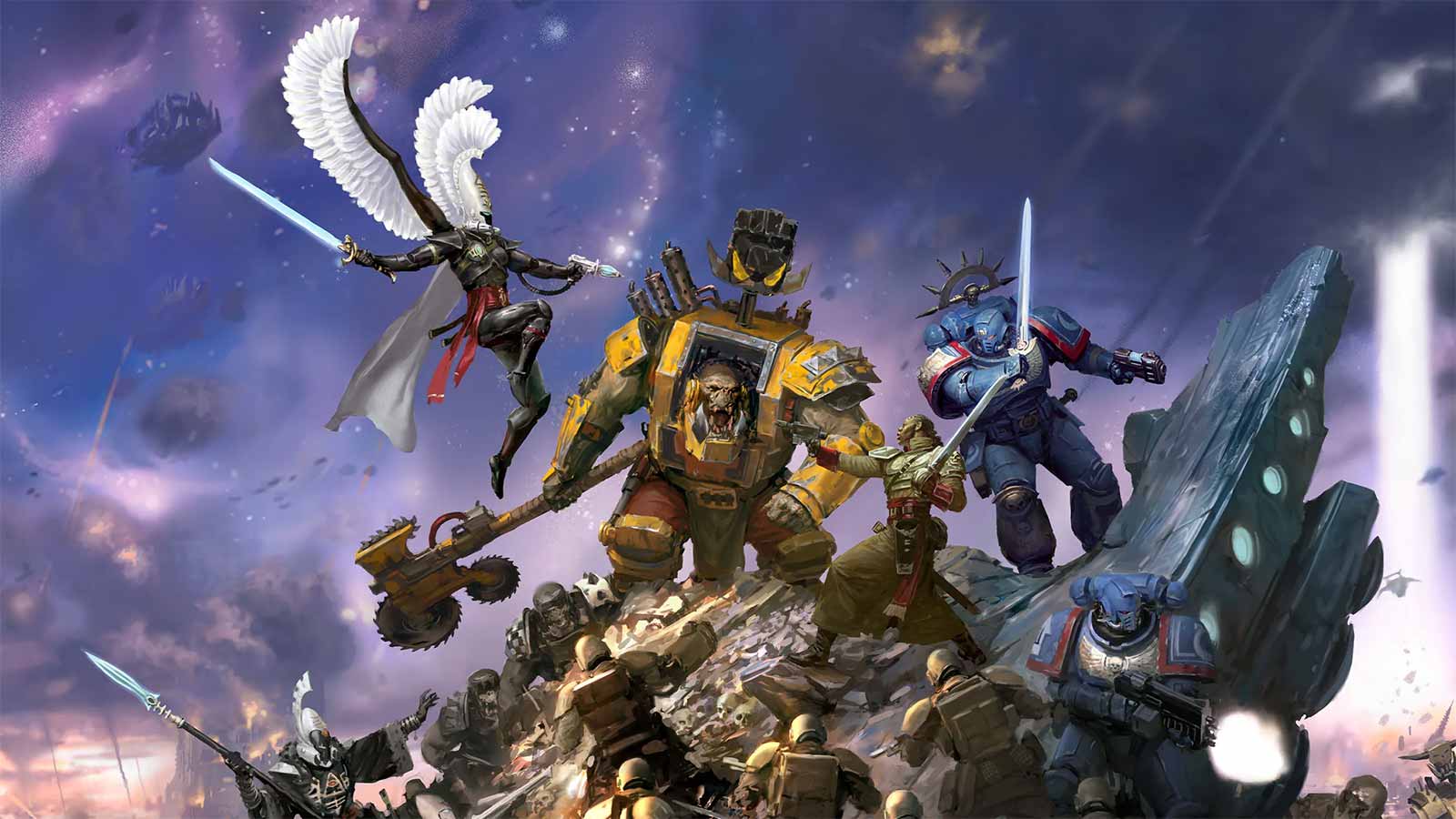
- The game features four playable factions: Space Marines, Orks, Aeldari, and Astra Militarum, with interplanetary battles and extensive customization.
- Powered by the Warcore engine, it introduces improved physics, pathfinding, and vehicle mechanics, enabling orbital bombardments and planet-destroying weapons.
- David Harbour revealed the game and will feature as part of the cast.
- Total War: Warhammer 40K marks the franchise’s first entry on consoles.
Creative Assembly Unveils Total War: Warhammer 40K at Game Awards 2025
For years, the Total War franchise has dominated the strategy landscape, blending grand tactics and cinematic battles. But at the Game Awards 2025, Creative Assembly pushed the boundaries even further, announcing Total War: Warhammer 40K—a bold new entry that not only expands the series into the grimdark future of Warhammer 40,000, but also brings its epic warfare to Xbox Series X|S and PlayStation 5 alongside PC. For many fans, this marks a seismic shift. The series, long anchored on PC, now opens its doors to console gamers hungry for complex, large-scale strategy.
Console Debut and Engine Overhaul: Strategy Goes Interplanetary
The reveal, made by actor and dedicated Warhammer 40K enthusiast David Harbour, was more than just a trailer drop. Harbour’s presence—both as a fan and a cast member—underscored Creative Assembly’s commitment to authenticity and spectacle. The trailer itself offered a taste of what’s to come: Ultramarines clashing with Ork hordes, the familiar cacophony of bolters and war cries echoing across blasted landscapes, and hints of battles sprawling across multiple planets.
This interplanetary scope sets Total War: Warhammer 40K apart from anything the franchise has attempted before. Powered by the upgraded Warcore engine, Creative Assembly promises improved physics, smarter pathfinding, and robust vehicle mechanics—essentials for bringing the 41st Millennium to life. Players won’t just fight on a single front; they’ll wage war across star systems, with the ability to bombard planets from orbit or, if the situation demands, erase them entirely with apocalyptic weaponry. It’s a scale that dwarfs previous Total War games, demanding new strategic thinking and offering fresh narrative possibilities.
Four Factions, Endless Customization, and the Grimdark Stakes
According to details from the game’s Steam page, players will choose from four iconic factions: Space Marines, Orks, Aeldari, and the Astra Militarum. Each offers distinct tactical playstyles and thematic flavor. Want disciplined, high-tech warriors? The Space Marines are waiting. Prefer overwhelming numbers and savage humor? Orks have you covered. The elegant, enigmatic Aeldari and the stalwart Astra Militarum round out the lineup, promising rich variety and replayability.
Customization sits at the heart of the experience. Players can forge their own armies, select colors, and outfit troops with tactical abilities, traits, and wargear. This isn’t just about assembling a force—it’s about crafting a personal vision of warfare in the grimdark future. From orbital strikes to boots-on-the-ground combat, every decision shapes the fate of entire worlds. And with factions competing across multiple planets, the stakes couldn’t be higher: humanity stands on the brink, and every battle could tip the balance.
The Warhammer 40K Renaissance and Creative Assembly’s Next Moves
This announcement comes amid a surge of Warhammer 40K titles. Warhammer 40,000: Space Marine 2 landed in 2024 to critical acclaim, reigniting interest in the universe’s brutal, operatic warfare. Meanwhile, Warhammer 40,000: Dark Heresy—a follow-up to Rogue Trader—is in development, and the retro shooter Boltgun is set for a sequel next year. For Games Workshop and its partners, the 41st Millennium is more than a setting; it’s a cultural moment.
Creative Assembly isn’t putting all its eggs in one basket, either. While the team is laser-focused on delivering Total War: Warhammer 40K, they’ve confirmed that Total War: Medieval 3 is also in the works, albeit in the earliest stages of development. Meanwhile, ongoing support for Total War: Warhammer 3 continues, with a major expansion, Lords of the End Times, set to bring Nagash and new threats to the Warhammer Fantasy realm in summer 2026.
What Does This Mean for Strategy Gaming?
The decision to bring Total War’s signature gameplay to consoles isn’t just a technical milestone—it’s a strategic one. Console strategy games have often been niche, but by leveraging the Warcore engine’s upgrades, Creative Assembly aims to make the genre more accessible without sacrificing depth. For long-time PC fans, there’s reassurance: the core experience remains intact. For newcomers, especially those drawn by the spectacle and lore of Warhammer 40K, the barriers to entry have never been lower.
The debut trailer, while largely cinematic, teased early gameplay that showcased how massive sci-fi armies and planetary conquest will play out. This hybrid of turn-based strategy and real-time tactics—now amplified by the scale of the Warhammer 40K universe—promises a game where every choice matters, and every campaign can become a sprawling saga of survival, ambition, and destruction.
As the community waits for more details on release dates, gameplay deep-dives, and faction reveals, one thing is clear: Total War is evolving, and Warhammer 40K’s arrival marks a new era for both the franchise and strategy gaming as a whole.
The arrival of Total War: Warhammer 40K on consoles and PC is more than just another release—it’s a watershed moment for strategy gaming. By marrying the depth of Total War with the scale and lore of Warhammer 40K, Creative Assembly has set the stage for a genre-defining experience. The move to consoles could redraw the boundaries of who plays—and how they play—grand strategy games in 2025 and beyond. (Sources: Windows Central, Gamespot)