
Quick Read
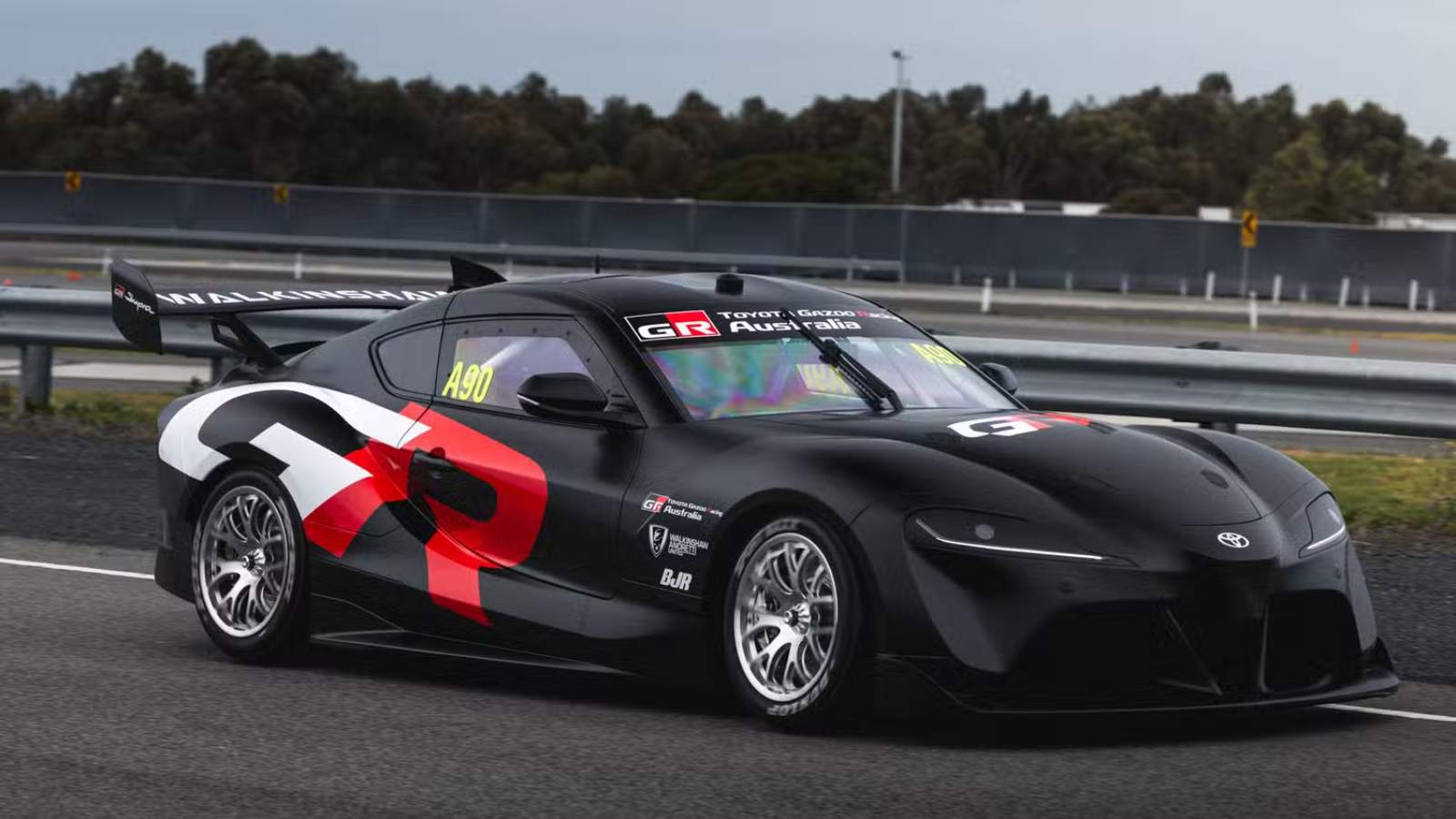
- Toyota GR Supra V8 racing car debuts this weekend in the Australian Supercars Championship.
- Toyota Australia’s goal is to build the GR brand and foster engineering learning, not primarily car sales.
- The bespoke 5.2-litre 2UR-GSE V8 engine was developed with Walkinshaw TWG Racing and Swindon Powertrains.
- Driver Ryan Wood faced early performance challenges in practice at Sydney Motorsport Park.
- Toyota emphasizes its 70-year motorsport heritage and a multi-pathway approach to vehicle development.
SYDNEY (Azat TV) – The Australian Supercars Championship is set to witness a significant shift this weekend as Toyota makes its long-awaited entry with the V8-powered GR Supra racing car at Sydney Motorsport Park. This multi-million dollar program, spearheaded by Toyota Australia, is notably driven by objectives beyond traditional car sales, aiming instead to bolster the Gazoo Racing (GR) brand and advance engineering knowledge.
For nearly 25 years, Toyota had considered and aborted attempts to join the prestigious Supercars series. Now, with the GR Supra V8 hitting the track, Toyota Australia boss John Pappas has clarified the company’s unconventional motivation. Pappas stated that the primary goal is not to sell more cars, but rather to build the GR performance brand and facilitate learning that contributes to producing ‘ever better cars’ and developing ‘better people.’ This philosophy echoes that of Toyota’s global president, Akio Toyoda, who initiated Gazoo Racing as his personal project, now evolved into the company’s global performance division.
Complex V8 Engine Development for Supercars
The heart of Toyota’s Supercars entry is its bespoke 2UR-GSE V8 engine, a choice that stands out given Toyota’s significant success in road car sales with hybrid technology. The development of this V8 engine for Supercars racing proved to be more complex than initially anticipated. Walkinshaw TWG Racing, a former Ford team, partnered with UK firm Swindon Powertrains to engineer the engine, requiring a version tailored specifically for the performance and durability demands of the Supercars category.
Initially, two iterations of the engine with different capacities were developed before the 5.2-litre version received official approval. Extensive track testing, spanning 5000km, began in September of last year, during which one of the UK-built test engines experienced a valve failure at Winton in November. Despite these challenges, the race engines were ultimately built at Walkinshaw’s Clayton headquarters, then tuned and sealed at Supercars’ dyno in Brisbane, ready for their competitive debut.
Teams, Drivers, and Early Challenges
Toyota’s entry into the Supercars Championship is facilitated by two prominent teams: Walkinshaw TWG Racing and Chevrolet converts Brad Jones Racing. While Brad Jones Racing received its first engine just two weeks prior to the Sydney debut, Walkinshaw confirmed a full fleet of five spare engines were on-site, underscoring the scale of preparation. Swindon technical director Sylvain Rubio is also present in Sydney, supporting the engine’s debut.
On the driving front, Walkinshaw TWG Racing star Ryan Wood faced immediate challenges during opening practice in Sydney, finishing last on the time sheets after struggling with new tyres in his new Toyota GR Supra. Wood’s performance comes amid continued scrutiny regarding his rivalry with Broc Feeney, following a controversial clash at the 2025 Adelaide finale. Despite the initial hurdles, Walkinshaw expressed optimism for the team’s competitiveness later in the season, with ambitions to win the championship and the iconic Bathurst race.
Toyota’s Enduring Motorsport Heritage
Toyota’s decision to enter Supercars with a V8-powered GR Supra, despite its dominance in hybrid road car sales, highlights its deep-rooted commitment to motorsport and performance heritage. John Pappas emphasized that Toyota has been involved in motorsport for 70 years, considering it part of the brand’s core DNA from a performance perspective. The company maintains a ‘multi-pathway approach’ to vehicle development, asserting that learnings from racing, even with V8 engines, flow into all their cars, including hybrids, contributing to the development of better overall vehicles.
Toyota’s strategic embrace of the V8 Supercars platform, prioritizing brand building and engineering innovation over direct sales, underscores the enduring appeal and developmental potential of high-performance V8 engines in competitive motorsport, even as the broader automotive market shifts towards electrification.