
Quick Read
- Trump administration revoked the 2009 ‘endangerment finding’ for climate action on Thursday.
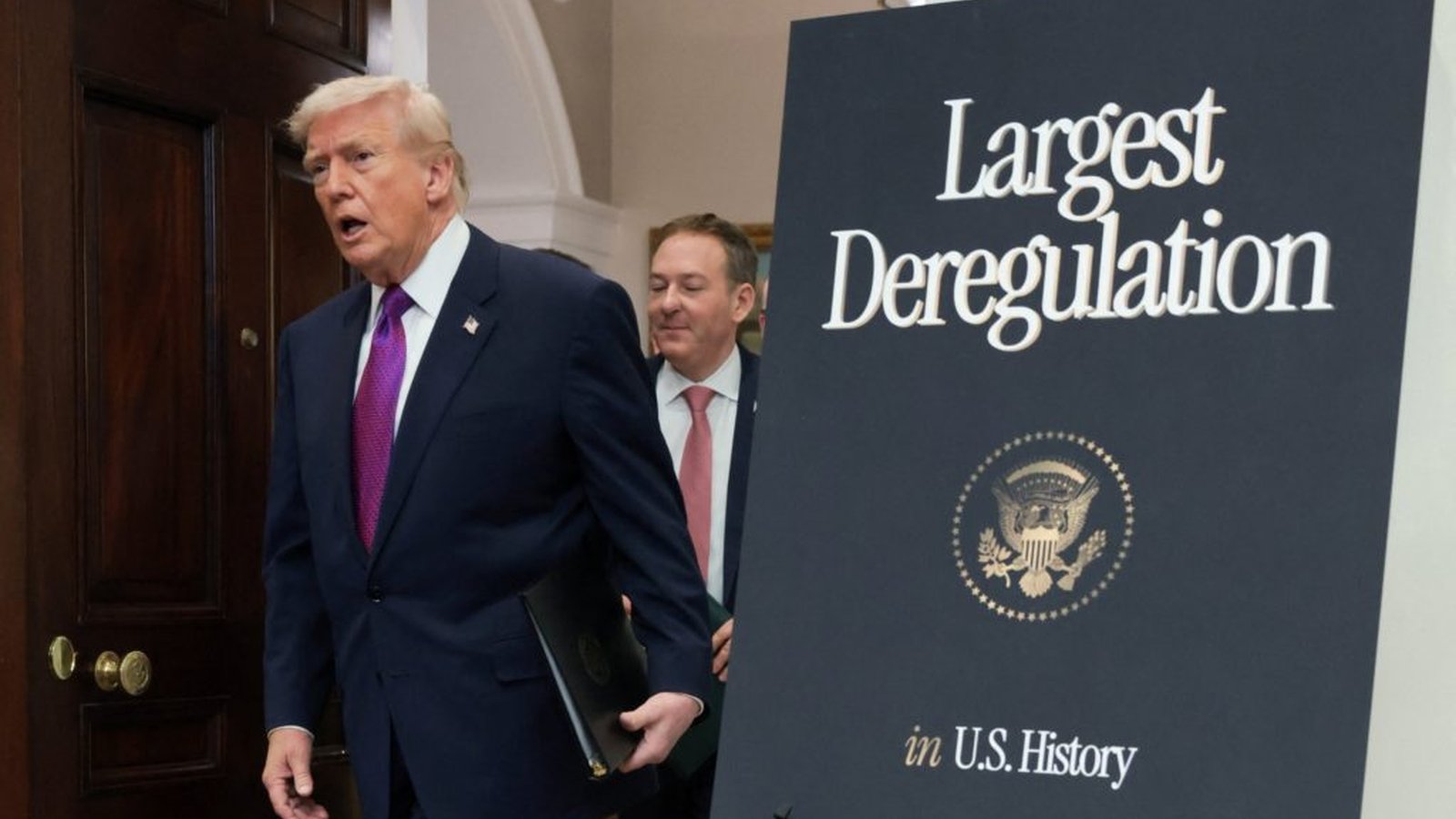
- The EPA’s action is deemed the ‘largest deregulatory action in U.S. history’ by Administrator Lee Zeldin.
- The finding was the legal basis for nearly all U.S. climate regulations under the Clean Air Act.
- Environmental groups call it the ‘biggest attack’ on federal climate authority; legal challenges are expected.
- A two-year delay to Biden-era vehicle emission rules was also proposed to reflect slower EV sales.
WASHINGTON (Azat TV) – The Trump administration on Thursday officially revoked a foundational scientific finding that has long served as the central basis for U.S. action to regulate greenhouse gas emissions and combat climate change. This move represents the president’s most aggressive effort to roll back environmental regulations to date.
The rule, finalized by the Environmental Protection Agency (EPA), rescinds a 2009 government declaration known as the ‘endangerment finding.’ This finding had determined that carbon dioxide and other greenhouse gases pose a threat to public health and welfare. The Obama administration’s endangerment finding has been the legal bedrock for nearly all climate regulations under the Clean Air Act, impacting motor vehicles, power plants, and other major pollution sources contributing to planetary warming.
Trump Administration’s Major Deregulatory Climate Action
EPA Administrator Lee Zeldin, who was appointed by President Donald Trump last year and has steered the agency toward a business-friendly, deregulatory stance, announced the completion of the rule on Thursday. Zeldin declared that the repeal of the endangerment finding “will be the largest deregulatory action in the history of America.” He has previously criticized predecessors in Democratic administrations for allegedly being “willing to bankrupt the country” in the name of tackling climate change.
This decision follows an executive order from President Trump, which directed the EPA to submit a report assessing the “legality and continuing applicability” of the endangerment finding. Conservatives and some congressional Republicans have consistently advocated for undoing what they view as overly restrictive and economically detrimental rules aimed at limiting greenhouse gases.
Legal Challenges and Environmental Backlash Expected
Legal experts anticipate immediate and significant challenges to this action. Ann Carlson, an environmental law professor at the UCLA School of Law, suggested that overturning the finding will “raise more havoc” than other environmental rollbacks by the Trump administration. The repeal effectively eliminates all greenhouse gas emissions standards for cars and trucks and could pave the way for a broader dismantling of climate regulations on stationary sources such as power plants and oil and gas facilities.
Environmental groups swiftly condemned the move, characterizing it as the single biggest attack in U.S. history against federal authority to address climate change. David Doniger, a climate expert at the Natural Resources Defense Council, stated that President Trump and Administrator Zeldin are attempting to use the repeal as a “kill shot” to invalidate nearly all existing climate regulations and prevent future administrations from proposing new rules to address global warming.
Gina McCarthy, a former EPA administrator and White House climate adviser in the Biden administration, labeled the Trump administration’s actions as reckless. McCarthy asserted that the EPA has a clear scientific and legal obligation to regulate greenhouse gases, adding that evidence supporting the endangerment finding “has only grown stronger” as the health and environmental hazards of climate change become “impossible to ignore.”
Impact on Vehicle Emissions and Future Regulations
In conjunction with the repeal, the EPA also announced plans to propose a two-year delay to a Biden-era rule restricting greenhouse gas emissions by cars and light trucks. This delay is intended to provide the agency time to develop an alternative plan that, according to the EPA, better reflects slower electric vehicle (EV) sales, promotes consumer choice, and lowers prices.
Transportation Secretary Sean Duffy, alongside Administrator Zeldin, has actively worked to scale back tailpipe emission limits for cars and trucks. Rules previously imposed under Democratic President Joe Biden were designed to incentivize U.S. automakers to produce and sell more electric vehicles. The transportation sector remains the largest source of greenhouse gas emissions in the United States. President Trump stated that the rule changes would lower the price of new cars and increase access to a wider range of gasoline vehicles for American consumers.
The Supreme Court previously ruled in a 2007 case, Massachusetts v. EPA, that planet-warming greenhouse gases are indeed air pollutants under the Clean Air Act. Since that landmark decision, courts have consistently rejected legal challenges to the endangerment finding, including a 2023 ruling by the U.S. Court of Appeals for the District of Columbia Circuit. The Trump administration’s latest action sets the stage for a significant legal battle over the scope of federal power to address environmental issues.
The revocation of the endangerment finding by the Trump administration marks a profound shift in U.S. climate policy, directly challenging established legal precedents and potentially reshaping the landscape of environmental regulation for decades to come, with immediate ramifications for industries and anticipated protracted legal battles.