
Quick Read
- President $1 Trump has threatened to invoke the Insurrection Act in Minneapolis.
- The threat follows protests over an ICE agent’s shooting of undocumented immigrant Julio Cesar Sosa-Celis and the fatal shooting of Renee Nicole Good.
- Minnesota Governor Tim Walz urged Trump to ‘turn the temperature down’ and ‘stop this campaign of retribution’.
- Homeland Security Secretary Kristi Noem defended ICE actions and confirmed discussions with Trump about the Act, asserting his constitutional authority.
- The Insurrection Act allows the President to deploy military forces domestically to suppress civil disorder; its last use was in 1992.
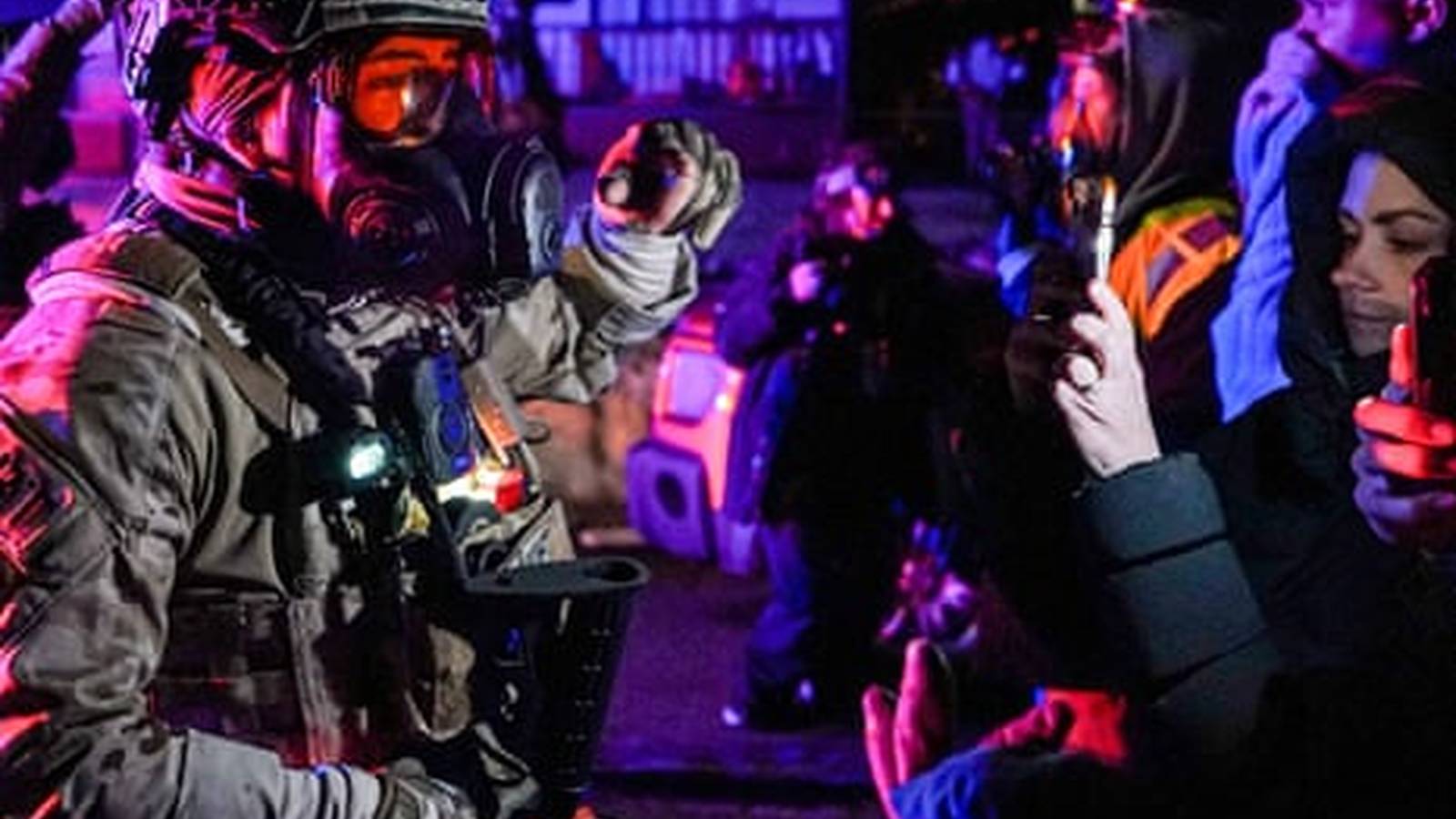
In a move that has sent ripples through the American political landscape, President $1 Trump has threatened to invoke the centuries-old Insurrection Act in Minneapolis, Minnesota. This declaration comes amidst escalating tensions and protests in the city, sparked by a federal immigration agent’s shooting of an undocumented immigrant and, a week prior, the fatal shooting of Renee Nicole Good. The threat has set the stage for a dramatic confrontation between federal authority and local governance, drawing sharp criticism from state and city officials.
The current unrest in Minneapolis stems from two critical incidents. On Wednesday, an agent from Immigration and Customs Enforcement (ICE) shot Julio Cesar Sosa-Celis, an undocumented immigrant from Venezuela, in the leg during an enforcement operation. Officials from the Department of Homeland Security (DHS) claim Sosa-Celis, along with two other undocumented individuals, assaulted the agent with a ‘snow shovel and broom handle,’ prompting the agent to fire a ‘defensive shot.’ All three immigrants were subsequently arrested. This incident, coupled with the fatal shooting of Renee Nicole Good just a week earlier, ignited widespread protests across the city, bringing thousands onto the streets to voice their outrage against federal immigration enforcement tactics.
Local Leaders Urge De-escalation Amidst Federal Pressure
In the wake of these events, Minnesota Governor Tim Walz has made an impassioned plea to Trump, urging him to ‘turn the temperature down’ and ‘stop this campaign of retribution.’ Speaking to The Guardian, Walz emphasized the need for calm, asking demonstrators to ‘speak out loudly, urgently, but also peacefully,’ while cautioning against actions that could ‘fan the flames of chaos.’ His message underscored a palpable concern that Trump’s rhetoric was exacerbating an already volatile situation.
Minneapolis Mayor Jacob Frey echoed these sentiments, expressing strong disapproval of ICE’s conduct. ‘I’ve seen conduct from ICE that is disgusting and intolerable,’ Frey stated, yet he also urged protesters to disperse. ‘We cannot counter Donald Trump’s chaos with our own brand of chaos… Anyone who is taking the bait tonight, stop. You are not helping the undocumented immigrants in our city.’ Minneapolis Police Chief Brian O’Hara similarly characterized some protest activities as ‘unlawful behavior,’ stressing the importance of peaceful assembly.
Homeland Security Defends Agents, Calls for Local Cooperation
In stark contrast to the local appeals for de-escalation, Homeland Security Secretary Kristi Noem staunchly defended the actions of federal immigration agents. Speaking outside the White House, Noem asserted that ‘every single action that our ICE officers take is according to the law and following protocols that we have used for years.’ She cited a history of legal validation for these procedures, maintaining that agents were ‘doing everything correctly.’
Noem also confirmed that she had discussed the potential invocation of the Insurrection Act with Donald Trump. She affirmed that using the act ‘certainly is within the president’s constitutional authority to use that if he thinks he needs to keep people safe.’ Furthermore, Noem criticized Minneapolis Mayor Frey, insisting that he ‘needs to start working with our law enforcement officers’ to effectively address the unrest. ‘We could go get these criminals off the streets with their partnership, and do it in a safe manner with less agents,’ she told Fox News, implying that the mayor’s stance was contributing to the ongoing violence.
The Insurrection Act: A Seldom-Used Presidential Power
Trump’s threat to invoke the Insurrection Act is not new, but its specific application to the current situation in Minneapolis highlights a recurring theme in his political strategy. The Insurrection Act, a set of federal laws dating back to 1807, grants the President the authority to deploy U.S. military forces domestically to suppress civil disorder, insurrection, or rebellion. This power can be invoked when a state is unable to maintain order, or when federal laws are being obstructed.
In a post on Truth Social, Trump articulated his reasoning, stating he would implement the act if ‘the corrupt politicians of Minnesota don’t obey the law and stop the professional agitators and insurrectionists from attacking the Patriots of I.C.E., who are only trying to do their job.’ He vowed that employing the act would ‘quickly put an end to the travesty that is taking place in that once great State.’
A Pattern of Threats: From Portland to George Floyd Protests
This is not the first time Donald Trump has wielded the threat of the Insurrection Act. He previously threatened its use in Portland, Oregon, in October 2025, during protests there. In June 2025, he also considered invoking it when California Governor Gavin Newsom sued to block the deployment of military forces alongside federal immigration enforcement in Los Angeles, labeling it an ‘illegal deployment.’
Perhaps most notably, Trump threatened to invoke the act in 2020 during the widespread protests that erupted after the killing of George Floyd by a Minneapolis police officer. While many governors agreed to send National Guard troops to Washington D.C. at his request, Trump ultimately did not invoke the federal act then. During his 2024 campaign, he also promised to deploy the National Guard to assist in achieving his immigration enforcement objectives. The most recent actual invocation of the Insurrection Act was in 1992, when President George H.W. Bush used it to respond to the deadly riots in Los Angeles following the acquittal of police officers in the Rodney King beating case.
The recurring nature of Trump’s threats to invoke the Insurrection Act underscores a contentious view of federal power, particularly in times of civil unrest and immigration disputes. While the Act provides a potent tool for presidential intervention, its infrequent historical use highlights the gravity of such a decision and the potential for severe federal-state friction. The current standoff in Minneapolis serves as a critical test of how far a president might push the boundaries of executive authority in the face of local dissent and how local leaders will navigate the delicate balance between maintaining public order and protecting civil liberties.