
Quick Read
- President Trump has set a Tuesday night deadline for Iran to agree to a ceasefire and reopen the Strait of Hormuz.
- Mediators from Egypt, Pakistan, and Turkey are proposing a 45-day ceasefire, but both Iran and the U.S. have shown reluctance.
- The conflict has intensified with increased civilian casualties and expanded to the Gulf region, impacting global energy markets.
WASHINGTON (Azat TV) – U.S. President Donald Trump has issued a stark warning to Iran, threatening to unleash widespread bombing raids on the country’s critical infrastructure if Tehran does not agree to a ceasefire and reopen the vital Strait of Hormuz by Tuesday night. The ultimatum, delivered via social media and at a White House press conference, marks an intensification of the escalating conflict that has already claimed thousands of lives and destabilized global energy markets.
Trump’s Ultimatum on Strait of Hormuz
President Trump set a firm deadline for Tuesday evening, warning that if Iran did not agree to a deal that would allow traffic to resume through the Strait of Hormuz, the U.S. would target power plants and bridges. In a post on his Truth Social platform, Trump stated, “Tuesday will be Power Plant Day, and Bridge Day, all wrapped up in one, in Iran. There will be nothing like it!!!” A White House official later specified the deadline as 8:00 P.M. Eastern Time on Tuesday, which corresponds to midnight GMT on Wednesday, or 3:30 A.M. local time in Iran on Wednesday. The U.S. President also reiterated his demand for Iran to forswear nuclear weapons as part of any potential agreement.
Mediators Push for Ceasefire Amidst Rejection
Mediators from Egypt, Pakistan, and Turkey have put forward a proposal for a 45-day ceasefire, aiming to create a window for broader negotiations between the U.S. and Iran. However, both Iran and the U.S. have expressed reluctance to fully embrace the plan. Iran has rejected the proposal, with its foreign ministry spokesman Esmail Baghaei stating that a ceasefire would allow enemies to prepare for further conflict. He added that Iran’s demands, communicated through intermediaries, were based on its interests and should not be seen as a sign of compromise but rather as a reflection of confidence in defending its positions. A senior Iranian official told Reuters that Iran would not reopen the Strait as part of a temporary ceasefire and would not accept ultimatums or pressure. Meanwhile, a White House official indicated that the ceasefire proposal was “one of many ideas” and that President Trump had not yet officially approved it, with “Operation Epic Fury” continuing.
Escalating Conflict and Civilian Casualties
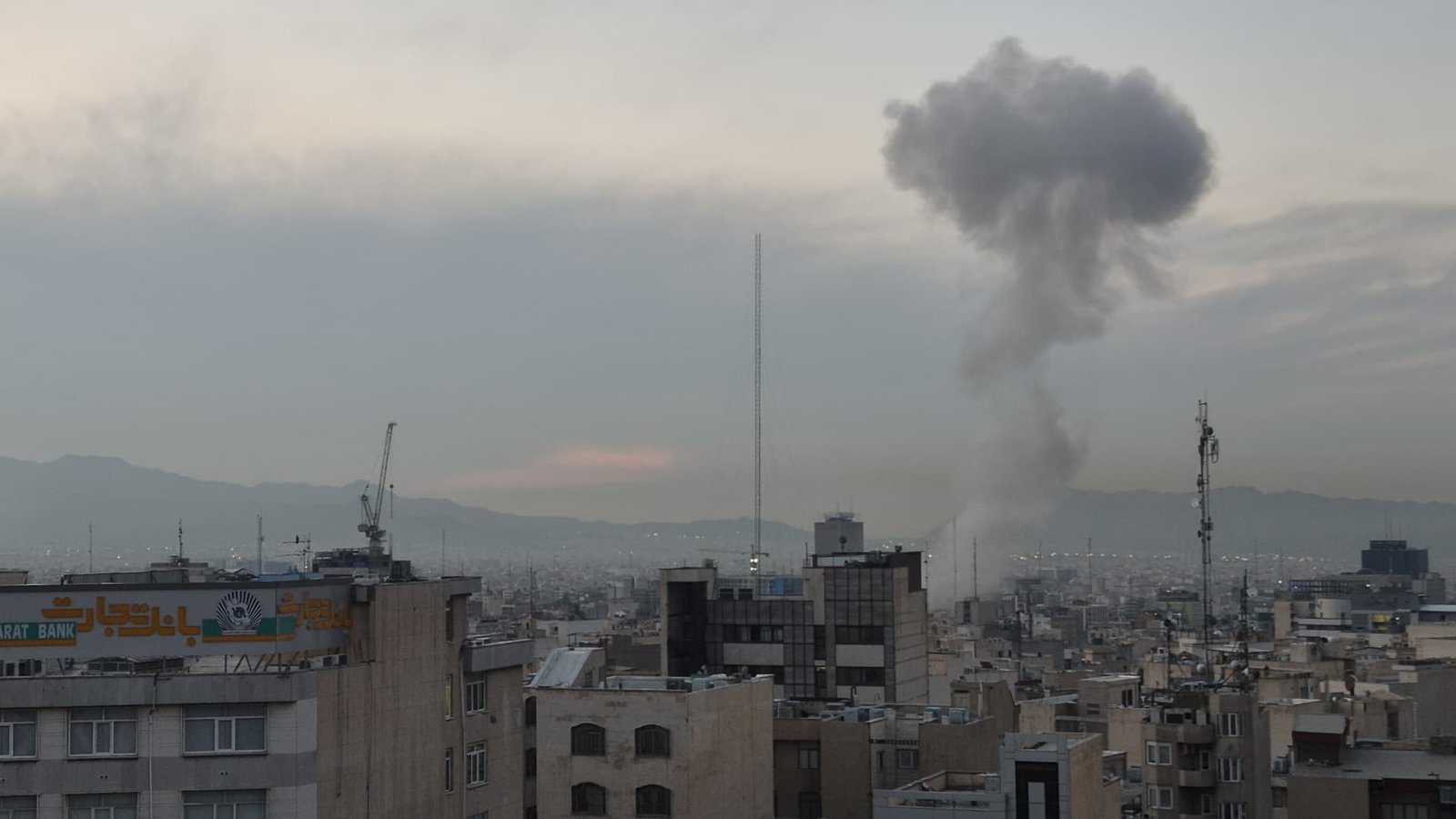
The conflict, which began on February 28, has seen a significant expansion of the war zone and a rise in civilian casualties. Reports from Iran indicate that more than 25 people were killed in attacks between Sunday and Monday, including an airstrike in the Eslamsar area near Tehran that killed at least 15. The Sharif University of Technology in Tehran was also reportedly hit, disrupting online services. In Tehran’s Bahrestan county, four girls and two boys under the age of 10 were killed in a residential area attack. The Revolutionary Guards’ intelligence chief, Maj. Gen. Majid Khademi, was also reported killed in an attack, with Israel claiming responsibility for targeting senior Guard officials. The conflict has also extended to Gulf countries, with an Iranian drone attack damaging a telecommunications building in Fujairah, United Arab Emirates, and missile interception incidents in Abu Dhabi.
U.S. Airman Rescue Operation
Amidst the ongoing hostilities, President Trump detailed a recent U.S. operation to rescue a downed American airman, identified as “Dude 44 Bravo,” who had evaded Iranian forces in mountainous terrain. Trump described the recovery as akin to finding a needle in a haystack, highlighting the efforts of intelligence agencies, including the CIA’s “deception campaign” to mislead Iranian forces about the airman’s location. CIA Director John Ratcliffe confirmed the agency’s role in locating the pilot, who was recovered on Sunday morning. General Dan Caine, chairman of the Joint Chiefs of Staff, praised the airman’s commitment to survival as crucial to the success of the recovery efforts.
Broader Implications and Market Reaction
The closure of the Strait of Hormuz, a critical route for approximately 20 percent of the world’s oil and gas supply, has had a significant impact on international markets. Brent crude futures saw a slight decrease as investors assessed the prospects of a ceasefire. However, analysts warn that any settlement must guarantee access through Hormuz and address Iran’s nuclear program and missile capabilities to prevent a more volatile Middle East. The ongoing war, now in its sixth week, has resulted in thousands of deaths across the region, including in Israel, Lebanon, and Iraq, and has caused significant damage to economies worldwide.
The escalating rhetoric and stringent deadlines set by President Trump, coupled with Iran’s firm stance and the mediators’ challenging task of bridging the divide, underscore the precariousness of the current situation, with a high risk of further military escalation should a diplomatic breakthrough not occur by Tuesday night.