
Quick Read
- Donald Trump announced Kim Sajet’s removal as National Portrait Gallery director on May 30.
- He cited her support for diversity, equity, and inclusion as inappropriate for the role.
- Sajet, the gallery’s first female director, held the position since 2013.
- The National Portrait Gallery showcases key figures in U.S. history, including presidential portraits.
- A new director will be announced soon, according to Trump.
Trump Announces Kim Sajet’s Removal
$1 Donald Trump announced on May 30 that Kim Sajet has been removed from her role as director of the Smithsonian’s National Portrait Gallery. The announcement, made through a Truth Social post, cited Sajet’s focus on diversity, equity, and inclusion (DEI) as “highly partisan” and unsuitable for the position. Trump stated, “Upon the request and recommendation of many people, I am hereby terminating the employment of Kim Sajet as Director of the National Portrait Gallery.”
Kim Sajet’s Legacy at the National Portrait Gallery
Kim Sajet, appointed as director in 2013 during the Obama administration, was the first woman to lead the National Portrait Gallery since its establishment in 1962. Born in Nigeria and raised in Australia, Sajet also holds Dutch citizenship and advanced degrees in art history, business, and liberal studies. Before her tenure at the Smithsonian, she served as president and CEO of the Historical Society of Pennsylvania and held key roles at the Philadelphia Museum of Art and the Pennsylvania Academy of the Fine Arts.
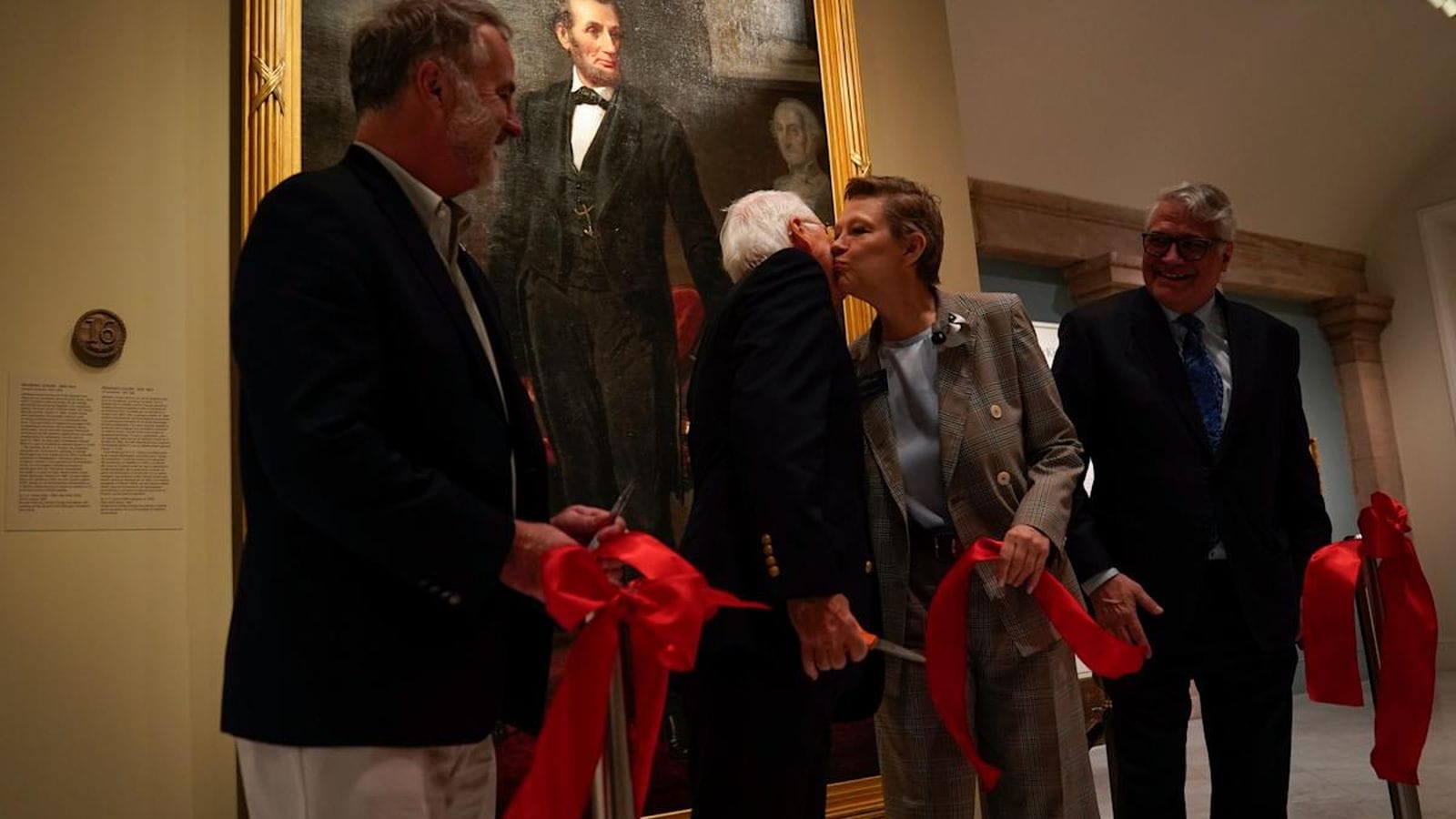
Under Sajet’s leadership, the gallery expanded its programming and exhibitions, including the long-term loan of a historic life-size painting of Abraham Lincoln. The gallery, which houses around 26,000 items and attracts approximately 2 million visitors annually, has become a significant cultural institution in the United States.
Controversy Over Diversity and Inclusion
Trump’s decision to remove Sajet has drawn attention to the ongoing debate over diversity, equity, and inclusion in cultural institutions. In his post, Trump described Sajet as a “highly partisan person” and criticized her support for DEI initiatives. This move reflects Trump’s broader stance against what he perceives as ideological influences in public institutions.
Sajet had previously emphasized the gallery’s commitment to neutrality in interpreting historical figures. In a 2024 interview with The Guardian, she stated, “We try very hard to be even-handed when we talk about people… Everyone has an opinion about American presidents, good, bad, and indifferent. We hear it all but generally I think we’ve done pretty well.”
Implications for the National Portrait Gallery
The National Portrait Gallery, established by Congress in 1962, aims to showcase individuals who have significantly contributed to U.S. history and culture. It includes a renowned collection of presidential portraits, with a tradition of displaying official portraits after a president leaves office. Sajet had noted that Trump’s official portrait, completed in recent years, would not be displayed until 2029, in line with this tradition.
The gallery’s role in shaping public understanding of historical and contemporary figures underscores the impact of its leadership. With Sajet’s departure, the direction of future exhibitions and programming remains uncertain. Trump has indicated that a new director will be announced shortly, though no details have been provided as of yet.
Historical Context of Leadership Transitions
Leadership changes in major cultural institutions like the National Portrait Gallery often reflect broader political and social dynamics. Sajet’s appointment in 2013 marked a milestone as she became the gallery’s first female director. Her tenure saw significant developments, including efforts to modernize the gallery’s approach and broaden its appeal to diverse audiences.
Trump’s decision to remove Sajet highlights the intersection of politics and cultural management, particularly in an era of heightened polarization. As the gallery prepares for new leadership, its role as a custodian of American heritage remains a focal point of public interest.
The removal of Kim Sajet from the National Portrait Gallery underscores the complexities of leadership in cultural institutions, where historical narratives and contemporary values often collide. The announcement of her successor will undoubtedly shape the gallery’s future direction and its place in the broader cultural landscape.
Source: Yahoo News, Timesnownews