
Quick Read
- Eric Adams withdrew from the NYC mayoral race following legal troubles and political pressure.
- Donald Trump and business leaders allegedly pushed Adams and Curtis Sliwa to exit, favoring Andrew Cuomo’s independent run.
- Zohran Mamdani, a Democratic Socialist, leads polls after defeating Cuomo in the primary.
- Mamdani’s platform centers on affordability: rent freeze, free childcare, and public services.
- National political figures, including Trump and Netanyahu, have intervened and criticized Mamdani.
Eric Adams Exits, Unleashing a Political Earthquake
New York City’s 2025 mayoral race was already a whirlwind—full of outsized personalities and big-money interests. But the moment Mayor Eric Adams announced his withdrawal, the contest was thrown into uncharted territory. Adams, once considered an establishment anchor, stepped aside after months of speculation and mounting legal troubles, leaving the city’s Democratic base and the wider electorate in a state of uncertainty.
The timing was no accident. As Democracy Now! and Bloomberg reported, pressure had been mounting for Adams and Republican Curtis Sliwa to clear the field. The pressure came from none other than President Donald Trump and a cadre of powerful business leaders. Their goal? To consolidate the anti-progressive vote and pave the way for former Governor Andrew Cuomo’s independent run, in hopes of blocking the surging Democratic Socialist, Zohran Mamdani.
Trump’s Influence and the Battle for City Hall
The shadow of Trump looms large over the city’s politics. Adams’s indictment on federal bribery charges last year—a scheme allegedly involving illicit foreign donations and favors to Turkey—was, according to prosecutors, only the tip of the iceberg. When Trump’s Justice Department dismissed the charges earlier in 2025, many saw it as a calculated move: a political trade-off for Adams’s cooperation with federal immigration crackdowns. Rumors even swirled that Trump offered Adams a plum diplomatic post if he agreed to step aside.
But the real story is what happened next. With Adams out, the contest rapidly narrowed. Cuomo, running as an independent, has trailed Mamdani in polls since the Democratic primary, but the field now feels more open—and more combustible—than ever. Trump’s phone calls to Cuomo, his public disparagement of Mamdani, and wealthy donors’ attempts to push Sliwa out of the race all point to a high-stakes effort to keep City Hall in the hands of the old guard.
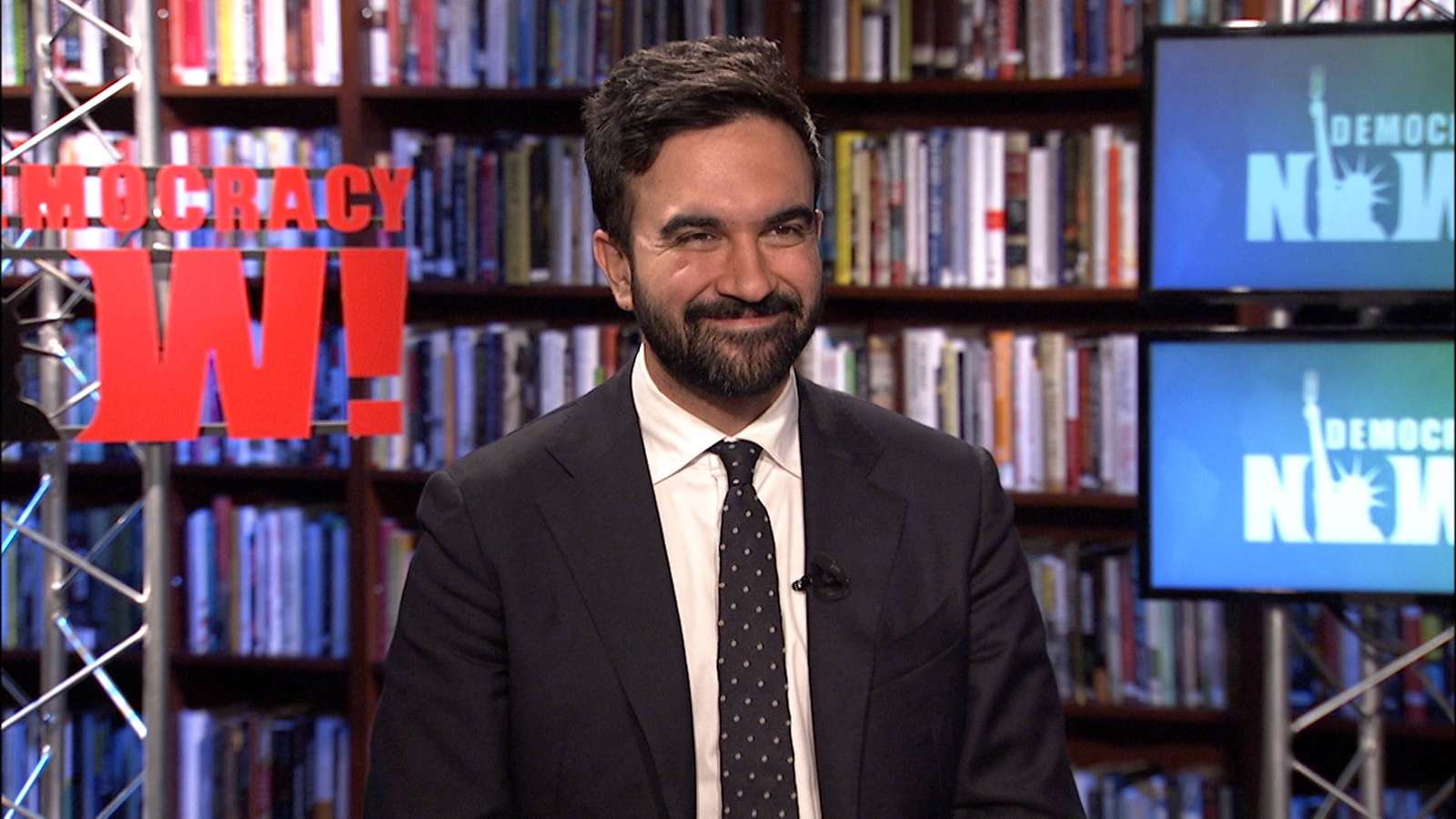
In an interview just hours after Adams’s exit, Mamdani summed up the moment: “It is an encapsulation of so much of what has characterized Eric Adams’s mayoralty—decisions at the behest of Donald Trump and his billionaire donors, at the expense of working-class New Yorkers.”
Mamdani’s Platform: Affordability, Equity, and Resistance
Zohran Mamdani, the son of Ugandan academic Mahmood Mamdani and Indian-American filmmaker Mira Nair, is on the cusp of making history as New York’s first Muslim—and first South Asian—mayor. His victory in the Democratic primary, where he bested Cuomo by 13 points, was seen as a seismic shift in city politics. But what is it about Mamdani’s campaign that has both energized the city’s working class and triggered such fierce resistance from entrenched interests?
The answer lies in the details of his platform. Mamdani’s campaign is built around sweeping affordability measures: a rent freeze for more than two million tenants, universal free child care, free buses, and the creation of city-owned grocery stores. These are not pie-in-the-sky promises; Mamdani points to successful precedents in places like New Mexico and New York’s own universal pre-K program. The numbers, he insists, add up: a modest tax increase on the wealthiest 1% and higher corporate tax rates, matching those in neighboring New Jersey, would generate the $9 billion needed to fund these programs.
But perhaps more than any single policy, it’s Mamdani’s vision for a city that serves all its residents—not just the wealthy or the well-connected—that’s driving his support. He’s built an unprecedented coalition, drawing in youth, South Asian and Muslim communities, and even winning endorsements from progressive Jewish organizations like Bend the Arc: Jewish Action.
Cuomo’s Comeback and Sliwa’s Stand
Andrew Cuomo, once a dominant force in New York politics, is attempting a comeback on an independent ticket. But even as he tries to court the city’s moderate and working-class voters—many of whom still associate his name with his father’s legacy—polls show Mamdani with a clear lead. The Republican, Curtis Sliwa, has refused to bow to pressure from wealthy donors to exit, insisting that he represents a different kind of challenge to Mamdani’s agenda.
Yet, as Mamdani points out, the real battle is not between personalities, but between competing visions of what the city should be. “We’re not focused on them,” Mamdani told Democracy Now!. “We’re focused on New Yorkers.”
Trump, National Politics, and the Stakes for New York
National political currents swirl through the city’s local contest. Trump’s vocal opposition to Mamdani—calling him a “communist” and threatening to “Trump-proof” the city—has only fueled Mamdani’s base. The candidate’s willingness to challenge the status quo, whether on housing, social services, or New York’s stance on international issues like the war in Gaza, has made him a lightning rod for both praise and criticism.
Mamdani’s agenda extends beyond city limits. He speaks of “Trump-proofing” New York by hiring more legal staff to protect vulnerable residents from federal overreach and by standing up to policies that would, in his words, “throw millions of New Yorkers off healthcare and cut vital benefits.” His critics, from Trump to Netanyahu to some Democratic leaders, have tried to frame him as radical and untested. But for many New Yorkers, that’s exactly the point: after years of politics as usual, a radical break may be what the city needs.
Coalition-Building and Community Voices
One of the most remarkable aspects of Mamdani’s campaign has been its grassroots energy. He’s mobilized not just the city’s youth and communities of color, but also long-neglected neighborhoods and first-time voters. The coalition he’s built is as diverse as New York itself, and he’s quick to emphasize that his identity—as a Muslim, South Asian, African, and New Yorker—shapes his politics, but doesn’t define its limits. “We wanted this race to look like the entire city,” Mamdani says. “Too often, politics is focused on an ever-narrowing group. We’re reaching out to everyone.”
Endorsements from groups like Bend the Arc highlight the campaign’s broad appeal, rooted not just in policy but in shared values of justice, dignity, and community.
The Road Ahead: A City at a Crossroads
As the race enters its final stretch, the stakes could hardly be higher. National media, from Reuters to Bloomberg, are watching closely. For New Yorkers, the choice is stark: a return to establishment politics, or a leap of faith into a new kind of leadership. The city faces twin crises—an affordability crunch and a creeping sense of authoritarianism from Washington. The next mayor will have to confront both head-on.
In the end, the 2025 New York City mayoral election is more than just a contest for City Hall. It’s a referendum on whether America’s largest city can chart a new course—one that resists outside interference, prioritizes its people over its power brokers, and redefines what leadership looks like in an age of uncertainty. Mamdani’s rise signals a profound hunger for change, and his ability to deliver will shape not just New York’s future, but the nation’s as well.