
Quick Read
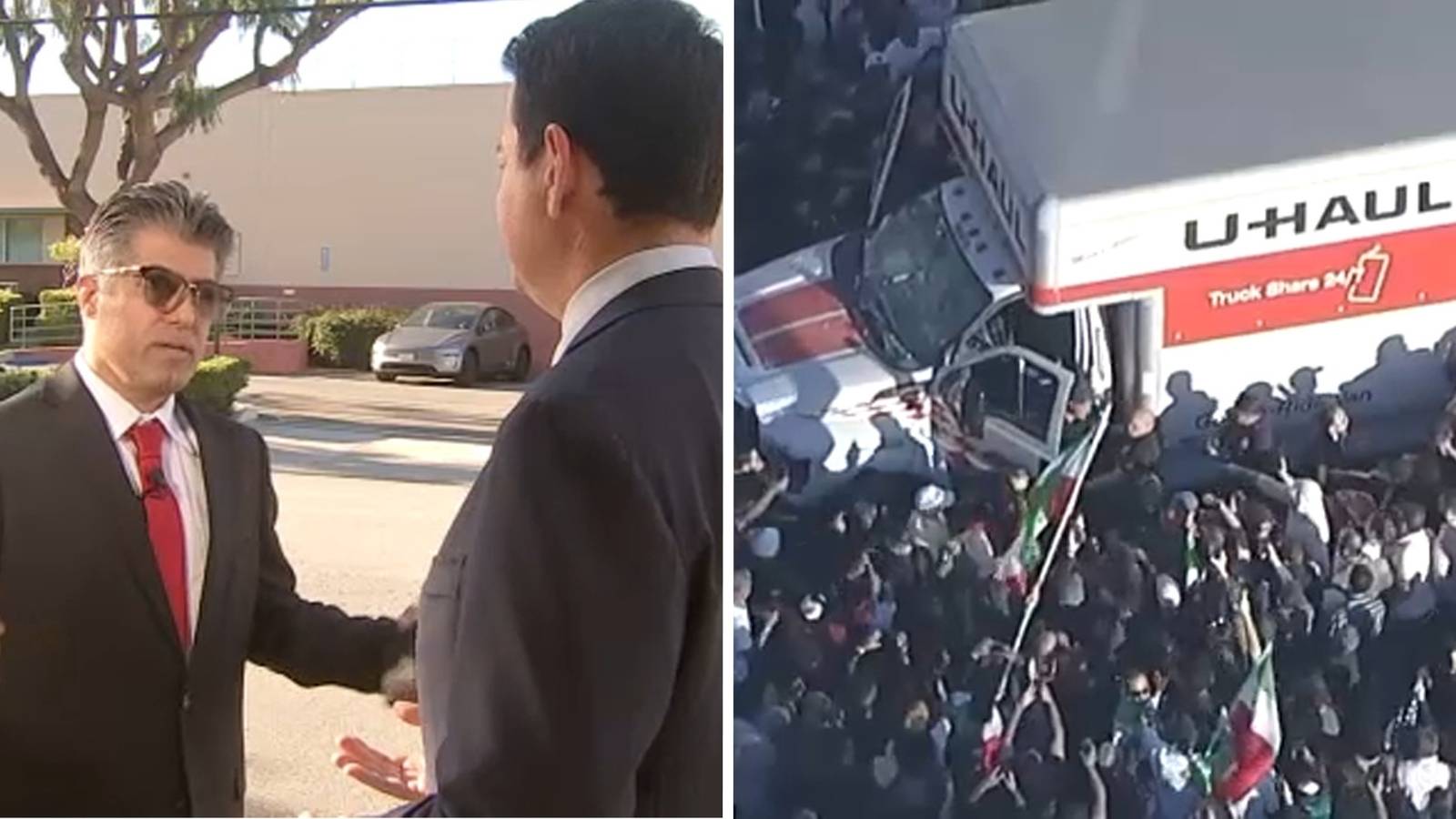
- A U-Haul truck drove into an anti-Iranian regime rally in Westwood, Los Angeles, on a recent Sunday.
- The driver, Calor Madanescht, was arrested for reckless driving but later released; he claimed his actions were a misunderstanding.
- The truck displayed signs referencing the 1953 U.S.-backed coup and challenging the current Iranian regime.
- The incident occurred amidst widespread, escalating protests in Iran against its authoritarian government, sparked by economic woes.
- The Iranian-American community in Southern California, the largest outside Iran, is deeply affected, watching events unfold with a mix of hope and dread.
A U-Haul truck plowed into an anti-Iranian regime rally in Westwood, Los Angeles, on a recent Sunday, injecting a new layer of tension and dread into an already anxious Iranian-American community. The incident, which saw driver Calor Madanescht arrested for reckless driving, occurred as thousands gathered in solidarity with ongoing, widespread protests in Iran. While Madanescht claimed his actions were a misunderstanding and intended to amplify voices from within Iran, protesters and many community members interpreted the event as a deliberate and dangerous act, further highlighting the volatile intersection of diaspora activism and the deep emotional connection to their homeland’s struggles.
The Incident in Westwood
The anti-Iranian regime rally in Westwood, a vibrant hub for Southern California’s large Iranian diaspora, was a scene of passionate solidarity when the U-Haul truck, emblazoned with political messages, drove into the crowd. The truck bore signs that read: “No Shah. No Regime. USA: Don’t Repeat 1953. No Mullah.” These messages appeared to reference the 1953 U.S.-backed coup that cemented the power of Shah Mohammad Reza Pahlavi and is widely seen as a precursor to the 1979 Islamic Revolution.
Eyewitness accounts and video footage captured protesters attempting to physically stop the vehicle and pull the driver, Calor Madanescht, 48, from the truck. Police swiftly intervened, arresting Madanescht on suspicion of reckless driving, a misdemeanor. He was subsequently released the following Monday afternoon, according to L.A. County sheriff’s inmate records. Despite the alarming nature of the incident, police reported no serious injuries among the demonstrators.
In the aftermath, Madanescht told Eyewitness News that his actions were a “big misunderstanding” and that he “had no intention to hurt anybody.” He asserted that he aimed “to deliver the Iranian voices from inside Iran. Not what American people see on the TVs.” He even claimed that “the majority of the demonstrators were supporting me,” a statement that starkly contrasted with video evidence and protester reactions. Sean Zarrabi, a protester, vehemently criticized Madanescht’s actions, equating driving into a crowd with a terrorist act and emphasizing that peaceful protests should prioritize dialogue over threats to safety. First Assistant U.S. Attorney Bill Essayli stated on X that the FBI was working with LAPD to determine the motive, though LAPD Chief Jim McDonnell later indicated no apparent “nexus to terrorism” and no expected federal charges.
A Community on Edge: Echoes of Iran in Southern California
The U-Haul incident sent ripples of fear and anger through Southern California’s Iranian-American community, which is estimated to be the largest outside Iran, with approximately 141,000 residents in L.A. County alone. This community has been intensely following the escalating crisis in Iran, where massive crowds have been demanding the overthrow of the authoritarian government. For many, the incident in Westwood was a stark reminder of the volatility and high stakes involved in their advocacy.
Individuals like Tabby Refael, a West Los Angeles-based writer and Iranian refugee, have been living with a mix of “electrifying hope” and “visceral dread.” Refael has desperately tried to contact loved ones in Tehran, where Iranian authorities imposed a near-total internet blackout alongside failing landline connections. Her messages, once answered, now go unread, fueling fears of a “wholesale massacre occurring in the literal dark” amidst a deadly government crackdown. Refael’s family fled Iran due to religious persecution after the 1979 Islamic Revolution, and she feels a profound “sense of guilt” being physically distant from the crisis while living with abundant resources.
Roozbeh Farahanipour, CEO of the West L.A. Chamber of Commerce and a witness to the U-Haul incident, articulated the mixed opinions within the diaspora regarding Iran’s future, including the potential role of exiled Crown Prince Reza Pahlavi. Farahanipour, who was jailed and beaten in Iran for his activism, stressed the immediate unity against the current regime, stating, “At the moment, I believe everybody needs to focus on overthrowing this regime.”
Sam Yebri, an attorney and former L.A. City Council candidate, echoed the sentiment of urgency, calling the current moment “the biggest moment in world history since the fall of the Berlin Wall.” Like many, Yebri, a refugee whose family fled when he was an infant, hopes for the overthrow of “the brutal mullahs who have their boots on their throats.” Alex Mohajer, Vice President of the Iranian American Democrats of California, also feels the profound impact, describing the country’s people as warm and hospitable, but living under oppressive rule, and expresses a deep longing to ensure his loved ones’ safety.
The Unfolding Crisis in Iran
The protests in Iran, which began on December 28, were initially sparked by severe economic woes, including a catastrophic crash of the national currency, the rial. They have since escalated dramatically, spreading to all 31 of the country’s provinces and evolving into a direct challenge against the rule of 86-year-old Supreme Leader Ayatollah Ali Khamenei. The government’s response has been brutal, with human rights groups reporting a deadly crackdown. Figures from the United States-based Human Rights Activists News Agency indicate at least 3,000 individuals killed, over 18,000 arrested, and 153 members of security forces also killed during the unrest, though these numbers remain unverified by independent sources.
The international community has watched with growing concern. U.S. President Trump, for instance, has publicly supported the “Iranian Patriots,” urging them to “KEEP PROTESTING – TAKE OVER YOUR INSTITUTIONS!!!” He has also vowed to impose 25% tariffs on countries doing business with Iran, effective immediately, and canceled meetings with Iranian officials until the killing of protesters ceases. These statements underscore the geopolitical ramifications of the internal unrest, placing additional pressure on the Iranian regime.
Navigating Dissent and Division
The U-Haul incident, despite causing no serious physical injuries, served as a potent symbol of the heightened emotions and the complexities inherent in diaspora activism. While the Iranian-American community largely stands united against the current regime, there are nuanced disagreements about the path forward and the specific form a post-regime Iran might take. The driver’s claim of intending to convey an authentic “Iranian voice” highlights the internal debates and varying perspectives that exist even within a unified opposition movement.
The incident underscores the deeply personal and often fraught nature of political expression for those connected to an oppressive regime, where the lines between protest, advocacy, and perceived threat can become dangerously blurred, even on foreign soil.