
Quick Read
- Four years after Russia’s full-scale invasion, Ukraine has undergone a profound national transformation, shedding illusions and forging a resilient identity.
- Ukrainian experts note a shift from an ‘inferiority complex’ to ‘fully realized agency,’ with a new understanding that freedom must be fought for.
- The nation’s institutions are evolving from electoral democracy to a ‘securitized wartime democracy,’ recognizing their crucial role in state survival.
- Perceptions of international partners have shifted, with some like the U.S. disappointing, while Baltic, Nordic states, Germany, and Japan have emerged as leading supporters.
- Ukraine’s experience has legitimized its nationhood globally and acted as a catalyst for Europe’s geopolitical awakening.
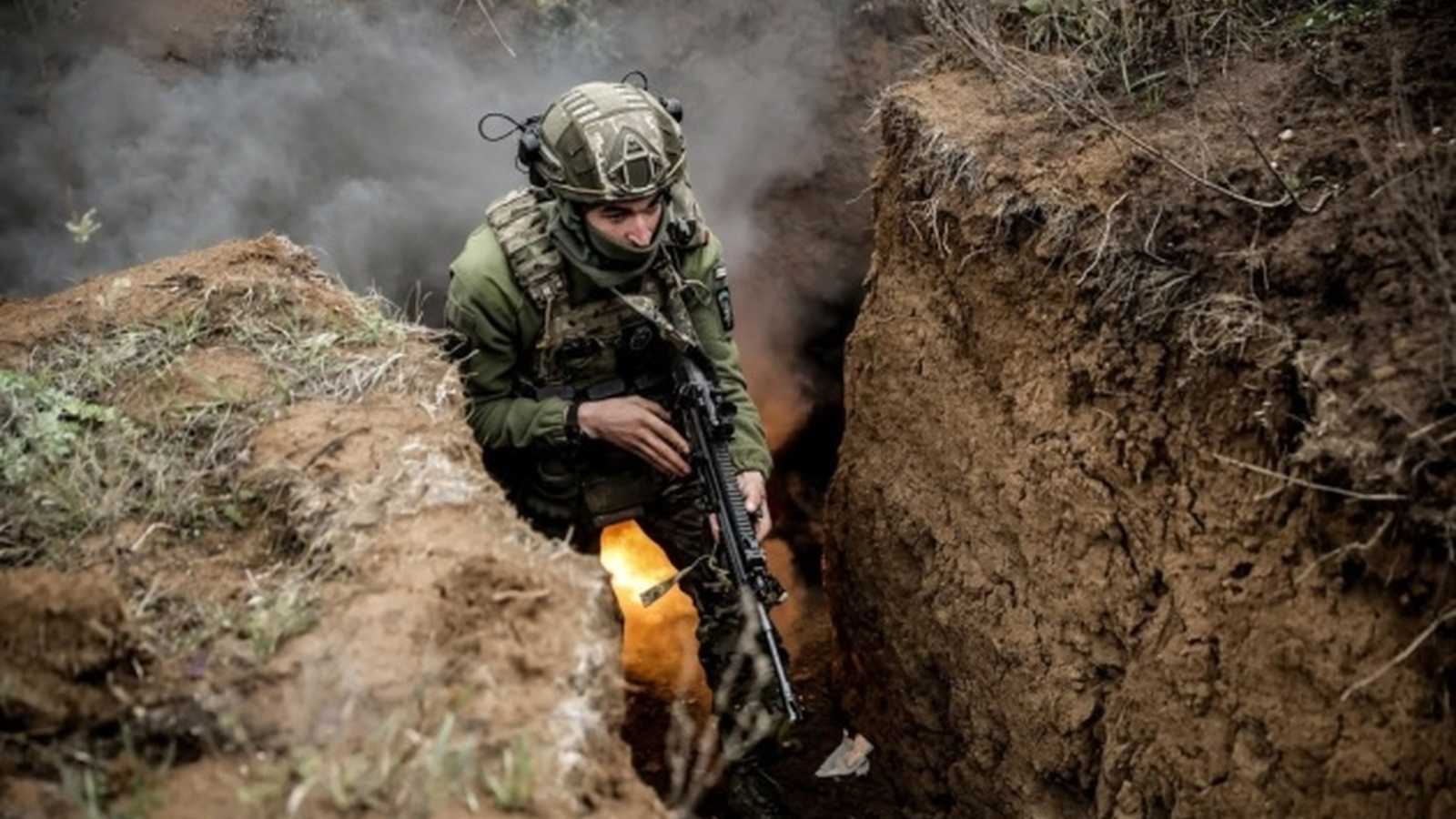
KYIV (Azat TV) – Four years have passed since Russia launched its full-scale invasion of Ukraine on February 24, 2022, marking a period of extraordinary national transformation and relentless resistance. As Ukraine reflects on this arduous epoch, experts highlight a profound shift in the nation’s self-awareness, shedding long-held illusions about external salvation and forging a more resolute, self-reliant identity while navigating the complex realities of international partnerships.
Ukraine’s Profound Self-Discovery Amidst Conflict
The past four years have catalyzed a fundamental re-evaluation of Ukraine’s national identity, according to leading Ukrainian experts. Historian Yaroslav Hrytsak observes that the nation has transitioned from merely existing ‘in ourselves’ to existing ‘for ourselves,’ dispelling internal doubts about its identity that lingered before February 2022. This shift represents a move from a state of potential to one of fully realized agency, despite the immense pain and irreparable losses endured during the conflict, which has now spanned twelve years in total.
Diplomat Volodymyr Ohryzko underscores that Ukraine has outgrown ‘childish trousers’ of naive expectations, understanding that freedom and liberty are not granted but must be fought for. This realization, he notes, is a conclusion for decades to come, solidifying Ukraine’s understanding of its values and its preparedness to defend them ‘at the cost of our last strength.’ The experience has led Ukrainians to rediscover their own country, cherishing its beauty and simple comforts in the face of potential loss, a sentiment expressed by many, including those returning from abroad.
Institutional Maturation and Wartime Democracy
Political scientist Oleh Saakyan points to a significant institutional maturation within Ukraine, evolving from a pre-war electoral democracy to a war-hardened system where institutions are vital instruments of survival rather than mere procedural ornaments. While society has grown ‘disillusioned but sober-minded,’ the state has recognized a fundamental truth: without robust institutions, there is no state. Ukraine is now grappling with the challenge of transforming this securitized wartime democracy into a resilient, institutionalized system capable of functioning effectively in peacetime.
This period has also definitively legitimized the Ukrainian nation in the eyes of the world, according to political scientist Ihor Reiterovych. He argues that the full-scale war forged a ‘true Ukrainian nation,’ proven through action, demonstrating that principles like freedom, dignity, justice, and democracy carry real weight and that people are prepared to defend them. This has dispelled earlier skeptical Western assumptions about Ukraine’s capacity to endure, establishing it as a freedom-loving nation committed to its land and its right to self-determination.
Shifting Sands of International Partnership
The past four years have brought a stark realization about the pragmatic nature of global politics, leading Ukraine to shed its ‘rose-colored glasses,’ as diplomat Vadym Tryukhan explains. Ukraine now understands that it does not have permanent allies, but a limited circle of partners whose support is often constrained by domestic politics and national interests. This has necessitated a strategic shift towards greater self-reliance and the development of domestic production and alternative procurement channels for critical military supplies.
While some partners have proven disappointing, notably the United States, whose assistance levels significantly decreased in 2025 and included suspensions of critical supplies, others have emerged as unexpected leaders. The Baltic and Nordic states, including Norway, Sweden, Denmark, and Finland, have provided exceptional assistance relative to their GDP, driven by a keen understanding of the implications of a potential Ukrainian collapse. Germany, initially cautious, has undergone a dramatic transformation, becoming Ukraine’s largest military aid provider with an allocation of €11.5 billion for 2026. Japan, Australia, and New Zealand have also demonstrated strong support, with Australia even transferring M1A1 Abrams tanks.
Conversely, Hungary and Slovakia, under leaders Viktor Orbán and Robert Fico, are perceived in Kyiv as advancing Kremlin-aligned positions, notably by obstructing critical EU assistance packages. Poland, while remaining an indispensable logistical hub, has shifted its focus to strengthening its own armed forces, reflecting a pragmatic national interest shaped by historical lessons. Despite these complexities, historian Yaroslav Hrytsak notes that while Ukrainians have stopped idealizing the West, this has not altered the country’s strategic trajectory towards the European Union and NATO, which is now driven by a basic instinct for survival.
Global Impact and Enduring Values
Oleh Saakyan observes that Ukraine has effectively become a catalyst for Europe’s awakening, forcing the continent to confront mounting global threats that had been ignored for decades. Europe, at the cost of Ukrainian lives and efforts, is becoming a more fully fledged geopolitical actor, with Ukraine as an integral part of its future. This transformation is not merely a consequence of the war but a testament to what Ukraine itself has proven to be. The country’s circle of self-awareness is completing, moving beyond ‘Ukraine is not Russia’ to a deeper understanding of ‘what, in fact, is Ukraine.’ This comprehensive self-awareness, within protected borders and with guaranteed capacity for development, will ultimately define the end of the war.
The four years since the full-scale invasion have irrevocably altered Ukraine’s internal landscape and its role on the global stage, transforming it from a nation grappling with its identity into a resilient, self-aware actor whose endurance has redefined its sovereignty and reshaped geopolitical perceptions.