
Quick Read
- Ukrainian drones struck the Kirishi oil refinery in Russia’s Leningrad Oblast for a second consecutive night.
- The attacks damaged critical oil refining units, impacting a facility that produces over 6% of Russia’s total refined oil.
- The strikes are part of a broader Ukrainian effort to disrupt Russia’s oil exports and revenue streams.
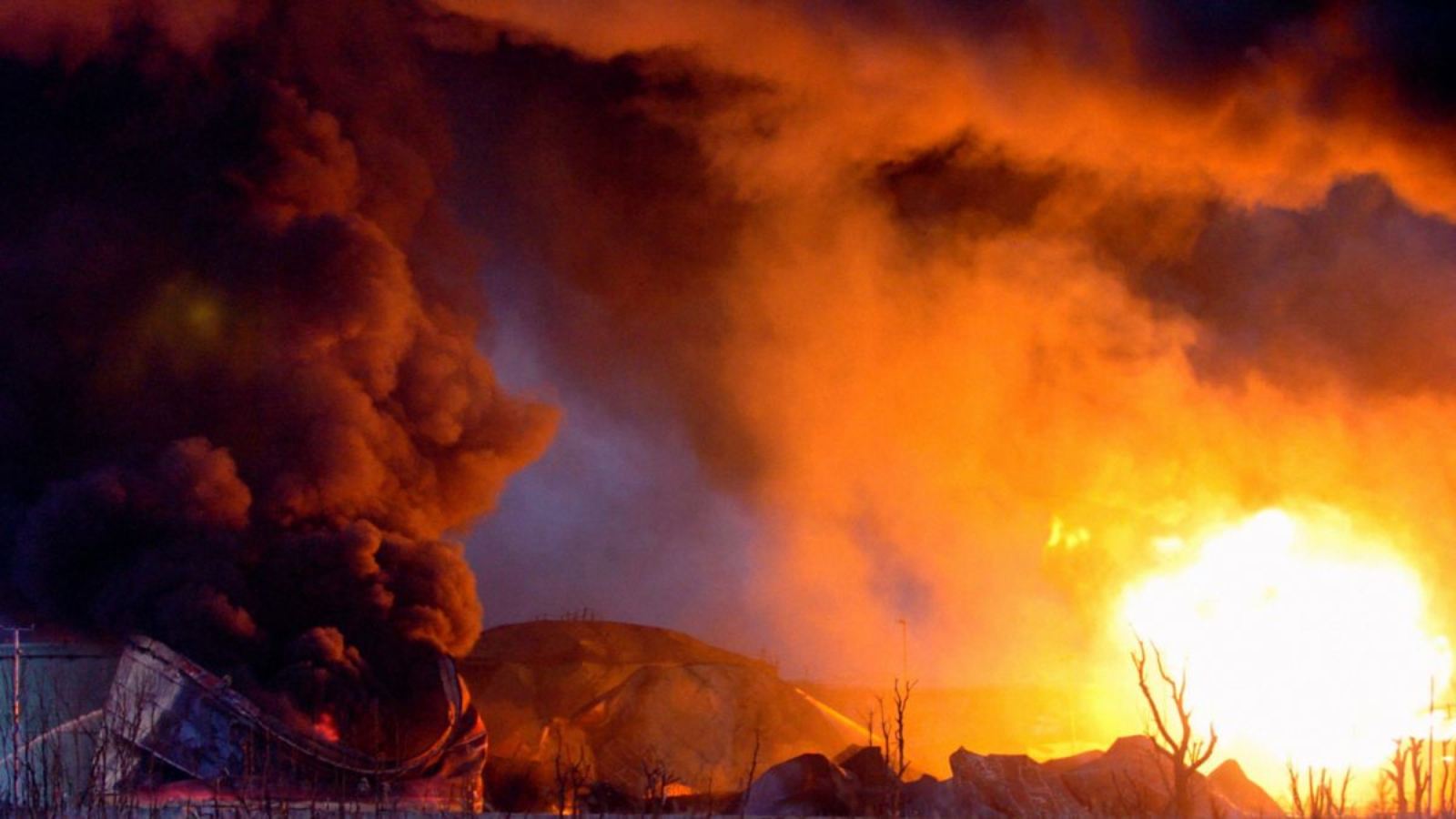
ST. PETERSBURG (Azat TV) – Ukrainian forces launched a sustained drone assault on Russia’s energy infrastructure for a second consecutive night, targeting the major Kirishi Petroleum Organic Synthesis (Kinef) oil refinery in the Leningrad Oblast on March 26. The General Staff of Ukraine confirmed that critical primary oil refining units, including ELOU-AVT-2 and ELOU-AVT-6, along with petroleum bitumen production facilities, sustained damage. The strikes follow a large-scale overnight attack on March 25 that hit an energy terminal in Ust-Luga and a Russian military icebreaker in Vyborg.
Continued Drone Attacks on Leningrad Oblast
The overnight March 26 strikes at the Kirishi refinery, one of Russia’s largest with an annual processing capacity of approximately 20–21 million tons, resulted in a fire engulfing crude oil processing units and two storage tanks, according to the General Staff. The facility accounts for over 6% of Russia’s total refined oil production, supplying fuel vital to the country’s armed forces. Leningrad Oblast Governor Aleksandr Drozdenko acknowledged a drone attack in Kirishi, claiming over 20 Ukrainian drones were intercepted in the area and reporting damage in the industrial zone without naming the refinery directly. No casualties were reported from the Kirishi refinery incident.
Broader Impact on Russian Energy and Export Terminals
The drone attacks extended to other key energy and industrial sites. In the Leningrad region, oil terminals in Ust-Luga and Primorsk were reportedly hit again on the night of March 26-27. Monitoring channels shared videos showing fires near Primorsk, a city home to crucial Baltic ports. Concurrently, on the same night, drone strikes were reported in Cherepovets, Vologda Oblast, targeting the Apatit chemical plant, a major producer of phosphate fertilizers, and the Severstal steel and mining company. Governor Georgy Filimonov of the Vologda region confirmed drone activity and debris in the industrial zone but claimed no damage to critical infrastructure and no casualties.
Strategic Significance and Export Disruption
These coordinated strikes underscore Ukraine’s strategy to disrupt Russia’s oil export capabilities. The port of Ust-Luga, a major hub for crude oil and petroleum product exports, plays a significant role in Russia’s state budget revenue. Energy analysts, such as Boris Aronstein, described the recent series of attacks as the “most serious threat to exports of Russian oil and oil products since the war began,” citing the thoughtfulness, scale, and timing of the operations. The attacks have raised concerns about the long-term impact on Russia’s oil export infrastructure, particularly in Primorsk and Ust-Luga, where several facilities were reported to be on fire. Flights at Pulkovo Airport in St. Petersburg were temporarily suspended for the second night in a row due to the drone activity in the region.
The sustained targeting of Russia’s oil refining and export infrastructure represents a significant escalation in Ukraine’s campaign to cripple the Kremlin’s war-funding capabilities, aiming to impact revenue streams critical for sustaining its military operations.