


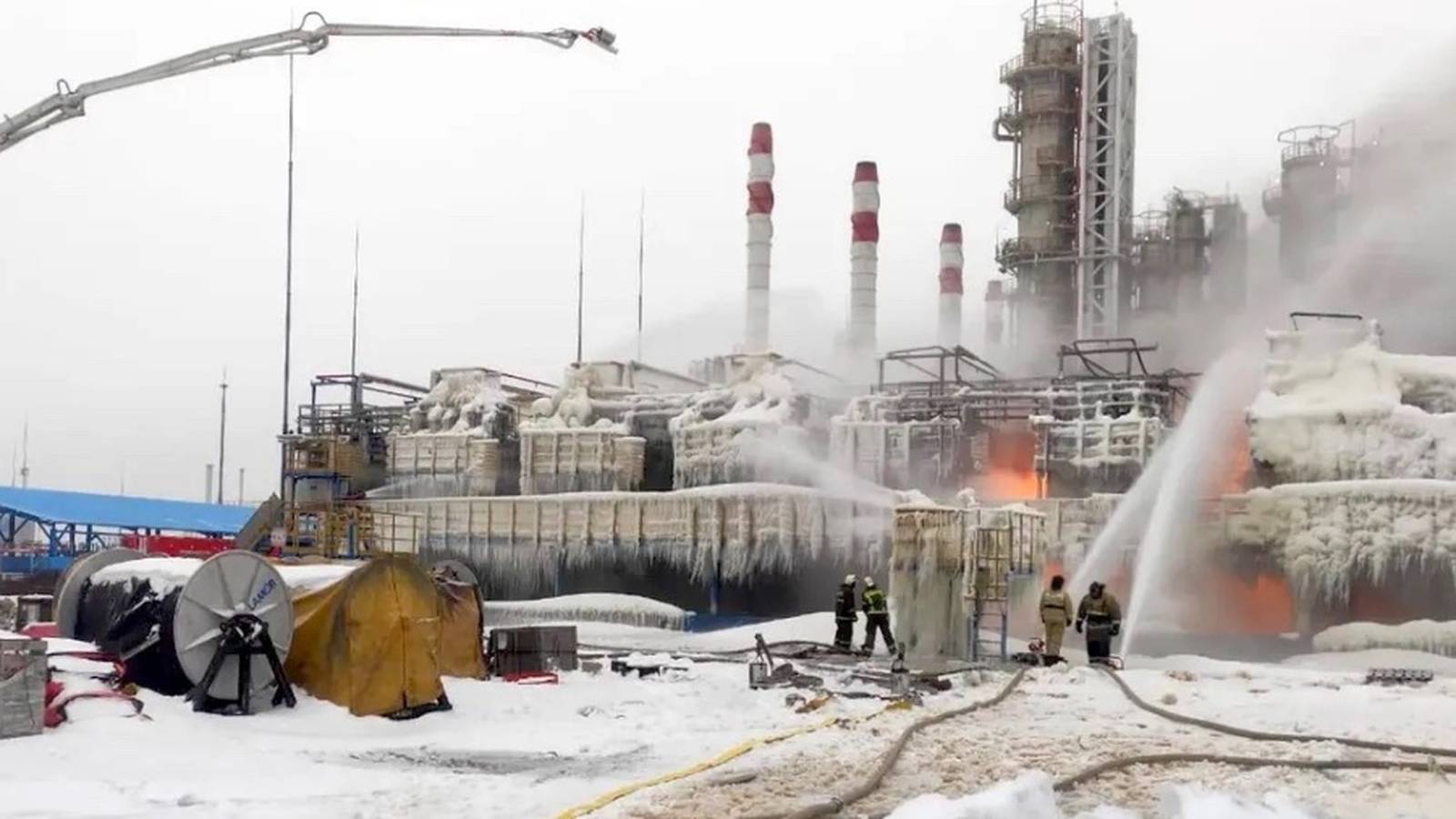
A coordinated Ukrainian drone assault on Sunday targeted major energy infrastructure deep within Russia, causing significant fires at the Slavyansk-na-Kubani refinery in the Krasnodar region and hitting facilities in the Yaroslavl region. The strikes, confirmed by Ukrainian President Volodymyr Zelensky, represent a strategic escalation in Kyiv’s campaign to cripple Russia’s fuel supply chain.
Operational Impact and Casualties
According to regional Governor Veniamin Kondratyev, falling debris from intercepted drones ignited a blaze at the Slavyansk refinery, a critical processing hub for the export of petroleum products, including naphtha and marine fuel. Local authorities reported at least one fatality in the region. Simultaneously, Governor Mikhail Evraev confirmed that drone activity necessitated the temporary closure of roads and airports in the Yaroslavl region, located approximately 700 kilometers from the Ukrainian border.
Economic Strain and Domestic Shortages
The cumulative effect of these long-range strikes is manifesting in widespread fuel shortages. In the Irkutsk region of Siberia, Governor Igor Kobzev announced strict rationing at state-run Rosneft gas stations, limiting sales to 50 liters per vehicle. These disruptions are no longer confined to border areas; private networks in Tomsk have also reported supply constraints, suggesting that the Russian energy sector is struggling to maintain domestic equilibrium.
Analysis: The Strategic Calculus
President Vladimir Putin, addressing a United Russia party conference, characterized the current situation as a “difficult period” for the country. While he stopped short of directly addressing the refinery strikes, he emphasized that Moscow would adjust its development plans while maintaining social obligations. This rhetoric signals that the Kremlin is increasingly concerned about the domestic political fallout of economic instability.
Western analysts suggest that Kyiv’s focus on refineries is a deliberate attempt to force the Kremlin toward the negotiating table by eroding the revenue streams that fund the war effort. By targeting facilities like the Slavyansk refinery, which processes roughly 4 million tons of crude annually, Ukraine is effectively weaponizing Russia’s own logistics against it. For the global market, these persistent strikes raise concerns about the stability of Russian exports, though Moscow insists it is prioritizing domestic demand over foreign contracts.