
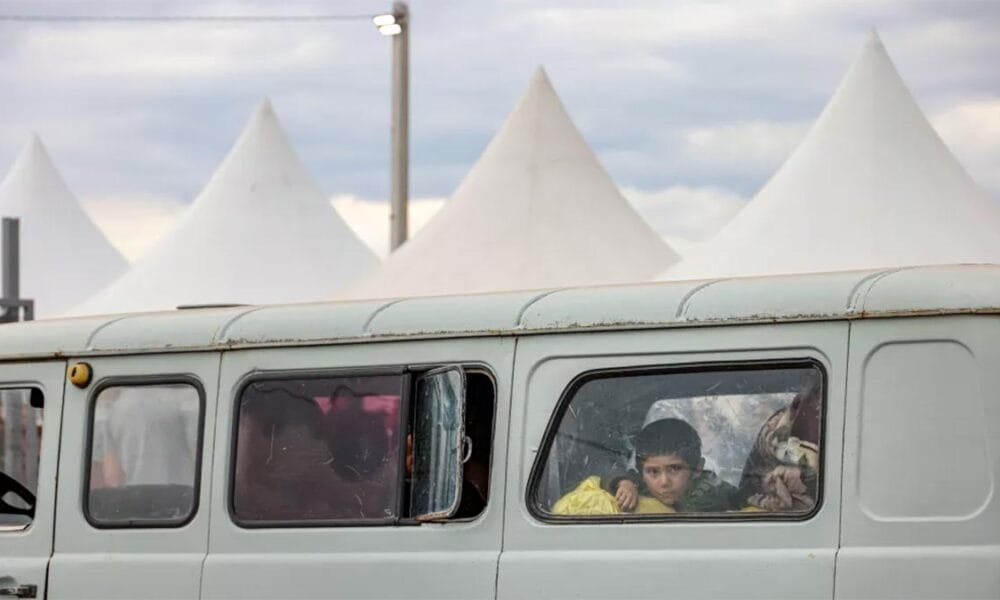
Armenia is currently home to 115,388 refugees, including 36,000 children, many of whom fled to the country during the September 2023 conflict escalation or were evacuated via the Lachin Corridor between December 2022 and September 2023. They have joined 26,700 people displaced after the 2020 Nagorno-Karabakh war. As refugee families adapt to their new reality, access to education, mental health support, and financial assistance remains a significant challenge, according to UNICEF’s latest Humanitarian Situation Report on Armenia, compiled at the end of 2024.
Why Are Thousands of Refugee Children in Armenia Missing Out on Education?
According to the Ministry of Education, Science, Culture, and Sports (MoESCS), as of December 2024, 16,232 refugee children have been enrolled in Armenian schools, and 1,617 in vocational education programs. However, the total number of school-age refugee children is unknown, raising concerns that many remain out of school, particularly adolescents.
A critical issue highlighted in the report is that 42% of refugee households with preschool-age children have at least one child who does not attend kindergarten, with half of them never having been enrolled. The risks of school dropouts among refugee adolescents are increasing due to differences in mandatory schooling years between Armenia and their home country, economic hardship, and displacement-related trauma.
The UN Committee on the Rights of the Child (CRC) has acknowledged Armenia’s efforts to integrate refugee children into the education system, but has also raised serious concerns about worsening attendance rates and declining academic performance. Reports show that some refugee children fail to meet basic reading proficiency by the end of primary school, putting their future education at risk.
Mental Health Crisis: Thousands of Refugee Children Need Urgent Psychological Support
The impact of displacement extends beyond education. UNICEF’s data reveals an increasing need for mental health and psychosocial support (MHPSS), as many refugee children suffer from trauma, anxiety, and emotional distress due to their experiences.
Since the refugee influx, 9,543 children have been assessed by mobile pediatric teams, and 2,594 were referred for higher-level healthcare services, including mental health treatment. In addition, 5,886 caregivers received age-specific counseling on child nutrition and health.
37,453 children and their caregivers have accessed safe spaces and child protection centers, while 34,712 individuals have received community-based mental health and psychosocial support. UNICEF has reported that at least 6,701 refugee children required case management support, while 26% of refugee households have at least one family member suffering from emotional instability.
Barriers such as lack of information, financial struggles, and limited access to mental health services prevent many refugee families from seeking psychological support. UNICEF urges stronger investments in mental health services to prevent long-term consequences for affected children.
What Financial Support Do Refugees in Armenia Receive?
The Armenian government has granted temporary protection to refugees, initially for one year in October 2023, and later extended until December 31, 2025. As of the end of 2024, around 76% of refugees reside in Yerevan and surrounding regions, including:
- Yerevan – 46,512 refugees (40.3%)
- Kotayk – 18,622 refugees (16.1%)
- Ararat – 11,986 refugees (10.4%)
- Armavir – 10,957 refugees (9%)
Cash Assistance and Financial Aid for Refugees in Armenia
The government has extended social assistance for three more months (January–March 2025), increasing the monthly cash aid to $125 per refugee household. However, starting April 2025, financial aid will be prioritized for the most vulnerable groups, including:
- Persons with disabilities (severe and moderate functional impairments)
- Elderly individuals (63+ years old)
- Households that have lost a breadwinner with dependent children under 18
Eligible refugees will receive:
- $100 per month from April to June 2025
- $75 per month from July to December 2025
Housing and Social Welfare Challenges for Refugee Families
Despite existing aid programs, refugee families continue to struggle with housing and economic stability. According to the Multi-Sector Needs Assessment (MSNA), families with children are twice as likely to share housing with another household, compared to those without children.
In May–June 2024, the government introduced a refugee housing assistance program, but its effectiveness has been questioned, leading to proposed amendments currently under public discussion. The new housing policy adjustments aim to:
- Remove restrictions on land plot sizes for housing construction
- Reduce the minimum living space requirements per individual
While refugees in Armenia now have access to pensions and social benefits, administrative barriers such as registration issues and lack of awareness prevent many from applying for assistance.
The Future of Refugee Assistance in Armenia
With continuing economic challenges, the Armenian government and international organizations like UNICEF aim to shift towards need-based assistance rather than blanket cash aid. Future humanitarian priorities include:
- Strengthening child protection services
- Expanding psychosocial support for refugee children
- Enhancing educational inclusion efforts
- Supporting refugees in job training and livelihood programs
While cash assistance will continue through 2025, the government plans to introduce more sustainable, long-term solutions that ensure refugees gain independence and access to stable living conditions.
UNICEF’s report highlights the urgent need for expanded educational opportunities, mental health support, and targeted financial aid to ensure refugee children in Armenia receive the care and opportunities they need. As the Armenian government refines its policies, international partners and humanitarian organizations must continue their efforts to support the most vulnerable refugee families in the country.
Source: UNICEF Armenia, Humanitarian Situation Report, December 2024