
Quick Read
- A tornado in Paraná state, southern Brazil, killed at least six and injured over 750 people.
- Authorities declared a state of calamity as 90% of Rio Bonito do Iguaçu was destroyed.
- Rescue teams are searching for missing persons and providing emergency support.
- Winds reached up to 250 km/h, flattening homes and businesses.
- The cyclone may continue to affect other coastal states over the weekend.
Deadly Tornado Shatters the Heart of Paraná
On a day that began like any other, the southern Brazilian town of Rio Bonito do Iguaçu was torn apart by a force few had ever witnessed. At least six people have lost their lives and more than 750 are injured after a tornado, described as “unprecedented” by state governor Ratinho Júnior, ripped through Paraná, leaving devastation in its wake (CNN Brazil).
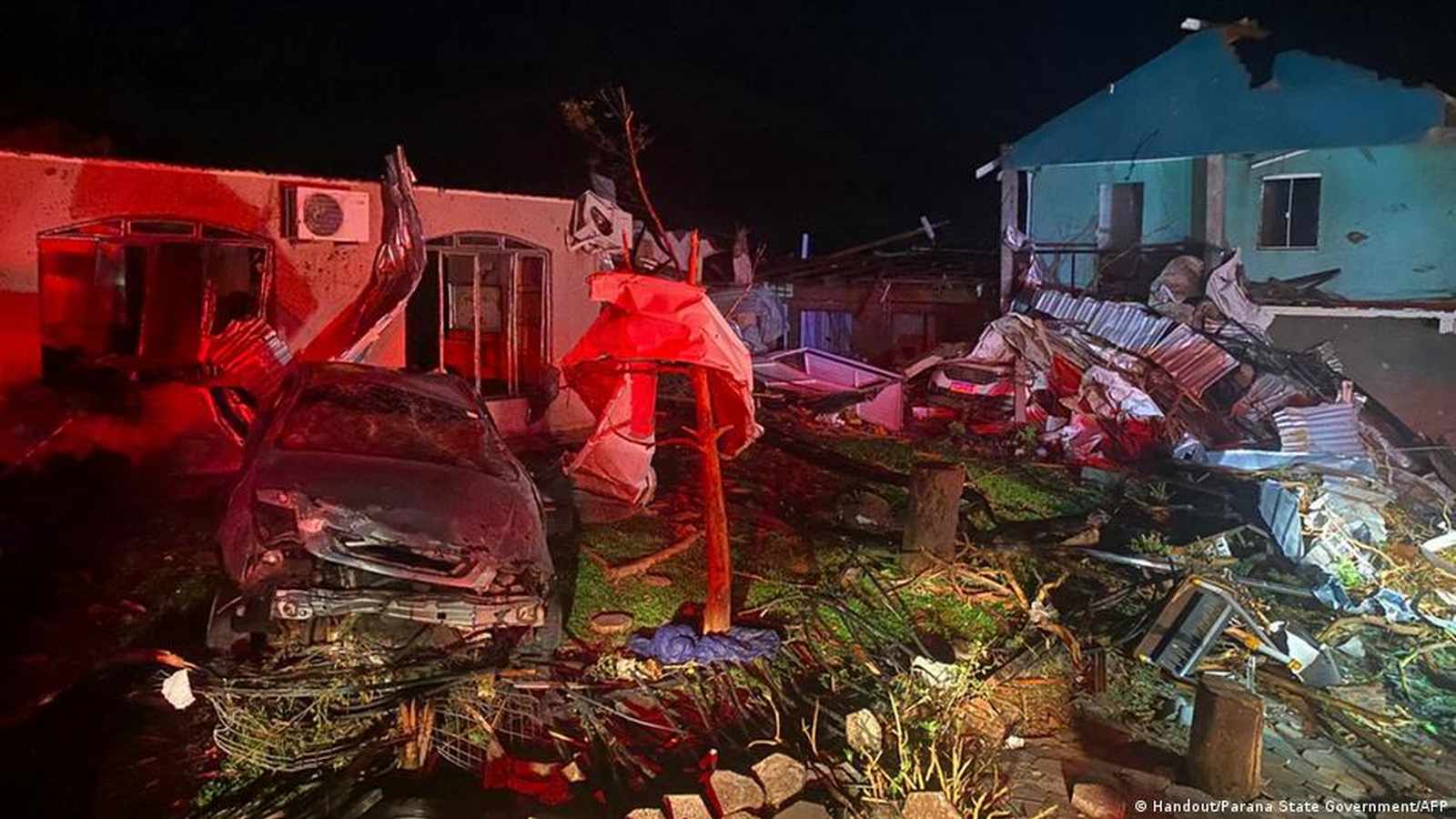
For residents, the disaster was not just a weather event—it was a catastrophe. Eyewitnesses and aerial footage reveal a town almost unrecognizable: roofs ripped away, brick homes crumbled, entire streets reduced to rubble. The tornado’s winds, clocked between 180 and 250 kilometers per hour (110 to 155 mph), flattened buildings, uprooted trees, and hurled vehicles into chaos (DW).
How Bad Was the Damage?
The numbers tell only part of the story. According to local authorities, approximately 90% of Rio Bonito do Iguaçu’s residences and commercial buildings sustained damage. The town’s Civil Defense chief, Fernando Schunig, called the aftermath “a war zone,” and for many, the comparison is apt. The destruction struck directly at the town center, amplifying its deadly toll. Among the dead are three men, ages 49, 57, and 83, and two women, aged 47 and just 14. Another man, 53, died in the nearby city of Guarapuava. One person remains missing, while two others are still unaccounted for (BBC).
Jonas Emmanuel Benghi Pinto, Deputy Commander-in-Chief of the Paraná Fire Department, told Brazilian media that the scale of devastation was unlike anything the region had ever faced. “It’s unlikely that any house, or even a commercial building, will remain standing. We saw silos collapsing, gas stations destroyed,” Governor Ratinho Júnior reported.
Emergency Response and State of Calamity
In response to the disaster, the state government declared a “public calamity,” a move that allows for emergency measures and federal support. Search and rescue teams, security forces, and health officials have been mobilized to assist affected families. The National Institute of Meteorology continues to warn of severe storms in Paraná and neighboring states, including Santa Catarina and Rio Grande do Sul, as the cyclone associated with the tornado pushes northward.
Minister of Institutional Relations Gleisi Hoffmann and acting Health Minister Adriano Massuda are on the ground, coordinating relief and reconstruction. Brazilian President Luiz Inacio Lula da Silva has publicly expressed condolences and committed to supporting the region: “We will continue to assist the people of Paraná and provide all the help needed.”
Many families are still searching for loved ones, and the numbers of homeless and displaced continue to climb. Local authorities warn that the toll may yet rise as rescue teams sift through the debris.
Survivors and the Path Ahead
For the 14,000 residents of Rio Bonito do Iguaçu, recovery is only just beginning. The tornado’s fury left behind not only physical destruction but deep emotional scars. The immediate focus for authorities and aid workers is on shelter, medical care, and restoring basic services. The government has urged the public to stay away from open areas and remain vigilant around damaged structures, trees, and power lines—risks that linger in the aftermath.
Drone footage broadcast by Brazilian media captures the scale of the disaster: rows of flattened houses, vehicles tossed like toys, and a landscape transformed in mere minutes. Survivors describe the moment as surreal, with many still struggling to process the loss of homes, livelihoods, and, for some, loved ones.
The cyclone that spawned the tornado is linked to a cold front, which continues to threaten coastal states with wind gusts above 100 km/h. The forecast suggests that the phenomenon will persist until Sunday, potentially affecting regions as far as Rio de Janeiro and Espírito Santo.
As the region grapples with the aftermath, questions arise about preparedness and the increasing frequency of extreme weather events. Experts point to climate change as a possible factor in the severity and unpredictability of recent storms, urging renewed attention to emergency planning and infrastructure resilience.
Community, Resilience, and Unanswered Questions
In the ruins of Rio Bonito do Iguaçu, stories of resilience emerge. Neighbors help neighbors, volunteers organize food and water distribution, and local officials work around the clock to restore a semblance of normalcy. The coming weeks will test the community’s resolve, as authorities assess the full scope of damage and begin the daunting task of rebuilding.
For many, the tornado has become a stark reminder of nature’s unpredictability and the importance of collective action in times of crisis. As the search for missing persons continues, and the long process of recovery begins, Paraná’s experience will shape conversations about disaster response and climate adaptation across Brazil.
While southern Brazil mourns its losses and braces for more storms, the scale and severity of this tornado highlight both the vulnerability and the resilience of communities facing the front lines of climate-driven disasters. The coordinated response—local, state, and federal—underscores the urgent need for robust infrastructure and emergency planning in a world where such catastrophes may become more frequent.