
Quick Read
- US special envoy Steve Witkoff and Jared Kushner arrived in Berlin for Ukraine peace talks.
- Ukrainian President Zelenskyy and US, European officials are meeting to seek a political agreement to end the war.
- Major sticking points include control of Donetsk and security guarantees for Ukraine.
- Russia demands Ukrainian troop withdrawal and NATO renunciation; Ukraine rejects these terms.
- Ongoing aerial attacks underscore the urgency and difficulty of reaching a settlement.
US Delegation Arrives in Berlin: The Scene of Renewed Hope
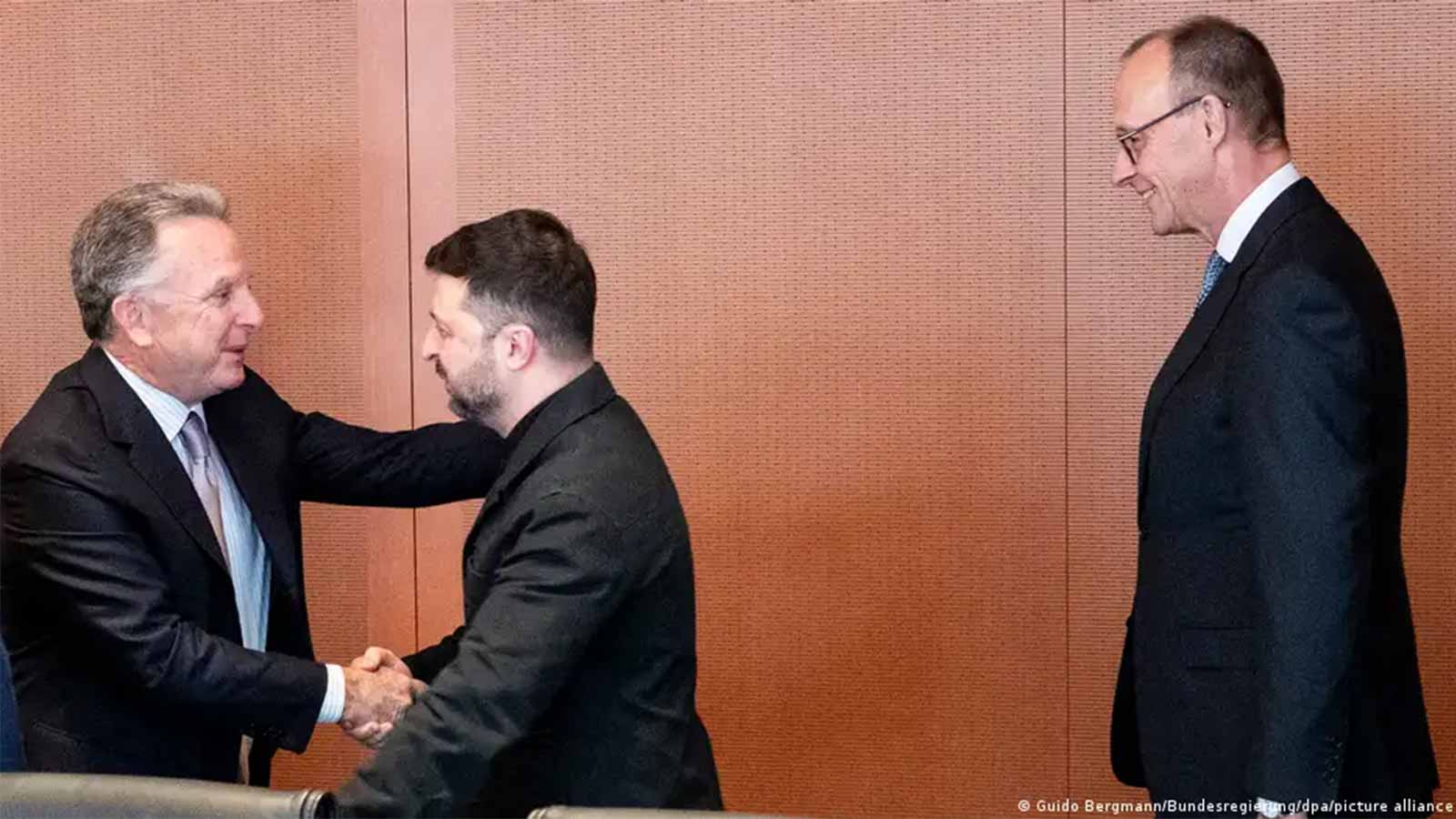
On a chilly December morning in Berlin, the stakes could hardly be higher. US President Donald Trump’s special envoy Steve Witkoff and his son-in-law Jared Kushner, both seasoned negotiators, were seen in the city center, their arrival signaling the start of another critical round of peace talks to end the war in Ukraine. Photographers from the German news agency dpa caught the moment, capturing not just faces, but the tension and expectation that hung in the air.
Ukrainian President Volodymyr Zelenskyy has put the spotlight squarely on these meetings. In an address to the Ukrainian nation, Zelenskyy described the upcoming days as filled with diplomacy and possibility: “Most importantly, I will be meeting with envoys of President Trump, and there will also be meetings with our European partners, with many leaders, concerning the foundation of peace — a political agreement to end the war.”
Washington’s motivation is clear. After months of navigating a labyrinth of demands from all sides, the Trump administration is pressing for a swift conclusion to Russia’s war in Ukraine. The US has grown increasingly impatient with delays, seeking solutions that balance the needs of Ukraine and the realities imposed by Russia.
Negotiating the Impossible: Sticking Points and Friction
Yet, the path to peace is anything but straightforward. The biggest obstacles remain unresolved: control of the eastern Donetsk region—mostly under Russian occupation—and security guarantees that Ukraine desperately needs. Zelenskyy’s words captured the urgency: “The chance is considerable at this moment, and it matters for our every city, for our every Ukrainian community. We are working to ensure that peace for Ukraine is dignified, and to secure a guarantee — a guarantee, above all — that Russia will not return to Ukraine for a third invasion.”
But Russian President Vladimir Putin’s conditions are uncompromising. He demands that Ukraine withdraw its forces from the remaining part of Donetsk and abandon its aspirations to join NATO—terms Kyiv has flatly rejected. Russian foreign affairs adviser Yuri Ushakov elaborated that even if the Donbas were to become a demilitarized zone, Russian police and national guard would remain in place. “We will strongly insist on our considerations,” Ushakov said, underscoring how far apart the sides still are.
Ushakov also hinted at a drawn-out process, telling Kommersant that US proposals attempting to balance Russian demands have been “worsened” by changes pushed by Ukraine and its European allies. “We don’t know what changes they are making, but clearly they aren’t for the better,” he remarked.
Europe’s Role and the Broader Strategic Landscape
Europe, meanwhile, finds itself at a crossroads. German Chancellor Friedrich Merz has taken a leading role, together with French President Emmanuel Macron and UK Prime Minister Keir Starmer, in supporting Ukraine. At a party conference in Munich, Merz declared, “The decades of the ‘Pax Americana’ are largely over for us in Europe and for us in Germany as well.”
Merz’s warning was stark: Putin’s ambitions, he said, threaten “a fundamental change to the borders in Europe, the restoration of the old Soviet Union within its borders.” He cautioned that if Ukraine falls, the consequences for Europe could be profound. Putin, for his part, denies any intent to restore the Soviet Union or threaten European allies.
Conflict Continues: The War That Shadows Diplomacy
Even as diplomats gather in Berlin, the violence continues. Russia launched ballistic missiles and 138 attack drones overnight, according to Ukraine’s air force, which reported intercepting or downing 110 of them. Nevertheless, missile and drone strikes hit six Ukrainian locations.
The humanitarian toll is relentless. Zelenskyy reported on Sunday that hundreds of thousands of families remain without power in the south, east, and northeast, with teams working tirelessly to restore basic services after the latest large-scale attack. In just one week, he said, Russia had launched over 1,500 strike drones, nearly 900 guided aerial bombs, and 46 missiles at Ukraine.
“Ukraine needs peace on decent terms, and we are ready to work as constructively as possible. These days will be filled with diplomacy. It’s very important that it brings results,” Zelenskyy said.
Russia, meanwhile, reported shooting down 235 Ukrainian drones late Saturday and early Sunday, with incidents ranging from a drone injuring a man and setting his house ablaze in the Belgorod region, to Ukrainian strikes at oil depots and refineries in the Volgograd and Krasnodar regions.
The Road Ahead: Will Diplomacy Deliver?
The Berlin meetings are a test of political will and diplomatic skill. Negotiators must confront the reality that any agreement will require not just compromise, but a realignment of expectations on all sides. The US, Ukraine, and their European partners are searching for a peace that safeguards Ukrainian sovereignty and provides lasting security—a goal complicated by Russia’s insistence on its own terms.
As the world watches, the outcome of these talks may set the tone for the region’s future. The question hanging in the air, for diplomats and citizens alike, is whether the promise of peace can withstand the pressures of war and politics.
The Berlin negotiations represent a critical juncture. The complex interplay of demands and the persistence of violence underscore how fragile any potential settlement remains. The coming days will reveal whether diplomacy can bridge the gulf, or if the war’s shadow will stretch further into 2025.