
Quick Read
- U.S. and Israeli forces escalated strikes on Iran, while Iran and its proxies launched missile attacks across the Middle East on March 2, 2026.
- Over 555 people were killed in Iran, 11 in Israel, and 31 in Lebanon as a result of the widening conflict.
- U.S. forces neutralized 11 Iranian warships; Iran claimed to have shot down 20 enemy drones.
- International bodies like the UN expressed concern over humanitarian impact, especially on children and migrant workers.
- U.S. President Trump outlined four objectives for the operation and did not rule out sending ground troops.
Middle East (Azat TV) – The conflict involving the United States, Israel, and Iran widened significantly on Monday, March 2, 2026, as both sides escalated military actions, unleashing missile strikes and counter-strikes across the Middle East. The intensifying hostilities have resulted in hundreds of casualties and prompted urgent international calls for de-escalation, raising profound concerns about regional stability and global security.
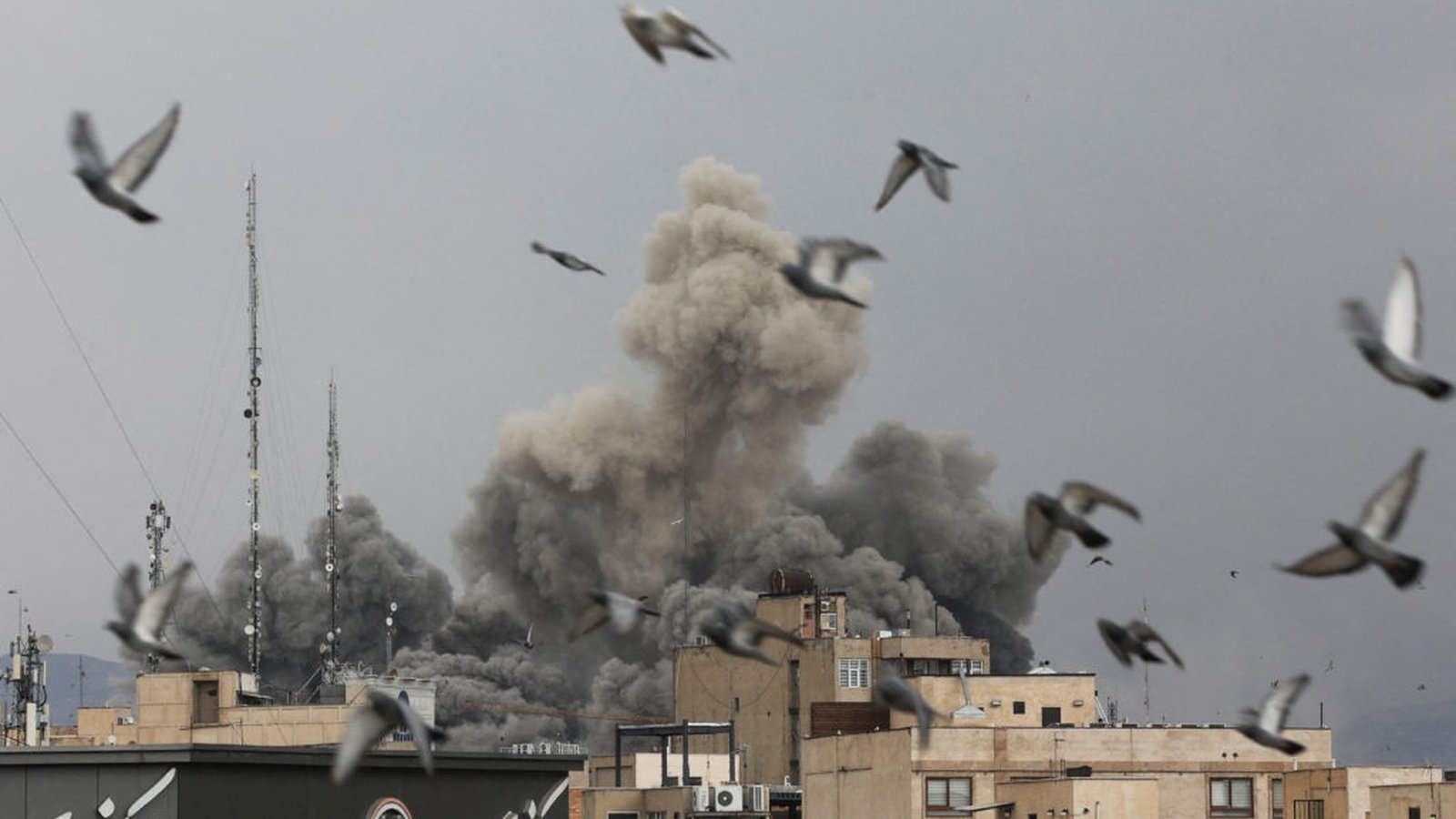
Iran and its allied militias launched missile attacks targeting Israel and several Arab states, with one strike reportedly hitting the U.S. Embassy compound in Kuwait. Concurrently, Israel and the United States conducted extensive bombardments on targets within Iran. The Iranian Red Crescent Society reported that over 555 people have been killed in Iran by the U.S.-Israeli campaign, with more than 130 cities across the country coming under attack. In Israel, authorities confirmed 11 fatalities, including three young siblings tragically killed in an Iranian missile strike in Beit Shemesh, while Lebanon reported 31 deaths from Israeli counter-strikes.
Escalating Military Actions and Regional Casualties
The latest surge in military operations saw significant engagements across the region. The U.S. military confirmed that Kuwaiti forces “mistakenly shot down” three American F-15E Strike Eagles during a combat mission. U.S. Central Command announced on X that American forces had neutralized all 11 Iranian warships in the Gulf of Oman, following President Donald Trump’s earlier statement about destroying nine Iranian naval vessels. Iran, for its part, claimed its military had shot down 20 “enemy drones” since the U.S. and Israeli attacks began on Saturday.
Further intensifying the aerial conflict, Qatar’s air force stated it had shot down two Iranian Sukhoi Su-24 bombers. The United Arab Emirates reported intercepting nine ballistic missiles, six cruise missiles, and 148 drones on Monday alone, part of hundreds of Iranian projectiles repelled since Saturday. These attacks claimed the lives of five foreign nationals in Gulf countries, highlighting the vulnerability of migrant workers in the region, prompting the Philippines to issue a deployment ban for newly hired workers to several Gulf states.
On the Lebanese front, Israel launched a “broad wave of strikes” on dozens of Hezbollah targets in southern Lebanon, including weapons storage facilities and missile launchers. An Israeli airstrike in Beirut’s Beir Hassan neighborhood also heavily damaged a building, with the Israeli military stating it targeted a senior Hezbollah official. Hezbollah had previously fired rockets into northern Israel, marking its first such action in over a year.
International Response and Diplomatic Tensions
The widening conflict immediately drew sharp international reactions and diplomatic maneuvers. U.N. political chief Rosemary DiCarlo briefed the U.N. Security Council on the immediate impact of the strikes on children, noting school closures in Israel, the UAE, Qatar, Bahrain, and Oman. Iran’s Ambassador to the U.N., Amir Saeid Iravani, condemned a U.N. Security Council session on protecting children in armed conflict, chaired by U.S. First Lady Melania Trump, as “deeply shameful and hypocritical” in light of reported deadly strikes on a girls’ school in Iran.
NATO Secretary General Mark Rutte called on European allies to support the U.S. and Israeli campaign, citing the threat of a nuclear-armed Iran, though he ruled out direct NATO military involvement. In contrast, Spanish Prime Minister Pedro Sánchez denounced the U.S. attack as “unjustifiable” and “dangerous,” confirming that no assistance was provided from shared U.S. bases in Spain. Russia’s President Vladimir Putin and Saudi Crown Prince Mohammed bin Salman held a phone call, expressing “serious concern” over the conflict’s spread and emphasizing the urgent need for political and diplomatic resolution.
U.S. President Donald Trump articulated four objectives for the military operation: destroying Iran’s missile capabilities, eliminating its naval capacity, preventing nuclear weapon acquisition, and curbing its support for proxy armies. He estimated the operation would take four to five weeks but affirmed the U.S. capability to extend it if necessary. Despite Vice President JD Vance’s earlier assertion of “no chance” of a drawn-out war, President Trump stated he would not rule out sending U.S. ground troops into Iran if deemed necessary, telling the New York Post, “I don’t have the yips with respect to boots on the ground.” Early polling from The Washington Post, however, suggested that about half of U.S. adults opposed the initial airstrikes.
Humanitarian Crisis and Regional Fallout
Beyond the direct military confrontations, the conflict has exacerbated existing humanitarian crises. The U.N.’s humanitarian office reported that Israel’s closure of all crossings into Gaza has led to severe fuel rationing, water shortages, and inflated prices for basic goods, with some residents drinking as little as two liters of water daily. The humanitarian impact on children was also a focal point, with Iran accusing U.S. and Israeli forces of targeting a girls’ school in southern Iran, a claim both countries are investigating.
The widespread travel disruptions have also affected civilians and international events, with tennis stars, including Daniil Medvedev, facing difficulties leaving Dubai, and Paralympians encountering travel issues ahead of the Winter Paralympics in Italy. The situation underscores the far-reaching consequences of the escalating conflict, impacting not only immediate combat zones but also broader civilian life and international movement.
The confluence of simultaneous military engagements across multiple fronts, coupled with starkly divergent international responses, underscores the profound and immediate threat this escalating conflict poses to the fragile stability of the Middle East, signaling a critical juncture in regional geopolitics.