
Quick Read
- US Central Command commander Brad Cooper is directly involved in US-Iran talks in Oman, highlighting their security focus.
- President Trump has warned of a “massive military presence” and readiness for war if Iran nuclear negotiations fail.
- The US Virtual Embassy in Iran issued a security alert advising American citizens to leave Iran immediately.
- President Trump’s “Board of Peace” initiative for Gaza, supported by Israel, aims for lasting solutions and Hamas dismantlement.
- Israel emphasizes the need for de-radicalization in Gaza and will not accept hostile state forces in the territory.
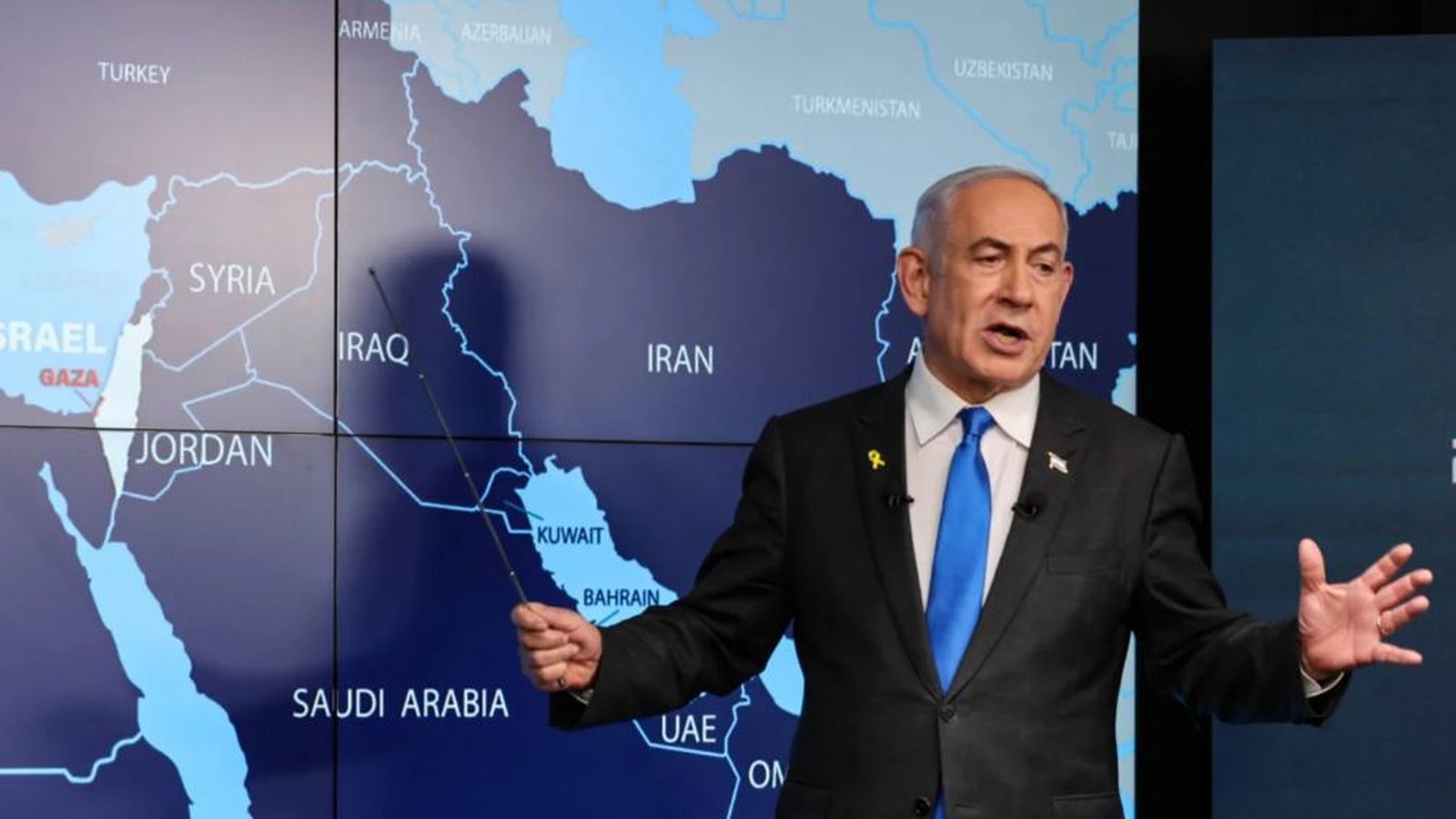
MUSCAT (Azat TV) – The United States has significantly bolstered its military presence in the Middle East as critical talks with Iran get underway in Oman, signaling a dual approach of diplomatic engagement backed by robust security preparations. This comes as President Donald Trump’s administration also pushes a comprehensive peace plan for Gaza, emphasizing a broad, if complex, strategy for regional stability.
The ongoing US-Iran negotiations in Muscat are marked by an unusually direct role for U.S. Central Command (CENTCOM) commander Brad Cooper, underscoring the security-heavy nature of the discussions. The US delegation, led by special envoy Steve Witkoff and President Trump’s son-in-law Jared Kushner, is engaging Tehran amid rising tensions and visible military maneuvers by both sides. The White House has confirmed the talks, with Press Secretary Karoline Leavitt reiterating President Trump’s firm stance: a demand for ‘zero nuclear capabilities’ from Iran.
US Military Buildup Amid Iran Negotiations
As diplomacy unfolds in Oman, the United States has continued to move substantial military assets into the region. President Trump has repeatedly warned that the U.S. has assembled a ‘massive military presence’ and is ‘fully prepared for war’ if negotiations with Iran fail. These warnings follow earlier statements by Trump to NBC News, where he cautioned Iran against building a new nuclear site, threatening ‘really bad things’ if such actions were taken. The US Virtual Embassy in Iran issued a security alert urging American citizens to ‘leave Iran now,’ further highlighting the volatile atmosphere.
Tehran, for its part, has publicly framed the talks as limited to its nuclear program. Iranian state-aligned media reported the deployment of the Khorramshahr-4 ballistic missile to underground Revolutionary Guard facilities, described as enhancing the readiness and survivability of Iran’s missile forces. A spokesperson for Iran’s armed forces stated Tehran has prepared for every scenario its adversaries might consider, as reported by World Israel News.
President Trump’s Gaza Peace Initiative
Concurrently, the Trump administration is actively pursuing a ‘Board of Peace’ initiative aimed at achieving lasting solutions for Gaza. Israel’s Ambassador to India, Reuven Azar, confirmed Israel’s full support for President Trump’s 20-point plan, which outlines a clear path for stabilization and reconstruction of Gaza. The plan explicitly calls for the ‘full dismantlement of Hamas and other terrorist organizations’ and emphasizes the need for de-radicalization efforts within the Gazan population, according to an interview with Eurasian Times.
Ambassador Azar highlighted that Israel had already cleared over 50% of Gaza from terrorist infrastructure and stressed the importance of the diplomatic initiative securing the demilitarization of the remaining areas. Both President Trump and Prime Minister Netanyahu have indicated that failure by Hamas to comply would necessitate renewed military pressure. The Board of Peace includes dozens of countries, with President Trump at its helm, aiming to bring various players, including those with historically problematic attitudes such as Pakistan, Turkey, and Qatar, into consensus under UNSCR 2803.
Israel’s Regional Security Concerns
Israel’s security requirements remain non-negotiable, with Ambassador Azar stating that Israel will not accept the presence in Gaza of forces from states openly hostile to Israel or those with a history of supporting terrorist organizations. The Israeli diplomat also warned against states tolerating or patronizing jihadist proxies, arguing that such actions ultimately endanger their own security. He cited concerns over Hamas leaders expanding their footprint into countries like Bangladesh and Pakistan, viewing it as a broader strategy to secure funding, ideological support, and logistical channels for their activities across South Asia, as detailed by Eurasian Times.
The US engagement in both the high-stakes Iran talks and the Gaza peace initiative underscores a complex strategy to manage immediate security threats while pursuing long-term regional stability. The direct involvement of a senior military commander in diplomatic negotiations with Iran signals a readiness to leverage all instruments of power, from diplomacy to military deterrence, in a region fraught with deep-seated conflicts.
The confluence of intensified US military posturing and concurrent diplomatic endeavors in both Iran and Gaza highlights a strategic effort by the Trump administration to exert influence and enforce its security objectives across the Middle East, balancing the threat of military action with the pursuit of negotiated settlements.