
Quick Read
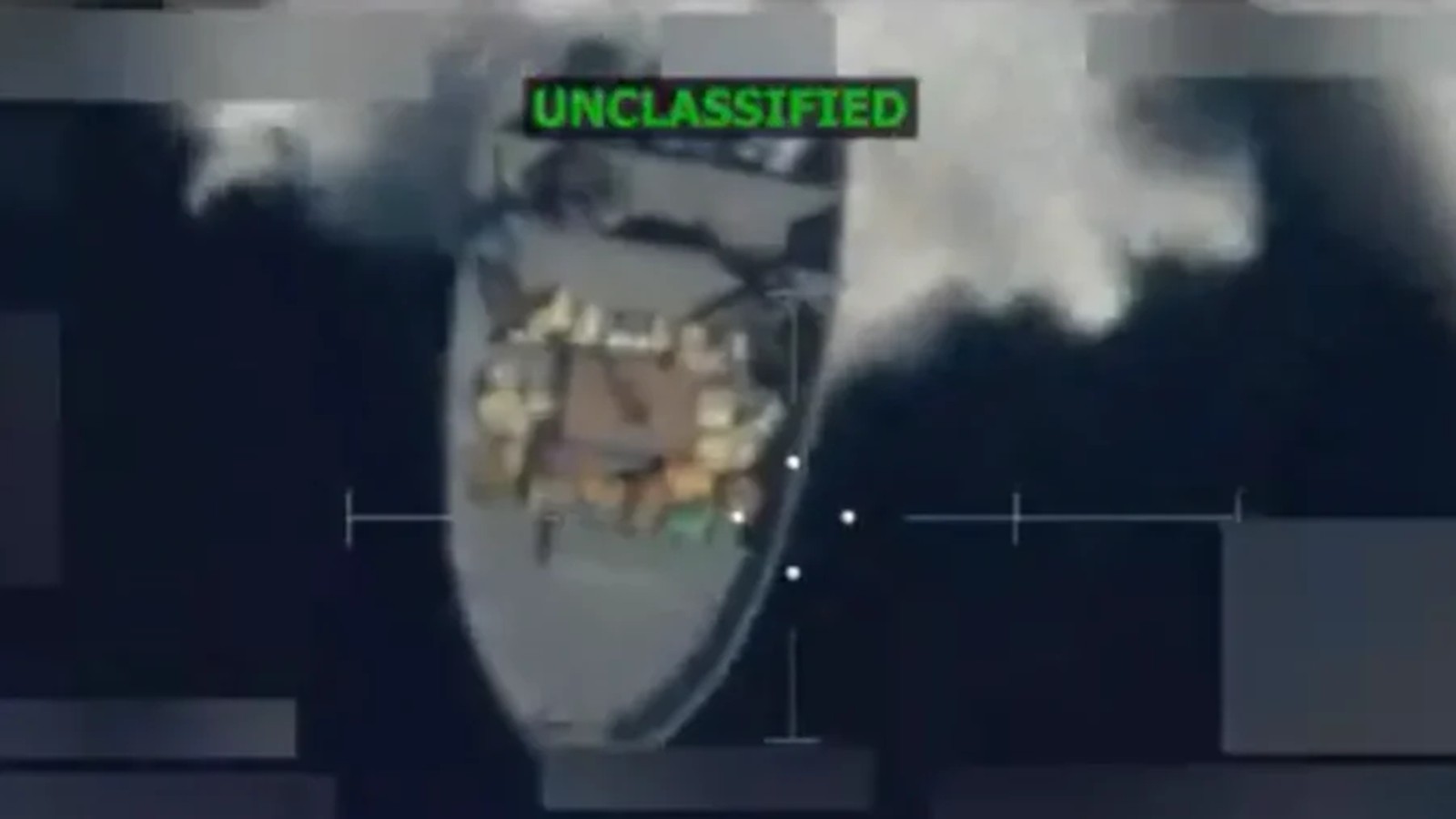
- U.S. military struck two suspected drug boats in the Eastern Pacific on November 9, 2025, killing six people.
- The attacks were part of President Trump’s escalating campaign against drug trafficking and alleged narco-terrorists.
- Since September 2025, at least 19 strikes have targeted drug boats around Latin America, with over 75 reported dead.
- The legality and transparency of the strikes have been hotly debated in Congress and by international organizations.
- Regional reaction is fragmented, with some governments condemning the strikes and others remaining cautious.
U.S. Military Expands Anti-Drug Boat Campaign in the Pacific
The waters off the coast of South and Central America have become the latest battleground in President Donald Trump’s campaign against international drug trafficking. On November 9, 2025, U.S. forces launched lethal strikes on two vessels in the Eastern Pacific, killing six individuals identified by officials as “male narco-terrorists.” These attacks, ordered directly by President Trump, are part of a wider military effort aimed at disrupting the flow of narcotics into the United States.
According to Secretary of War Pete Hegseth, both boats were tracked by U.S. intelligence and believed to be operated by designated terrorist organizations. The vessels were reportedly carrying narcotics and navigating a known trafficking corridor—a route notorious for smuggling large quantities of cocaine from South America. The Pentagon has confirmed that both strikes occurred in international waters, a detail cited as critical in justifying the military’s actions under U.S. and international law (NTD, India Today).
Legal and Political Tensions Surrounding the Strikes
While the Trump administration has touted these operations as vital to national security, the strikes have prompted heated debate in Washington and beyond. Critics in Congress, including Sens. Adam Schiff and Tim Kaine, have raised concerns about the legal foundation of the attacks. In October, a resolution under the 1973 War Powers Act was introduced to curtail the president’s authority to launch such strikes without direct congressional approval. The measure was narrowly defeated in the Senate, signaling deep divisions over the scope of presidential military power.
Sen. Tim Kaine, briefed on the administration’s legal rationale, questioned the logic and transparency behind the strikes. “There are logical fallacies in the rationale,” he stated, adding that no clear justification had been presented for expanding strikes to land-based targets in Venezuela. Another resolution to restrict U.S. military action against Venezuela failed by a margin of two votes, with some Republican senators expressing unease about the campaign’s direction. Sen. Todd Young, while voting against the measure, underscored his discomfort with the operation, noting that most Americans prefer a less interventionist military posture (NTD).
Regional Reaction: Fragmentation and Uncertainty
The U.S. military’s presence in Latin American waters is not new, but its intensified anti-drug boat campaign has triggered a complex response across the region. Far from a unified opposition, Latin American governments and publics have displayed a range of reactions—from cautious support to outright condemnation. Venezuela’s President Nicolás Maduro has denounced the strikes, calling them a threat to national sovereignty and an attempt at regime change. The United Nations has weighed in as well, with High Commissioner Volker Turk stating that there is “no justification in international law” for the ongoing U.S. attacks in the Caribbean and Pacific (Fox Illinois).
The Trump administration maintains that the campaign is necessary to protect American communities from the violence and addiction fueled by foreign drug cartels. However, the lack of transparency about intelligence sources and the identities of those targeted raises uncomfortable questions. Congressional briefings have revealed that U.S. forces often do not know the identities of individuals aboard the vessels before striking, relying instead on intelligence linking the boats to specific cartels.
Escalation, Impact, and Calls for Oversight
Since September 2025, U.S. forces have conducted at least 19 strikes, destroying 20 boats and resulting in a reported death toll of over 75 people. The majority of these actions initially targeted the Caribbean Sea, but recent operations have increasingly focused on the Eastern Pacific—where U.S. intelligence believes the largest narcotics shipments transit. The deployment of naval assets, including the USS Gravely warship and an aircraft carrier, signals the seriousness of Washington’s intent.
Yet, the campaign’s human and geopolitical costs remain under scrutiny. Critics argue that the strikes risk inflaming tensions in a region already marked by historic fragmentation and instability. The fragmentation is not only political but also social, as communities caught in the crossfire struggle with the fallout of military interventions. The specter of expanded U.S. action on Venezuelan soil adds to the uncertainty, with lawmakers and international organizations urging greater restraint and transparency.
For now, President Trump continues to defend the strikes as a necessary component of the “armed conflict” with cartels accused of flooding American cities with drugs. But the debate over legality, effectiveness, and unintended consequences rages on, with no clear end in sight.
The Search for Balance: Security, Sovereignty, and Accountability
The U.S. anti-drug boat campaign in Latin America has become a flashpoint in broader discussions about the limits of military power and the responsibility of democratic governments. While the administration’s stated goal is to safeguard American lives, the lack of publicly available evidence connecting specific strikes to terrorist organizations has fueled skepticism. Regional players and international bodies continue to press Washington for justification, transparency, and respect for sovereignty.
As the U.S. expands its naval footprint and intensifies its operations, the challenge will be to reconcile security imperatives with legal and ethical constraints. The fragmented response in Latin America reflects not just divergent national interests but also deep-seated mistrust borne of a long, complicated history of U.S. intervention. Whether this latest campaign will disrupt trafficking networks or simply deepen divisions remains a question for policymakers, military strategists, and the communities most affected.
With mounting pressure from both domestic and international critics, the Trump administration faces a pivotal test: can it justify its military campaign against drug boats as both effective and lawful, or will the operation become another chapter in the fraught legacy of U.S. intervention in Latin America?