
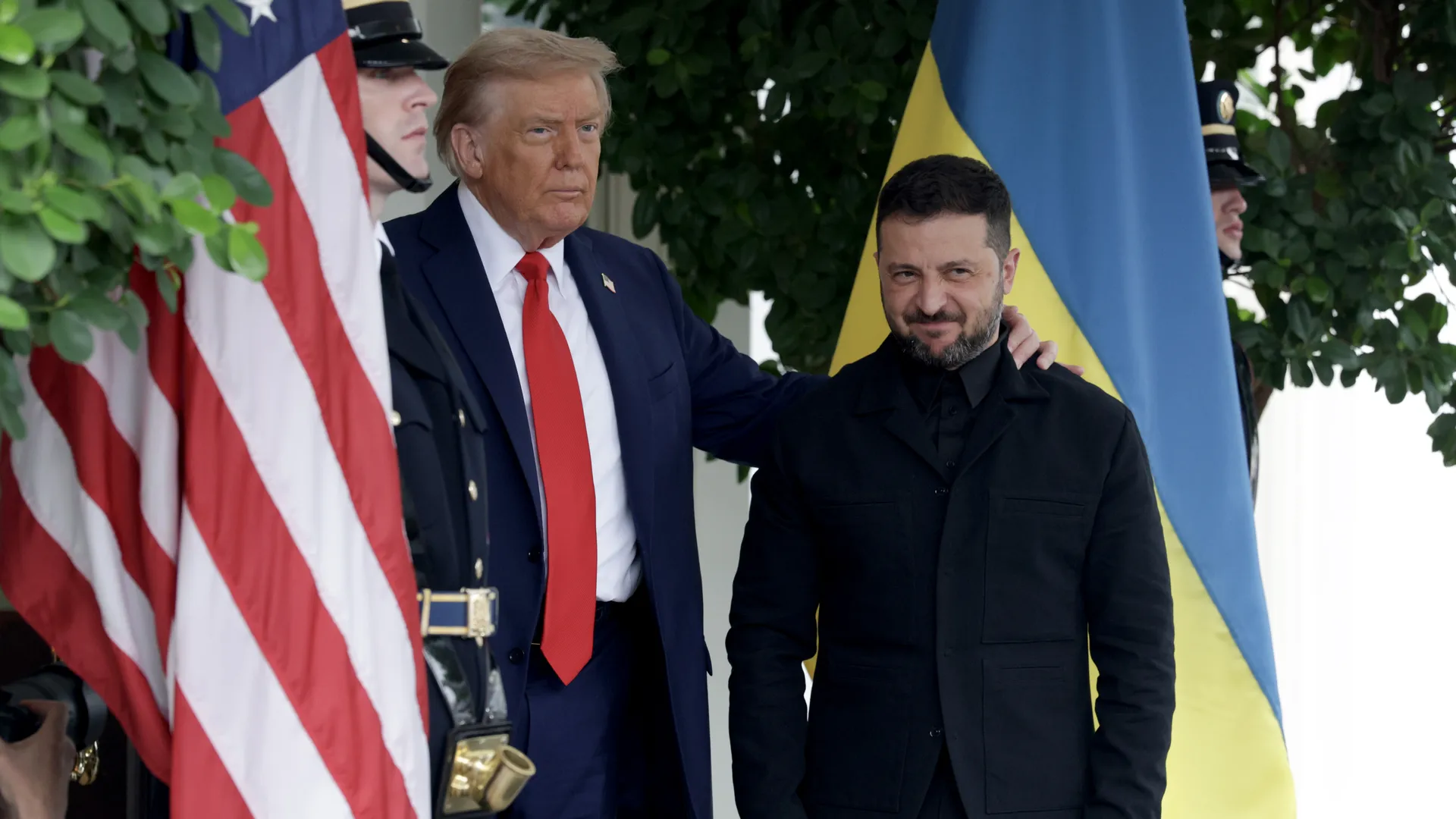
- The United States denies tying Ukraine’s security guarantees to Kyiv’s territorial concessions.
- The clarification comes amid ongoing diplomacy on a framework of security assurances for Ukraine in the event of aggression.
- The stance emphasizes that security commitments should not be conditioned on land changes.
- Diplomats and analysts will watch how this position influences Kyiv’s approach to negotiations with Moscow and Western partners.
The United States has explicitly denied claims that Ukraine’s security guarantees are conditioned on Kyiv’s willingness to concede territory, a clarification issued as Western officials continue discussions about a robust security framework for Ukraine. The comment underscored Washington’s position that guarantees of defense and security should not be traded for land or border changes, signaling a deliberate effort to separate deterrence arrangements from potential territorial negotiations.
Security guarantees in this context refer to commitments by allies and partners to assist Ukraine in the face of aggression, potentially including rapid deterrence assurances, military aid, and other forms of security support. Since Russia’s invasion began in 2022, the idea of a formal or quasi-formal framework offering credible, enforceable guarantees has occupied a central place in diplomatic conversations among Kyiv, Washington, Brussels, and other Western capitals. The United States has been a leading voice in shaping these discussions, highlighting the importance of a security architecture that can deter aggression while respecting Ukraine’s sovereignty and territorial integrity.
The newly stated position suggests Washington intends to keep security guarantees insulated from any possible territorial arrangements. By insisting that such assurances do not hinge on Kyiv ceding land, U.S. officials are signaling a preference for a mechanism that stands on its own terms—grounded in credible commitments, clear triggers for action, and enforceable governance—rather than a linkage that some observers fear could set a dangerous precedent for future negotiations in the region.
For Ukraine, the clarification could be interpreted as a reassurance that security support would not be traded away as part of border discussions. For Moscow, the stance may intensify consideration of how Western security commitments would function in practice, especially in scenarios involving potential future conflicts or disputes in the broader neighborhood. Western allies, meanwhile, face domestic and parliamentary scrutiny over the scope and speed of any guarantees, and the exact architecture—whether bilateral, multilateral, or a combination—still remains a work in progress. The current emphasis, however, is on credibility and timeliness, with planners weighing how quickly guarantees can be invoked and what the response would look like under different contingencies.
Analysts stress that while the denial clarifies the United States’ framing, the actual design of any security-guarantee package remains complex. Key questions include what constitutes an “attack” that would trigger collective defense or aid, which institutions would coordinate the response, and how the package would be resourced and verifiably enforceable. There is also heavy interest in how Ukraine would be expected to participate in broader security reforms—such as modernization of its armed forces, interoperability with Western systems, and governance standards—that could bolster the reliability of any guarantees. Diplomats caution that these discussions will require careful calibration to avoid creating a policy that is aspirational but not practically enforceable on the ground.
In the wider regional and international context, the United States’ reiteration that security guarantees should not be contingent on territorial concessions aims to reinforce Ukraine’s strategic position while preserving a deterrent framework that Western partners can sustain over time. The next phase of negotiations is likely to focus on the mechanics of the guarantees: how they would be activated, what kinds of deterrence and defense measures would be included, how funding and logistics would be arranged, and what assurances would be provided to ensure timely and credible responses. As diplomats proceed, the emphasis will be on building a framework that deters aggression, reassures Kyiv, and remains adaptable to evolving security dynamics in Europe and beyond.
Overall, the development signals a deliberate attempt by the United States to separate core security protections from territorial bargaining. The practical test, however, will be translating this principle into a concrete, legally robust package that can withstand political scrutiny at home and abroad, deliver real deterrence for Ukraine, and withstand the shifting strategic calculus of a region still prone to crises and rapid changes in alliance postures.
Final analytical thought: The U.S. position to decouple security guarantees from territorial concessions could shape future diplomacy by focusing discussions on enforceable commitments and credible deterrence rather than preconditions tied to border changes, offering Ukraine a clearer path to security while presenting Western partners with a framework that aims to be both durable and adaptable.