
Quick Read
- Valentin Vacherot, ranked No. 204, won the 2025 Shanghai Masters as an alternate qualifier.
- He defeated Novak Djokovic in the semi-final and his cousin Arthur Rinderknech in the final.
- Vacherot became the first native Monégasque to win an ATP singles title.
- He is now ranked No. 39 and received a wild card for the Paris Masters.
- Vacherot’s rise has inspired Monaco’s tennis community and changed his career trajectory.
From Monaco’s Shadows to Center Court: The Start of a Fairytale
Valentin Vacherot’s story doesn’t begin with fanfare or headlines. For years, he was just another promising player grinding away on the Challenger Tour, familiar with the grind but rarely the spotlight. Monaco, his home, is a place where tennis stars train and live, but for most of his career, Vacherot was just another face in the crowd at the Monte Carlo Country Club—a club with a view of the sea and a history rich with champions, none of them Monégasque.
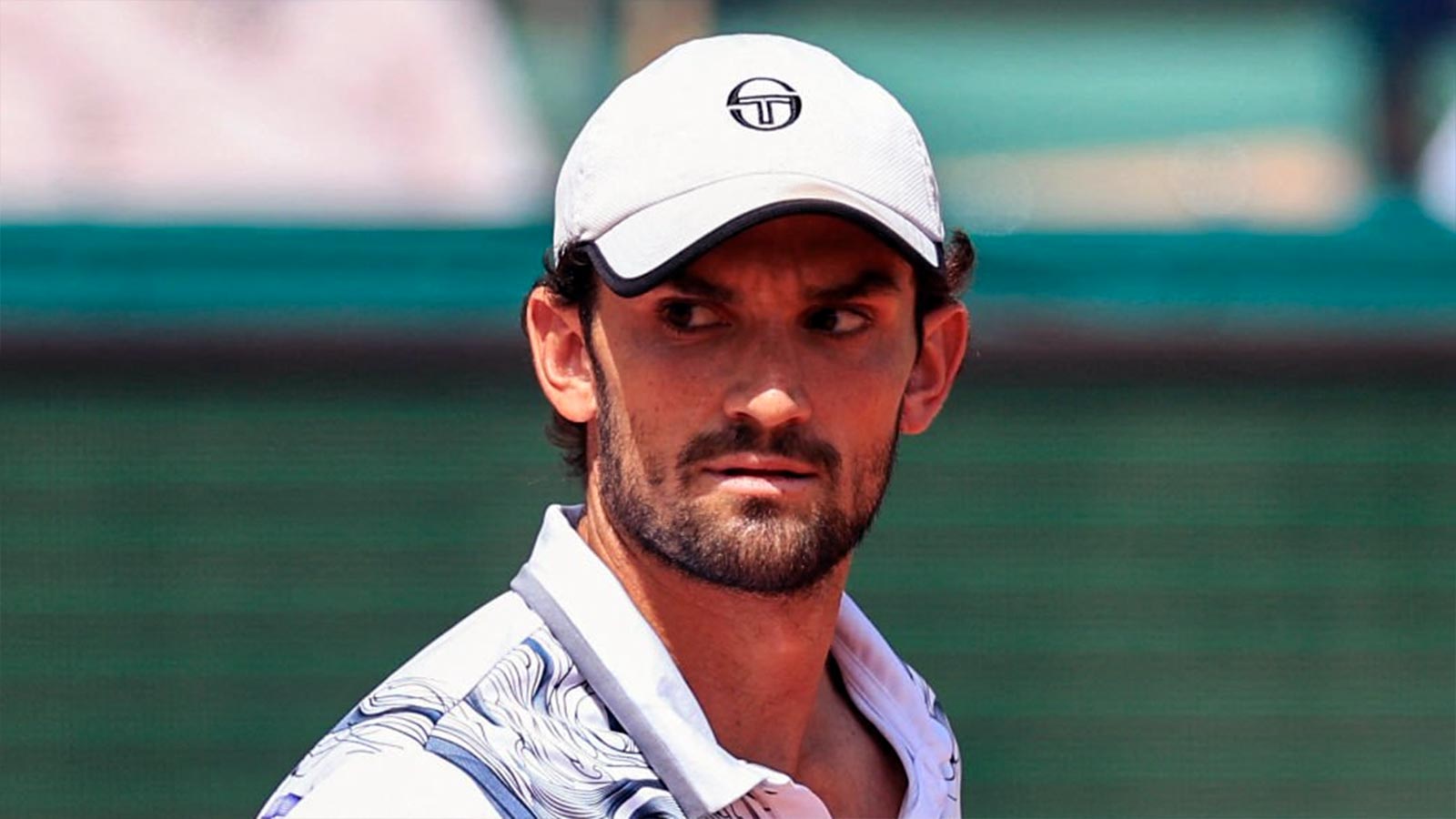
Three weeks ago, the tennis world barely knew his name. Ranked No. 204, his career seemed set for more years battling in the sport’s minor leagues. Then, in Shanghai, everything changed. Vacherot, now 26, arrived as an alternate in the qualifying draw and left as the lowest-ranked Masters 1000 champion ever. In a matter of days, he climbed to world No. 39, his life transformed in ways few athletes ever experience.
Source: Ubirata Online
The Shanghai Miracle: Triumphs, Tears, and a New Legacy
Vacherot’s run in Shanghai wasn’t just about winning—it was about rewriting the rules for what’s possible. He faced nine opponents, six of whom took the first set. Yet, Vacherot refused to fold. In the semi-final, he faced Novak Djokovic, a 24-time Grand Slam champion, and stunned the tennis world by defeating him 6-3, 6-4. “Just stepping onto the court with the most decorated player of all time was incredible. Being able to compete against him and win is something I will never forget,” Vacherot told reporters after his victory.
Source: Tennis World USA
His journey was personal for Monaco as well. Before Vacherot, no native Monégasque had ever won an ATP singles title. Suddenly, the principality’s tennis federation, led by Mélanie-Antoinette de Massy, was celebrating a homegrown champion. “Not much sleep since this crazy weekend and it just doesn’t stop,” de Massy said, reflecting the pride and excitement sweeping through Monaco.
The final in Shanghai was a family affair. Vacherot faced his cousin, Arthur Rinderknech—a player who had paved the way for both of them in professional tennis. Their emotional trophy ceremony was a culmination of years spent training together, first in Monaco and later at Texas A&M, where both had honed their games far from home.
Family, Faith, and the Long Road Through Texas
Vacherot’s journey into tennis wasn’t a straight line. His parents were both players, and he spent his childhood around tennis courts, occasionally hitting with top stars like Grigor Dimitrov and Daniil Medvedev. Yet, he wasn’t a prodigy. “I wasn’t an amazing player in juniors,” Vacherot admitted. “I was already really tall but not developed physically, not developed mentally. I just became an actual athlete and got myself perfectly ready for the tour.”
The turning point came when Rinderknech convinced the head coach at Texas A&M, Steve Denton, to take a look at his cousin. Denton saw raw potential—a “baby giraffe” needing to be molded. Vacherot’s time in Texas was a crash course in hard work and adaptation, learning to play on hard courts and survive the intense, team-driven atmosphere of college tennis. He majored in sports management, balancing academics and athletics in a new language, slowly building the foundation for the player he would become.
His coach, Benjamin Balleret, describes Vacherot’s mentality: “Val is basically better against better opponents. When he’s the favorite, he goes less for the ball. But when he’s the underdog, you see his fearlessness.” That trait would define his Shanghai run, where he won six matches from a set down.
Setbacks, Injuries, and the Power of Resilience
Vacherot’s progress wasn’t linear. He hovered near the top 100, the invisible line separating contenders from journeymen. Then, at the 2024 French Open, he suffered a shoulder injury. At Wimbledon, a slip on grass injured his knee. For a moment, it seemed as if his body wouldn’t let his talent flourish. Yet, these setbacks became fuel—a chance to toughen up physically and mentally.
When he finally returned to form, his belief began to grow with each victory. Shanghai was the breakthrough. He toppled seeded players like Alexander Bublik and Tallon Griekspoor, faced a drained Djokovic, and then battled Rinderknech in a three-set final. “You just believe in yourself,” he said of the run.
The Paris Masters followed, with Vacherot entering as a wild card. In his opening round, he dispatched Czech No. 18 Jiří Lehečka with a convincing 6-1, 6-3 scoreline, setting up another showdown with Rinderknech. The world was watching a new chapter in tennis unfold.
Source: Sky Sports
A New Arena, a New Stage: Paris Masters and Beyond
The Paris Masters had changed venues, moving from the iconic Accor Arena in Bercy to La Défense Arena—a shift that drew mixed reactions from players. Cameron Norrie, who awaited the winner of Vacherot vs. Rinderknech, described the new venue as “special,” praising its spaciousness and energy. “The stadium was close to full tonight, and I felt the energy. It was nice to have the energy for me,” Norrie shared.
Source: Tennishead
For Vacherot, the new stage meant another chance to prove himself. The season ahead is filled with opportunity: few ranking points to defend, and a newfound belief that he can compete with the best. His forehand may be inconsistent, and he’s learning to manage the physical toll of a packed schedule, but the doors are open.
The bigger question now is sustainability. Can Vacherot turn a fairytale into a consistent career? He’s realistic: “I know I’m not going to do it every single tournament, we know how tennis is. But I want to win more titles.” Even an ATP 250 trophy, he says, would be a new milestone.
The Road Ahead: Redefining Monaco’s Tennis Ambitions
Monaco, a principality better known for its luxury and glamour than for producing tennis champions, now has a hero. Vacherot’s ascent has energized the local tennis community and given young Monégasque players someone to emulate. The Monte Carlo Country Club, once just a training base, is now a symbol of possibility.
For Vacherot, the journey is far from over. With the support of his family, coaches, and the broader Monégasque community, he faces the challenge of building on his breakthrough. The road ahead will demand resilience, adaptation, and a willingness to keep learning. If Shanghai and Paris are any indication, the next chapters promise to be just as captivating.
Valentin Vacherot’s triumph is more than a personal achievement; it’s a cultural moment for Monaco and a testament to the unpredictability of sport. His fairytale run shows that in tennis, the margin between obscurity and glory can be as thin as a single match—and that belief, resilience, and a willingness to seize the moment can rewrite history.