
Quick Read
- Valentin Vacherot reached the Paris Masters quarter-finals, defeating Cameron Norrie in straight sets.
- He extended his Masters 1000 win streak to 10 matches, following his breakthrough Shanghai title.
- Vacherot’s ranking has surged from outside the top 200 to a projected career-high of No. 30.
- He will face world No 10 Felix Auger-Aliassime next, with top-20 ATP status within reach.
- Vacherot credits years of persistent work and resilience after injury setbacks.
Vacherot’s Unlikely Ascent: From Underdog to Paris Masters Quarterfinalist
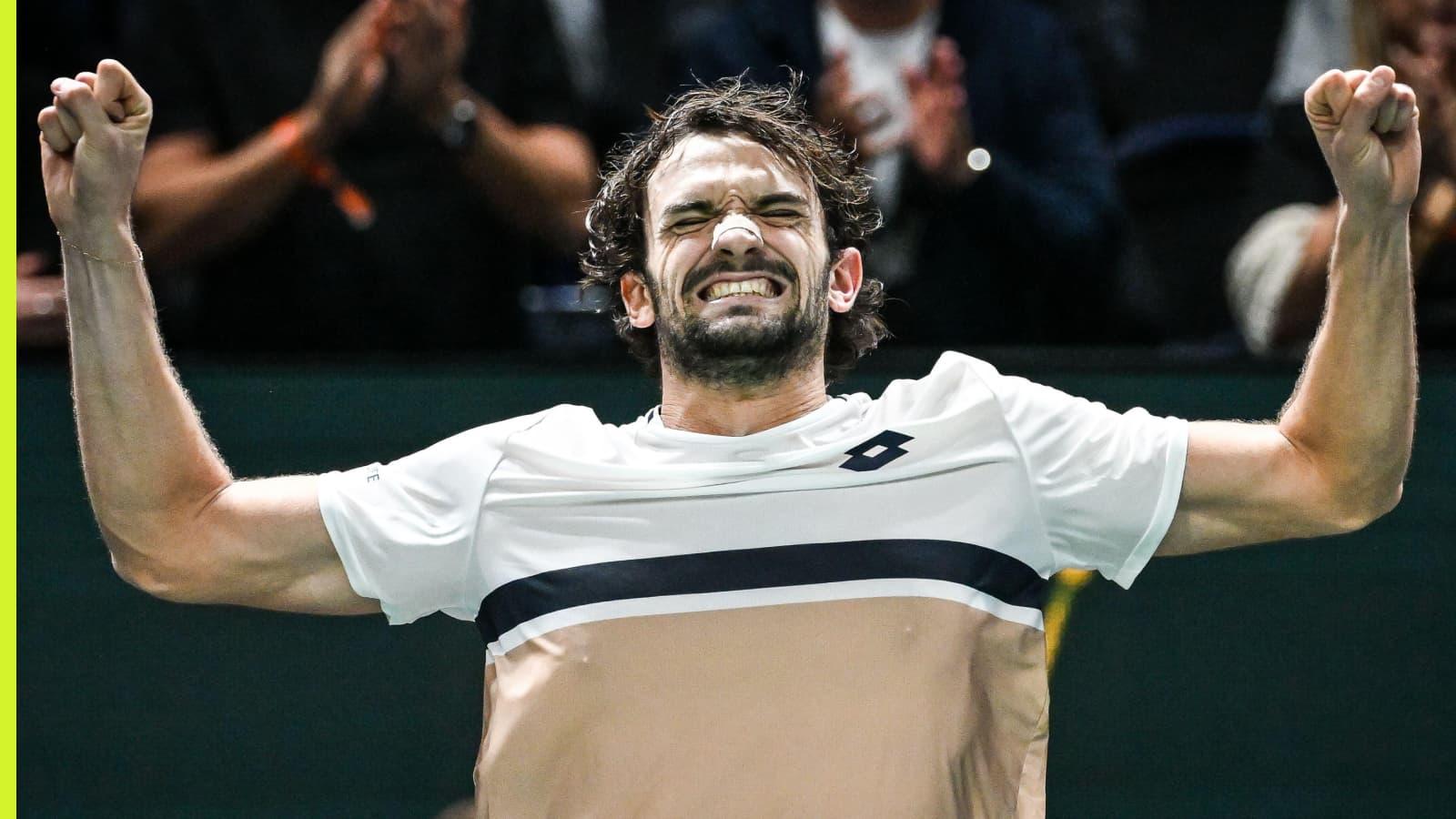
At the Paris La Defense Arena, the tennis world is witnessing a streak that few saw coming. Valentin Vacherot, the 26-year-old Monegasque, has bulldozed his way into the quarter-finals of the Paris Masters as a wildcard—defeating Cameron Norrie, world No. 31, with a composed 7-6(4), 6-4 victory. For most fans, Vacherot’s name only began to ring out after his astonishing Shanghai Masters triumph, but the Paris run is cementing his status as one of the ATP Tour’s most compelling new stories.
Masters Momentum: 10 Straight Wins and a Ranking Surge
Vacherot’s current streak is historic. Since Shanghai, where he clinched his maiden Masters 1000 title as a 204th-ranked qualifier, he has now won 10 consecutive main draw matches at Masters 1000 events. This rare feat places him alongside only one other player in history: David Nalbandian, who managed a similar run outside the top 20 back in 2007 (Tennis365).
In Paris, Vacherot’s victories over Jiri Lehecka, Arthur Rinderknech, and Cameron Norrie have not only captivated crowds but radically altered his career trajectory. The Shanghai win rocketed him 164 places in the rankings—moving from 204th to 40th. Now, his Paris performance has pushed him to a projected career-high of 30th. Should he advance further, a spot in the top 20 looms tantalizingly close.
Inside the Battle: Vacherot’s Reflections on Norrie and Growth
The scoreline in Vacherot’s win over Norrie may read straightforward, but the match itself was anything but simple. Norrie, known for his tenacious backhand, forced Vacherot to dig deep. “His backhand is so tough. It stays so low to the ground. I am tall and I have to get so low,” Vacherot shared with Sky Sports after the match. He noted that while left-handed backhands usually play into his forehand, Norrie’s shots often didn’t bounce, challenging Vacherot’s footwork and adaptability.
Despite Norrie winning more points overall and earning more break point chances, Vacherot’s serve held firm under pressure, saving all five break points faced. “I saved a lot of break points today. There is some good stuff and some not as good. Not everything is perfect; there’s stuff to work on,” Vacherot admitted, showing a candid awareness of his strengths and the areas he’s still refining (Tennishead).
After the match, Vacherot praised Norrie’s game and their history of training together: “We have trained a lot together, I know him. I was trying to hit my backhand really hard to his forehand, but I think he was responding really well today,” he said. For Vacherot, the win was especially meaningful because of Norrie’s high level of play—an indication that his own rise is built on genuine merit, not just favorable draws.
Adversity and Belief: Injury, Setbacks, and a New Mindset
Vacherot’s climb hasn’t been linear. Just last year, he was ranked 110th, on the cusp of bigger opportunities, when injury struck. “Before I actually sustained an injury, I was ranked 110. There were a lot of points to defend, so I went down in the ranking,” he recalled in his Paris press conference (Tennis365). The setback was compounded by the pressure to defend ranking points—a common challenge for tour-level professionals.
But the adversity seems to have forged a more resilient competitor. “I played much better this year rather than last year, and it was so hard for me to reach the quarter-finals. I didn’t reach a lot of semi-finals and finals, but I continue to believe in it right now. Maybe what was abnormal, it was rather to be ranked No 204. I knew that I could play better,” he reflected. It’s a rare moment of vulnerability from a player whose career, until now, had been defined by quiet persistence rather than headline-grabbing exploits.
Vacherot’s self-belief—”I knew that my level was closer to the top 100, and then that I could break into the top 50 rather than being actually ranked 200″—is now being vindicated on the sport’s biggest stages.
The Road Ahead: Seeded Status and a Quarterfinal Clash
With his Paris Masters run, Vacherot is now positioned within the ATP’s top 32, virtually guaranteeing seeded entry into the upcoming Australian Open. This is no small milestone for a player whose career was, until recently, spent grinding through qualifiers and lower-tier events. The next test is formidable: world No 10 Felix Auger-Aliassime awaits in the quarter-finals—a clash that will further reveal just how high Vacherot’s ceiling might be.
Vacherot’s journey, marked by his Shanghai title and now Paris run, is being hailed as the product of “many years, pure work,” in his own words (Ubitennis). In an era where tennis narratives are often dominated by established superstars, the emergence of a new contender—one who speaks openly about the mental and physical battles behind the scenes—offers a refreshing counterpoint.
What’s Next: Can Vacherot Sustain the Momentum?
As the Paris Masters heads into its final rounds, all eyes are on whether Vacherot can extend his streak and make further history. If he reaches the semi-finals, he’ll leap to 24th in the live rankings. A finals appearance or title would push him even higher, with top-20 status within reach. But for Vacherot, the journey appears to matter as much as the destination.
“Everything is clicking now. It’s the work of many years, pure work,” he said, capturing the spirit of a player whose patience is finally paying off. Whether his run ends in the next round or continues into yet another unlikely triumph, Vacherot’s story is a reminder that, in tennis, breakthroughs can come when least expected.
Vacherot’s Paris Masters surge isn’t just a tale of rankings and victories—it’s a testament to resilience, adaptability, and belief in one’s process. His candid reflections and steady growth signal a new contender who’s not just winning matches, but winning respect across the ATP Tour.