
Quick Read
- Vice President JD Vance’s official X account posted and then deleted a message referring to the 1915 Armenian massacres as ‘genocide’ during his visit to Yerevan, Armenia on February 10, 2026.
- The White House stated the post was made in error by staff and clarified there was ‘no change of policy at this time’ regarding the Trump administration’s stance.
- Vance himself did not use the word ‘genocide’ in his remarks to reporters, instead calling it a ‘very terrible thing’ and a ‘sign of respect’ for the victims and Armenian government.
- The deletion drew strong condemnation from Armenian diaspora groups and Democratic lawmakers, who called for explanations and criticized the administration’s stance.
- The incident marks the second time in days the Trump administration faced questions about its social media protocols, following a previous deletion from President Trump’s Truth Social account.
YEREVAN (Azat TV) – The White House on Tuesday, February 10, 2026, deleted a social media post from Vice President JD Vance’s official X account that commemorated the 1915 massacres of Armenians as a “genocide.” The post, which appeared during Vance’s two-day diplomatic trip to Armenia, was removed shortly after publication, with White House officials stating it was posted in error by staff and did not reflect a change in U.S. policy. The incident immediately ignited controversy, drawing sharp criticism from Armenian diaspora groups and opposition lawmakers, and highlighting the persistent diplomatic tightrope the United States walks regarding the historical designation of the Armenian Genocide.
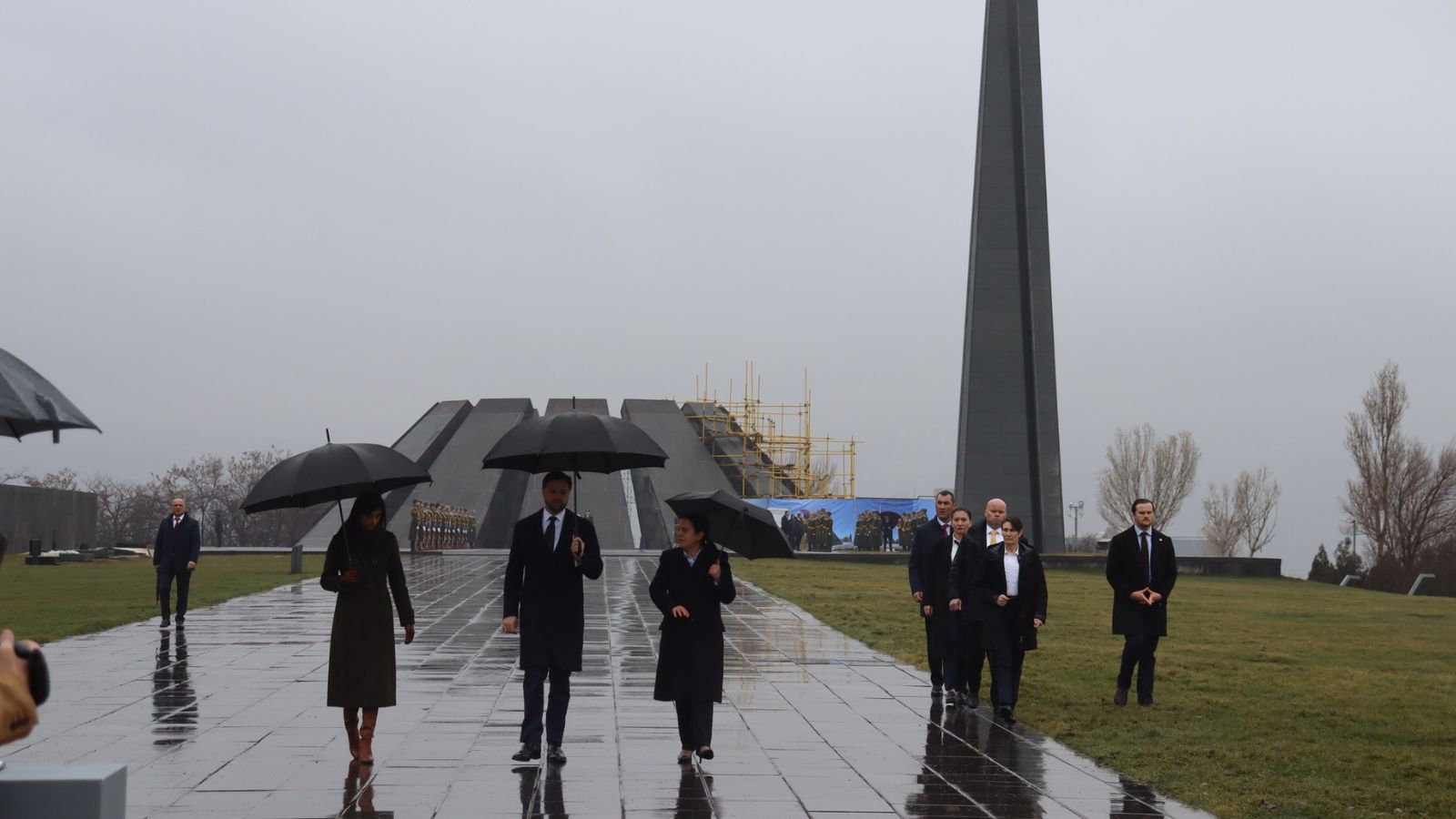
Vice President Vance, accompanied by his wife Usha Vance, had visited the Tsitsernakaberd Armenian Genocide Memorial in Yerevan, marking the first visit by a U.S. vice president to the South Caucasus republic. His official X account initially described the visit as intended “to honor the victims of the 1915 Armenian genocide.” However, the post was quickly removed, prompting a Vance aide to state that the message was an error by staff not part of the traveling delegation, as reported by Reuters.
White House Clarifies Stance on Armenian Genocide
Following the deletion, White House spokeswoman Karoline Leavitt affirmed that there had been “no change of policy at this time” regarding the Trump administration’s stance on the historical incident. President Donald Trump, like many of his predecessors, has avoided using the term “genocide” in his official statements on the 1915 events, despite the U.S. Congress and former President Joe Biden both formally recognizing it as such. When asked by reporters about the purpose of his visit to the memorial, Vance himself did not use the term “genocide,” instead stating, “Obviously, it’s a very terrible thing that happened little over 100 years ago, and something that was just very, very important to them culturally.” He emphasized his visit was a “sign of respect” for the victims and the Armenian government, a “very important partner for us in the region.”
Reactions and Diplomatic Fallout from the Deleted Post
The swift deletion of the post provoked strong reactions. Alex Galitsky, policy director for the Armenian National Committee of America, an advocacy group, condemned the move on X, calling Vance a “coward for deleting this post” and an “insult to the memory” of the victims. The Armenian Assembly of America also called for a public explanation, with co-chairs Talin Yacoubian and Oscar Tatosian stating, “We deserve better from our elected officials and call for a public explanation for the apparent flip-flop.” Opposition lawmakers also voiced their disapproval. Congressman Jim McGovern, a Democrat, described the move as “disgusting and pathetic,” adding that “The Armenian Genocide is a fact” and suggesting that the Vice President and President prioritize “authoritarian buddies than the truth.” Aram Hamparian, director of the Armenian National Committee of America, suggested that pressure from Ankara was likely behind the incident.
U.S. Policy and Turkey’s Position on the 1915 Massacres
The controversy underscores the delicate balance in U.S. foreign policy, particularly concerning its relationship with Turkey, a key NATO ally. Turkey acknowledges that many Armenians died in clashes with Ottoman forces during World War One but vehemently disputes the figures and denies that the killings constituted a systematically orchestrated genocide. For decades, the U.S. government largely refrained from using the term “genocide” to avoid alienating Ankara. This changed in 2021 when President Joe Biden became the first U.S. president to formally recognize the Armenian Genocide, a move that reportedly led to a tense phone call with Turkish President Recep Tayyip Erdoğan. The Trump administration has maintained close ties with Erdoğan, particularly in diplomatic initiatives such as those concerning Gaza.
Broader Context of White House Social Media Protocol
This incident marked the second time in days that the Trump administration faced questions about its social media protocols. Late last week, the White House defended and then deleted a post to President Trump’s Truth Social account that included a racist depiction of former President Barack Obama and first lady Michelle Obama. Trump later clarified that he had not watched the entire video before a White House aide posted it. When asked if the White House had a broader social media problem, spokeswoman Karoline Leavitt responded with a definitive “no.”
Vance’s visit to Armenia was part of a broader diplomatic effort by the Trump administration to promote peace agreements between Armenia and Azerbaijan, after nearly 40 years of conflict. During his trip, Vance signed a deal with Armenian Prime Minister Nikol Pashinyan that could facilitate the U.S. in building a nuclear power plant in Armenia. He later traveled to Azerbaijan, signing a strategic partnership deal encompassing economic and security cooperation, as Washington seeks to expand its influence in a region traditionally dominated by Russia.
The deletion of Vice President Vance’s social media post, despite his solemn visit to the Tsitsernakaberd memorial, highlights the persistent tension between historical recognition and geopolitical expediency in U.S. foreign policy, particularly concerning its alliances in the strategically vital South Caucasus and with NATO member Turkey.