
Quick Read
- Venezuela claims US military strikes in the Caribbean amount to an ‘undeclared war’.
- US attacks have reportedly killed at least 17 people in recent weeks.
- Venezuela and Colombia call for a UN investigation and condemn the US naval buildup.
- Even Venezuelan opposition leaders criticize foreign military intervention.
- The US says the strikes target drug traffickers but offers little evidence.
Venezuela Demands UN Investigation Into US Strikes in the Caribbean
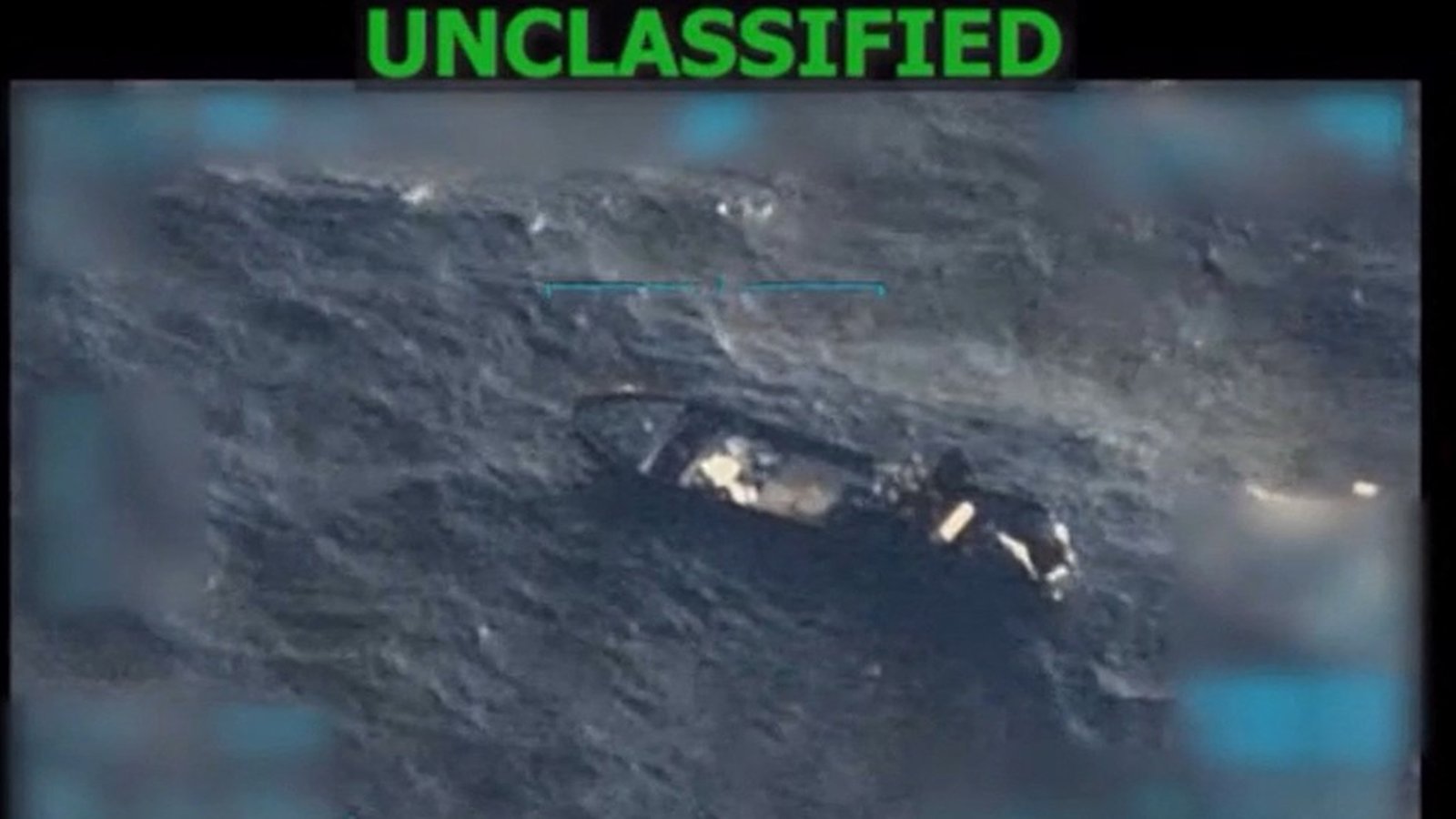
In a dramatic escalation of regional tensions, Venezuela has accused the United States of waging what it calls an “undeclared war” in the Caribbean Sea. The accusation comes in the wake of a recent US military strike against a vessel that claimed the lives of three people—a move that Venezuelan officials say signals a dangerous shift in American tactics and threatens the stability of Latin America.
The incident, confirmed by US President Donald Trump on his Truth Social platform, involved a “lethal kinetic strike” carried out under the auspices of US Southern Command. This command encompasses 31 countries across South and Central America and the Caribbean, highlighting the wide geographic scope of US military operations in the region. Trump claimed the targeted vessel was engaged in narcotics trafficking, but offered no concrete evidence or details regarding its origin or the precise location of the strike.
According to Reuters, recent US operations in the Caribbean have resulted in at least 17 deaths over several weeks, raising alarm among both Venezuelan officials and international observers. The strikes have reportedly involved US warships and advanced F-35 fighter jets, further underscoring the seriousness of the military campaign.
Regional Leaders Question US Motives and Call for Legal Accountability
Venezuelan Defense Minister Vladimir Padrino Lopez issued a strongly worded statement on Friday, asserting, “It is an undeclared war. People, whether or not they are drug traffickers, have been executed in the Caribbean Sea without a chance to defend themselves.” His remarks were echoed by Attorney General Tarek William Saab, who condemned what he described as crimes against humanity. Saab called for a United Nations investigation, stating, “Firing missiles at defenseless fishermen on a small boat amounts to crimes against humanity and must be investigated by the UN.”
Despite Washington’s assertion that the strikes are part of an anti-drug campaign, skepticism persists. US officials have provided scant evidence linking the targeted vessels to drug trafficking, leaving critics to question whether the operations are justified—or even legal—under international standards. Experts point out that drug trafficking is not a capital offense under US law, casting doubt on the legitimacy of the killings even by American judicial standards.
In response to the mounting threat, Venezuela has launched large-scale military drills on the Caribbean island of La Orchila. President Nicolas Maduro has gone so far as to claim that Washington is preparing an invasion, stating, “This is an imperial plan for regime change, to impose a puppet government and steal our oil.” Maduro has called on citizens to participate in militia training and defend the country against what he terms “imperialist aggression.”
Opposition Voices and Regional Neighbors Join the Chorus of Concern
Interestingly, even Venezuelan opposition figures—often critical of Maduro’s government—have condemned the US military actions. Henrique Capriles, a $1ial candidate, stressed that “military intervention is not a solution” and advocated for political dialogue as the only viable path forward. “Political dialogue is the only path forward, not foreign attacks,” he said, urging restraint on all sides.
The US military buildup in the Caribbean has drawn criticism from neighboring Colombia as well. Colombian Foreign Minister Rosa Villavicencio, in a statement released on Friday, labeled the US presence “excessive” and “destabilizing for Latin America.” She argued that the deployment of warships, submarines, and fighter jets off Venezuela’s coast was “disproportionate” and warned of the risk of a broader intervention. “Venezuela is concerned; as is the entire region, about the risk of an intervention … Such a massive military buildup cannot be justified,” Villavicencio noted.
Villavicencio also disputed Trump’s assertion that the US fleet was there to combat drug trafficking, suggesting instead that Washington may be preparing to strike Venezuela and potentially topple President Maduro. “This does not seem to be the legal way to pursue criminal groups,” she emphasized, highlighting international norms regarding the treatment of suspects. Her remarks signal a deepening rift in US-Colombia relations, already strained by recent US sanctions and disputes between Trump and Colombian President Gustavo Petro.
Legal and Humanitarian Implications: Calls for International Oversight
The controversy has prompted calls for greater transparency and accountability. Human rights advocates and legal experts argue that the killings raise serious questions about due process and the rule of law. The lack of clear evidence and the absence of judicial proceedings have fueled accusations that the US is acting outside accepted legal frameworks. As Attorney General Saab pointed out, “Such actions must be subject to international scrutiny.”
Venezuela’s appeal for a UN investigation underscores the gravity of the situation. If substantiated, the allegations could trigger a broader inquiry into US military conduct in the region and the legal basis for its anti-drug operations. The mounting criticism from both allies and adversaries in Latin America suggests that Washington’s approach may have unintended consequences, potentially undermining its stated goal of curbing narcotics trafficking.
For now, tensions remain high, with both Venezuela and its neighbors on alert for further escalation. The prospect of an expanded conflict in the Caribbean looms large, as regional leaders weigh their options and the international community watches closely.
What emerges from this crisis is not merely a clash between two governments, but a test of the balance between national security and international law. The US’s aggressive tactics have united voices across the Venezuelan political spectrum and throughout Latin America, demanding accountability and transparency. As the world awaits the UN’s response, the region faces a pivotal moment—one that will shape the future of its sovereignty and the legitimacy of foreign intervention.