
Quick Read
- Vivek Ramaswamy’s super PAC targets NYC mayoral candidate Zohran Mamdani.
- A Times Square billboard campaign urges New Yorkers to move to Ohio.
- Ramaswamy emphasizes Ohio’s ‘American spirit’ as part of his 2026 gubernatorial campaign.
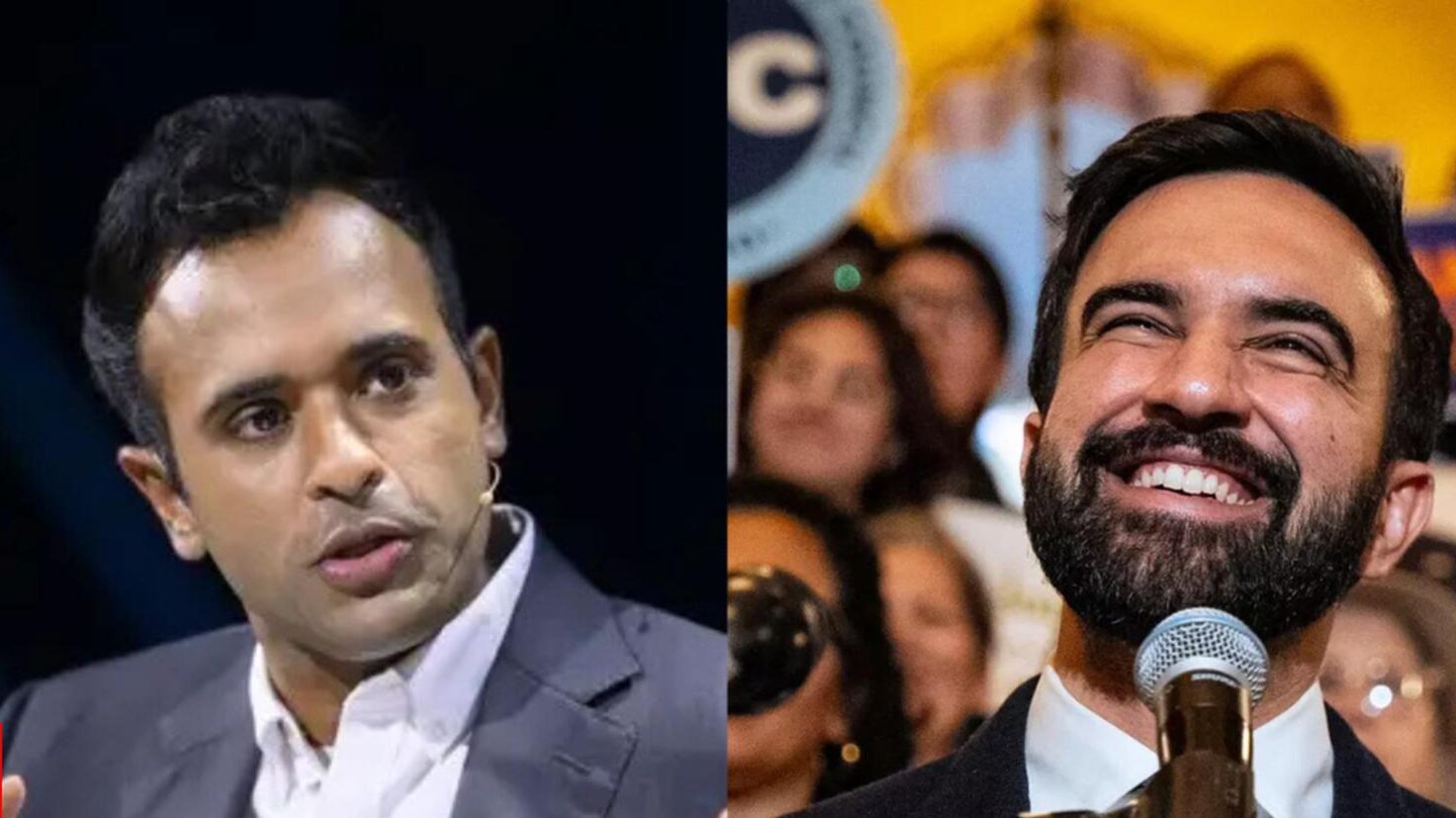
In an increasingly polarized political landscape, Vivek Ramaswamy, a prominent Republican figure and former head of the Department of Government Efficiency, has made headlines once again. This time, his super PAC, Victors Not Victims, has taken a direct aim at New York City mayoral candidate Zohran Mamdani, branding him as a ‘radical socialist’ while urging New Yorkers to consider Ohio as their new home. The campaign, which includes a giant billboard in Times Square, is part of Ramaswamy’s broader strategy to promote his gubernatorial bid in Ohio for 2026.
Ramaswamy’s Campaign Strategy
Ramaswamy, a 38-year-old former biotech executive, has been vocal about his concerns regarding the direction of urban governance in blue states. On July 17, 2025, he posted on X (formerly Twitter), claiming that cities like New York have lost their ‘American spirit’ under progressive leadership. He warned that if Mamdani, who is running as a progressive candidate, were to become mayor, it could lead to an exodus of residents seeking better opportunities elsewhere.
In an op-ed published in the New York Post, Ramaswamy elaborated on his criticism, emphasizing that his opposition to Mamdani was not rooted in the candidate’s Ugandan-Indian heritage but rather in his ‘anti-capitalist worldview.’ He wrote, “The real problem with Mamdani isn’t his race or religion. It’s his policies that risk destroying our nation’s largest city.”
Ramaswamy’s super PAC has already raised $17 million, according to Times of India, making it one of the most well-funded early campaigns for the 2026 gubernatorial race. The billboard campaign in Times Square, featuring the message ‘Worried About Zohran? Ohio Is Waiting For You!’ is seen as a strategic move to highlight Ohio as a haven for those disillusioned with progressive policies in states like New York.
Zohran Mamdani: A Controversial Contender
Zohran Mamdani, a New York State Assembly member of Ugandan-Indian descent, has built his political platform on progressive policies, including affordable housing and social equity. While his supporters see him as a champion for marginalized communities, critics like Ramaswamy have labeled his policies as ‘radical leftist.’ Mamdani’s campaign has faced significant challenges, including racially charged attacks from opponents. However, Mamdani has remained steadfast, focusing on issues he believes resonate with the average New Yorker.
Despite the criticism, Mamdani’s campaign has gained traction among young voters and progressive activists. His candidacy represents a broader trend of progressive candidates gaining prominence in traditionally centrist or conservative political landscapes.
The Role of Super PACs in Shaping Political Narratives
The involvement of super PACs like Victors Not Victims highlights the growing influence of money in American politics. According to AOL News, super PACs have become a critical tool for candidates to amplify their messages, often through aggressive advertising campaigns. Ramaswamy’s super PAC is no exception, leveraging its substantial war chest to shape public perception of Mamdani and, by extension, progressive governance.
While Ramaswamy’s campaign has drawn criticism for its polarizing rhetoric, it has also sparked a broader conversation about the role of ideology in urban governance. By positioning Ohio as a counterpoint to New York, Ramaswamy is not just campaigning for governor; he is also challenging the ideological divide between red and blue states.
Implications for the 2026 Gubernatorial Race
Ramaswamy’s focus on New York City’s mayoral race is part of a broader strategy to attract national attention to his gubernatorial campaign. By framing Ohio as a beacon of ‘American excellence,’ he aims to appeal to conservatives disillusioned with progressive policies in urban centers.
As reported by Star Tribune, the use of super PACs to fund early campaign efforts is not unique to Ramaswamy. In Wisconsin, for example, Republican candidates have also relied heavily on super PAC funding to gain an edge in the upcoming gubernatorial race. This trend underscores the increasing reliance on external funding sources to drive political campaigns, raising questions about the influence of wealthy donors on electoral outcomes.
Ramaswamy’s campaign has also highlighted the potential for ideological battles to shape the future of American politics. With the 2026 elections still more than a year away, the strategies employed by candidates like Ramaswamy could set the tone for political discourse in the coming years.
As the political landscape continues to evolve, the clash between progressive and conservative ideologies will undoubtedly play a pivotal role in shaping the future of governance in the United States.