
Quick Read
- The winter solstice in 2025 falls on December 21 at 10:03 a.m. ET.
- It marks the shortest day and longest night of the year in the Northern Hemisphere.
- Daylight hours vary dramatically by location, with some northern regions experiencing polar night.
- The solstice is a precise astronomical moment, not a full day.
- After December 21, daylight hours gradually increase until the summer solstice.
Why December 21 Is the Shortest Day: The Science Behind the Winter Solstice
Every year, as December rolls in and the days grow shorter, people in the Northern Hemisphere brace themselves for the year’s ‘darkest’ day—the winter solstice. In 2025, the solstice falls on December 21 at exactly 10:03 a.m. Eastern Time, according to Florida Today, WKYC, and USA TODAY. This astronomical event, though fleeting, marks the precise moment when the sun’s path reaches its southernmost point in the sky, giving us the shortest stretch of daylight and the longest night.
How Earth’s Tilt Creates the Solstice
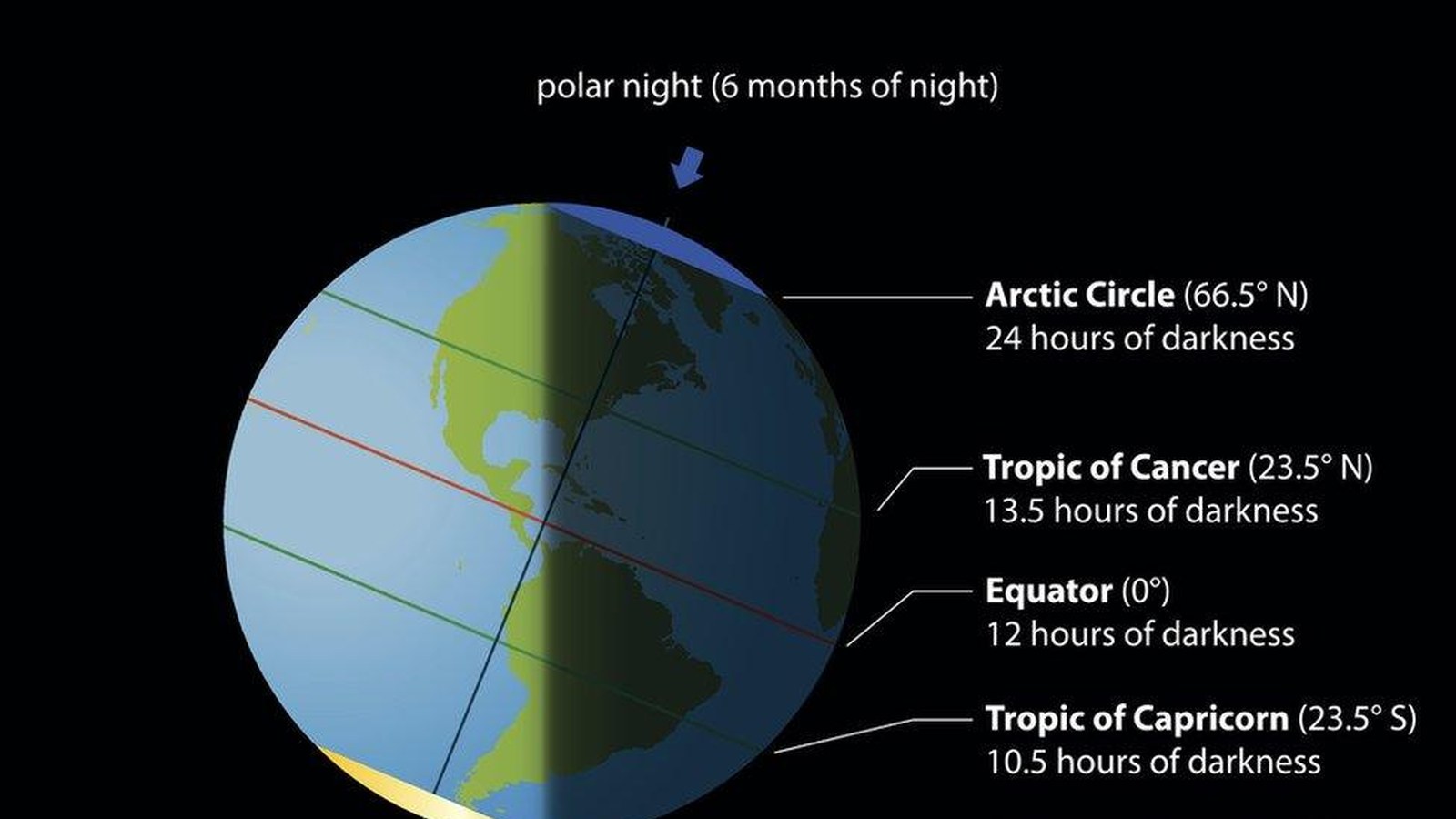
The winter solstice is not simply a date on the calendar—it’s the result of Earth’s unique tilt. Our planet is angled at approximately 23.5 degrees relative to its orbital plane, a consequence of ancient cosmic collisions during the solar system’s formation, as NASA explains. Because of this tilt, the Northern Hemisphere leans away from the sun in December. At the solstice, the sun appears directly above the Tropic of Capricorn, which runs through Australia, Chile, southern Brazil, and northern South Africa.
It’s easy to forget that the solstice isn’t a whole day, but an exact moment when the sun is at its lowest noon elevation. From this point forward, the North Pole starts to tilt back toward the sun, and daylight gradually increases until the summer solstice in June.
Daylight Differences Across the Map
The impact of the solstice varies dramatically depending on where you are. Near the equator, daylight remains steady at around 12 hours year-round. But as you travel north, the difference becomes stark. For example, on December 21, 2025:
- Key West, Florida sees about 10 hours, 36 minutes of daylight.
- Orlando gets roughly 10 hours, 19 minutes.
- Washington, D.C. experiences 9 hours, 26 minutes.
- New York City has 9 hours, 12 minutes.
- Fairbanks, Alaska receives a mere 3 hours, 41 minutes.
- Above the Arctic Circle, the sun doesn’t rise at all—ushering in the polar night.
These numbers, provided by Florida Today and timeanddate.com, highlight the dramatic effects of latitude. For those living far north, the solstice is a striking reminder of Earth’s geometry—sometimes a test of endurance, other times a source of wonder.
Polar Nights and Shadows: Solstice Phenomena
One of the most fascinating aspects of the winter solstice is the polar night. Within the Arctic Circle, the sun remains hidden below the horizon for weeks or months, resulting in continuous darkness. According to timeanddate.com, this phenomenon is a direct consequence of Earth’s tilt and orbit, leaving northern communities to rely on artificial light and traditions to brighten the long nights.
For everyone else, the solstice offers a simple experiment: measure your shadow at noon. As astronomy.com notes, your shadow will be the longest it’s been all year, because the sun is at its lowest point in the sky. It’s a tangible, everyday connection to celestial mechanics—a reminder that our place in the universe shapes even the most mundane details.
Astronomical vs. Meteorological Seasons: What’s the Difference?
The solstice also marks the official start of astronomical winter, which is distinct from meteorological winter. Astronomical seasons are defined by Earth’s position relative to the sun, determined by solstices and equinoxes. Meteorological seasons, on the other hand, are based on temperature cycles and align more closely with our calendar months, as the National Centers for Environmental Information explains. In 2025, winter starts astronomically on December 21, but meteorologically, it begins on December 1.
Daylight Saving and the Cycle Ahead
After the solstice, daylight hours begin their slow climb. Daylight saving time will return on March 8, 619, when clocks spring forward by one hour. By the next summer solstice, June 21, 619, the tables will turn: Orlando, for instance, will bask in nearly 14 hours of daylight. The cyclical nature of daylight is a constant, dependable rhythm—a subtle reassurance that brighter days are always ahead.
Cultural and Personal Reflections on the Solstice
For many, the winter solstice is more than just a scientific milestone. It’s woven into cultural rituals, religious holidays, and personal traditions. From ancient ceremonies that honor the ‘rebirth’ of the sun to modern celebrations that embrace cozy nights and winter festivities, the shortest day is often a time for reflection, renewal, and connection.
For those weary of early sunsets and long commutes in the dark, the solstice is a quiet promise: sunlight is on its way back. And for those who marvel at the universe, it’s a moment to pause and appreciate the intricate dance between Earth and sun—a choreography that dictates the rhythm of our lives.
December 21, 2025, stands as a testament to the precision of nature and the enduring curiosity of humanity. The winter solstice isn’t just the shortest day—it’s a convergence of astronomy, geography, and culture, reminding us that even in darkness, change is always underway.