
Quick Read
- Marimar Martinez was shot by Border Patrol agents during a controversial operation in Chicago.
- Federal agents allege Martinez and another individual rammed their vehicle, leading to the shooting.
- The incident sparked widespread protests in Chicago’s Brighton Park neighborhood.
- Critics argue the use of force was excessive, while officials claim it was self-defense.
- The case highlights tensions over immigration enforcement and community relations.
The streets of Chicago witnessed a charged confrontation between federal Border Patrol agents and local community members, culminating in the shooting of a woman, Marimar Martinez, during a contentious operation. This incident has spotlighted the tensions surrounding federal immigration enforcement in urban areas, especially those with significant immigrant populations.
What Led to the Incident?
The altercation unfolded in Chicago’s Brighton Park neighborhood, a predominantly Latino community, during an immigration enforcement operation dubbed “Operation Midway Blitz.” Federal agents alleged that Martinez, along with Anthony Ian Santos Ruiz, used their vehicles to ram and box in a U.S. Customs and Border Protection (CBP) vehicle. According to federal statements, Martinez was armed with a semi-automatic weapon and had previously been flagged for doxxing federal agents and inciting violence against them.
Federal prosecutors claim that after being cornered by a convoy of vehicles, a Border Patrol agent exited his immobilized car and fired multiple shots at Martinez. She sustained gunshot wounds but managed to drive to a nearby repair shop, where she was later transported to a hospital for treatment. Ruiz was arrested shortly after the incident at a nearby gas station. Both individuals now face federal charges of assaulting law enforcement officers.
Community Response and Protests
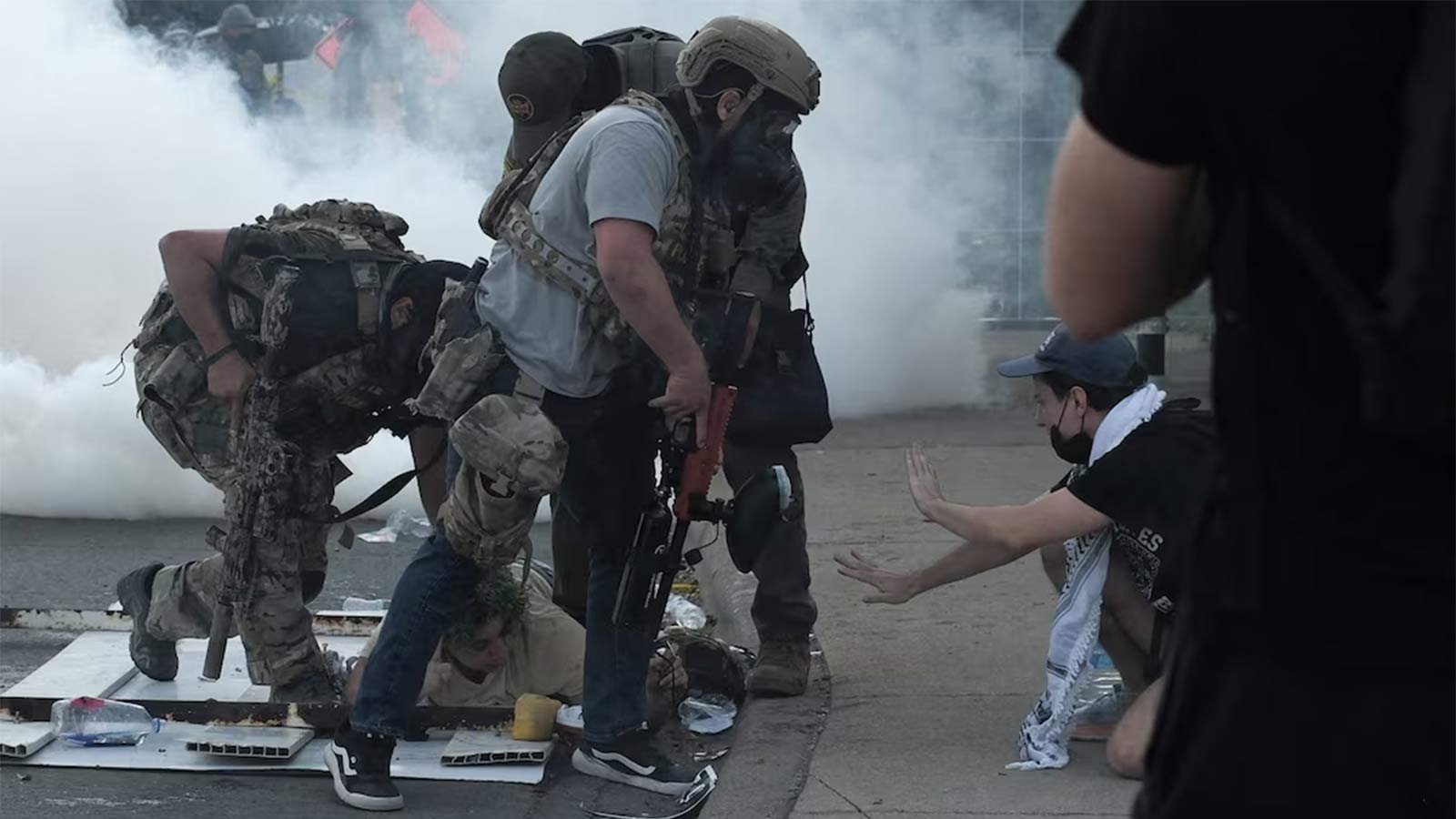
The shooting sparked immediate outrage in the Brighton Park neighborhood. Dozens of residents, many of whom are part of immigrant communities, gathered to protest what they perceived as excessive force by federal agents. Protesters clashed with agents equipped with military-style weapons, leading to a chaotic scene where tear gas and pepper balls were deployed to disperse the crowd. The incident has further strained relations between local residents and federal law enforcement, highlighting a growing mistrust fueled by aggressive immigration enforcement tactics.
Community organizations have long been mobilizing against federal immigration operations in Chicago, creating networks to alert undocumented immigrants of enforcement activities. The shooting of Martinez has galvanized these efforts, with activists condemning the federal government’s approach as heavy-handed and disproportionate.
Legal and Political Implications
The legal proceedings against Martinez and Ruiz have raised questions about the use of force by federal agents. While the Department of Homeland Security (DHS) insists that the agents acted in self-defense, critics argue that the escalation was avoidable. Notably, Martinez has not been charged with any weapons violations, despite allegations that she was armed during the incident. This discrepancy has fueled calls for greater transparency and accountability in federal operations.
Illinois Governor J.B. Pritzker has voiced strong criticism of the Trump administration’s immigration policies, accusing federal agencies of overreach and lack of accountability. The governor has also condemned the deployment of National Guard troops to Chicago as an unwarranted display of force. These developments underscore the broader political battle over immigration enforcement, with Chicago serving as a flashpoint in the national debate.
The Broader Context
The incident is not an isolated one; it is the second shooting by federal agents in the Chicago area during Operation Midway Blitz. Just weeks earlier, another individual, Silverio Villegas González, was fatally shot by federal agents during a traffic stop. These cases have intensified scrutiny of the operation, which has been criticized for its aggressive tactics and lack of oversight.
Federal officials, however, argue that such measures are necessary to maintain law and order. DHS Secretary Kristi Noem has described the protesters involved in the Brighton Park incident as “domestic terrorists,” alleging that they are part of an organized effort to target law enforcement officers. This rhetoric has further polarized public opinion, with some viewing federal actions as justified and others seeing them as an infringement on civil liberties.
The shooting of Marimar Martinez by Border Patrol agents serves as a stark reminder of the deep divisions surrounding immigration enforcement in the United States. As legal battles unfold and community protests continue, the incident highlights the urgent need for dialogue and reform in addressing the complex challenges of immigration and public safety.