
Quick Read
- Xpeng’s January 2026 vehicle deliveries dropped by 34% year-over-year to 20,011 units.
- Xpeng unveiled the GX, a new flagship six-seat SUV with Range Rover-inspired styling and advanced technology like steer-by-wire and AI-powered chassis.
- The GX is expected to offer both BEV and EREV variants, with the EREV version projected to have over 1,000 km of range.
- Volkswagen’s collaboration with Xpeng on the China Electronic Architecture (CEA) platform ended last year, with VW now solely developing it.
- The full reveal of the Xpeng GX is anticipated at the Beijing Auto Show in late April 2026, with an expected price range of $57,600-$72,000.
BEIJING (Azat TV) – Chinese electric vehicle manufacturer Xpeng (NYSE:XPEV) experienced a significant 34% year-over-year decline in January 2026 vehicle deliveries, totaling 20,011 units. This downturn has intensified market scrutiny on the company’s near-term growth trajectory and profitability, even as Xpeng simultaneously unveiled its new flagship six-seat SUV, the GX, and adjusted to the conclusion of a key platform development partnership with Volkswagen.
The mixed news highlights Xpeng’s current dual challenge: bolstering sales performance in a fiercely competitive market while pushing the boundaries of innovation with advanced new models. The delivery figures have contributed to a recent decline in Xpeng’s share price momentum, though some analysts, as reported by Simply Wall St, still view the stock as undervalued based on detailed growth and profitability forecasts.
Xpeng GX SUV Unveiled with Advanced Features and Premium Ambitions
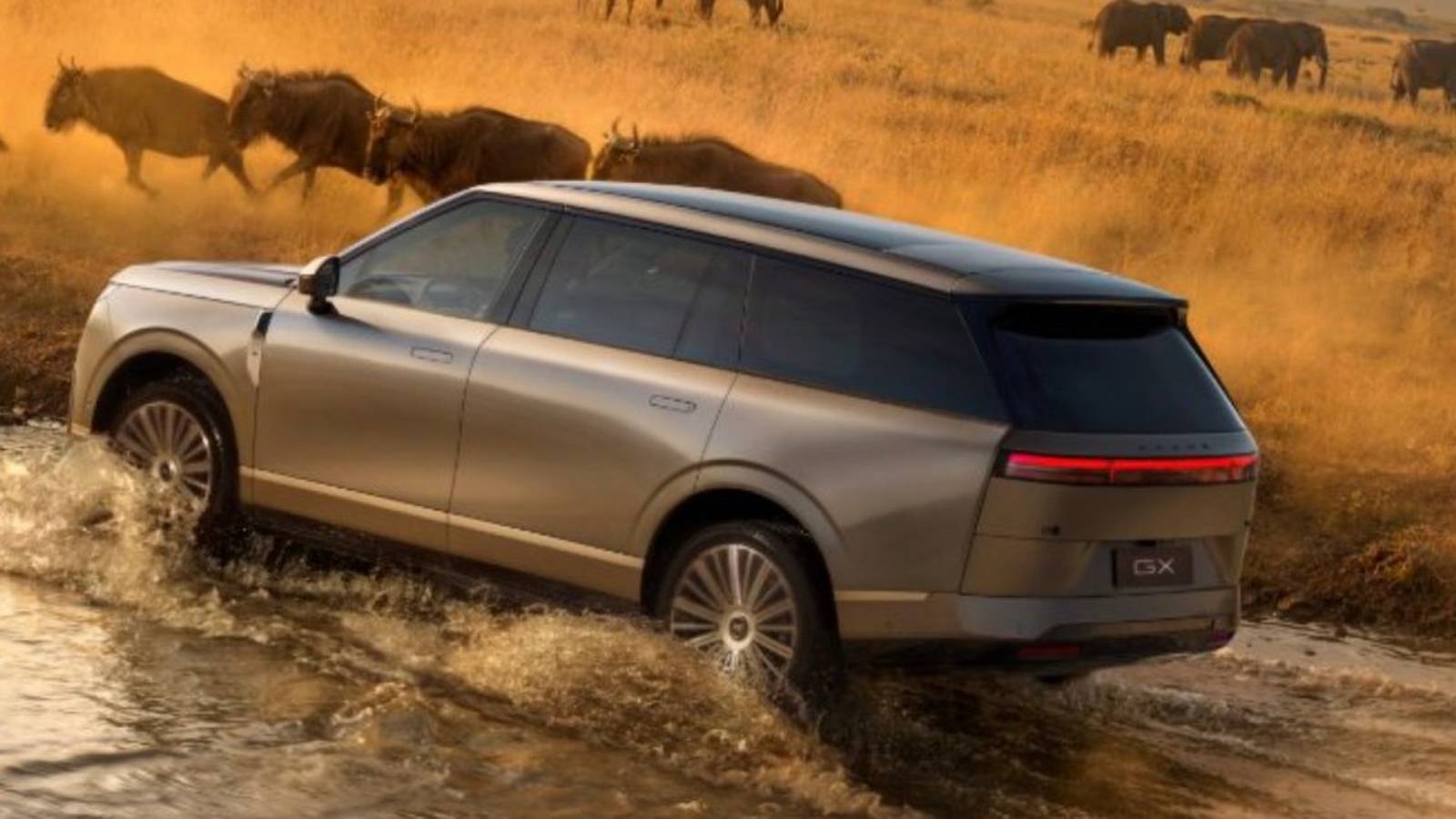
Amidst the delivery challenges, Xpeng officially revealed the first images of its new flagship SUV, the GX, signaling an ambitious push into China’s lucrative premium three-row segment. The GX, a six-seat vehicle, immediately drew attention for its design, which takes clear inspiration from the Range Rover, featuring a similar slanted pillar profile and a split two-piece tailgate.
However, beyond its aesthetics, the GX is positioned to showcase Xpeng’s most advanced technological capabilities. Built on the company’s new SEPA 3.0 “physical AI vehicle architecture,” the SUV integrates a suite of cutting-edge features. These include steer-by-wire technology, which eliminates the mechanical connection between the steering wheel and tires, and rear-wheel steering for enhanced maneuverability. The GX also boasts an AI-powered chassis that adapts to varying driving conditions, 5C battery charging technology promising rapid energy replenishment, and an augmented reality (AR) head-up display designed to replace traditional instrument clusters. Importantly, Xpeng is betting on vision-based autonomous driving, opting for no roof-mounted LiDAR sensors on the GX.
Xpeng CEO He Xiaopeng articulated the GX’s mission, explaining that the company aims to address common issues in existing three-row SUVs, such as limited luggage space when all seats are occupied and a perceived bulkiness that makes them difficult to drive. The GX is expected to offer both pure battery-electric (BEV) and extended-range electric (EREV) variants, aligning with Xpeng’s ‘dual-power strategy.’ The EREV version, utilizing Xpeng’s new “Kunpeng Super Electric System,” is projected to deliver over 1,000 kilometers of combined range, a significant draw for Chinese consumers concerned about range anxiety.
Strategic Shifts: Volkswagen Partnership Concludes
Another notable development for Xpeng involves the conclusion of its collaboration with German automotive giant Volkswagen. While the two companies had partnered on the development of Volkswagen’s China Electronic Architecture (CEA) platform, Volkswagen confirmed that the collaboration ended last year, with VW now solely responsible for further development. This platform is central to Volkswagen’s strategy to revitalize its presence in the highly competitive Chinese EV market, enabling faster and cheaper vehicle development compared to its German-developed MEB platform.
Volkswagen has already commenced production of its first China-built vehicle, the electric ID. UNYX SUV, on the CEA platform and plans to introduce four more models this year, with an additional ten models, including some combustion-engine cars, scheduled for 2027. The conclusion of this partnership underscores a potential shift in Xpeng’s strategic focus, moving towards internal development and proprietary platforms like the SEPA 3.0 that underpins the GX.
Market Positioning and Future Outlook for Xpeng
The GX is set to become Xpeng’s most expensive model, with expected pricing between 400,000 and 500,000 yuan (approximately $57,600-$72,000 USD). This places it in direct competition with established and emerging premium rivals in China, including the Li Auto L9, Huawei’s Aito M9, Zeekr 9X, the upcoming Nio ES9, and Denza N9. The full reveal of the GX is anticipated at the Beijing Auto Show in late April 2026, with detailed specifications expected to emerge from China’s Ministry of Industry and Information Technology (MIIT) homologation filing soon.
Notably, the GX features retractable door handles, a design element that China is set to ban in new cars from January 2027 due to safety concerns. This suggests that later production versions of the GX may see a design modification to comply with the upcoming regulation.
Xpeng’s simultaneous navigation of declining delivery figures and the launch of a technologically ambitious flagship SUV, alongside the conclusion of a significant external partnership, illustrates the dynamic and intensely competitive landscape of the Chinese EV market, where innovation and strategic agility are paramount for long-term success.