
Quick Read
- Zohran Mamdani’s Muslim faith was targeted by opponent Andrew Cuomo during the NYC mayoral campaign.
- Mamdani’s immigrant background and progressive stance on Palestine have energized a diverse coalition.
- Cuomo’s remarks have sparked controversy over religious tolerance in New York politics.
- Mamdani’s campaign signals a shift toward more global, inclusive political narratives.
Mamdani’s Political Journey: Beyond the Conventional Narrative
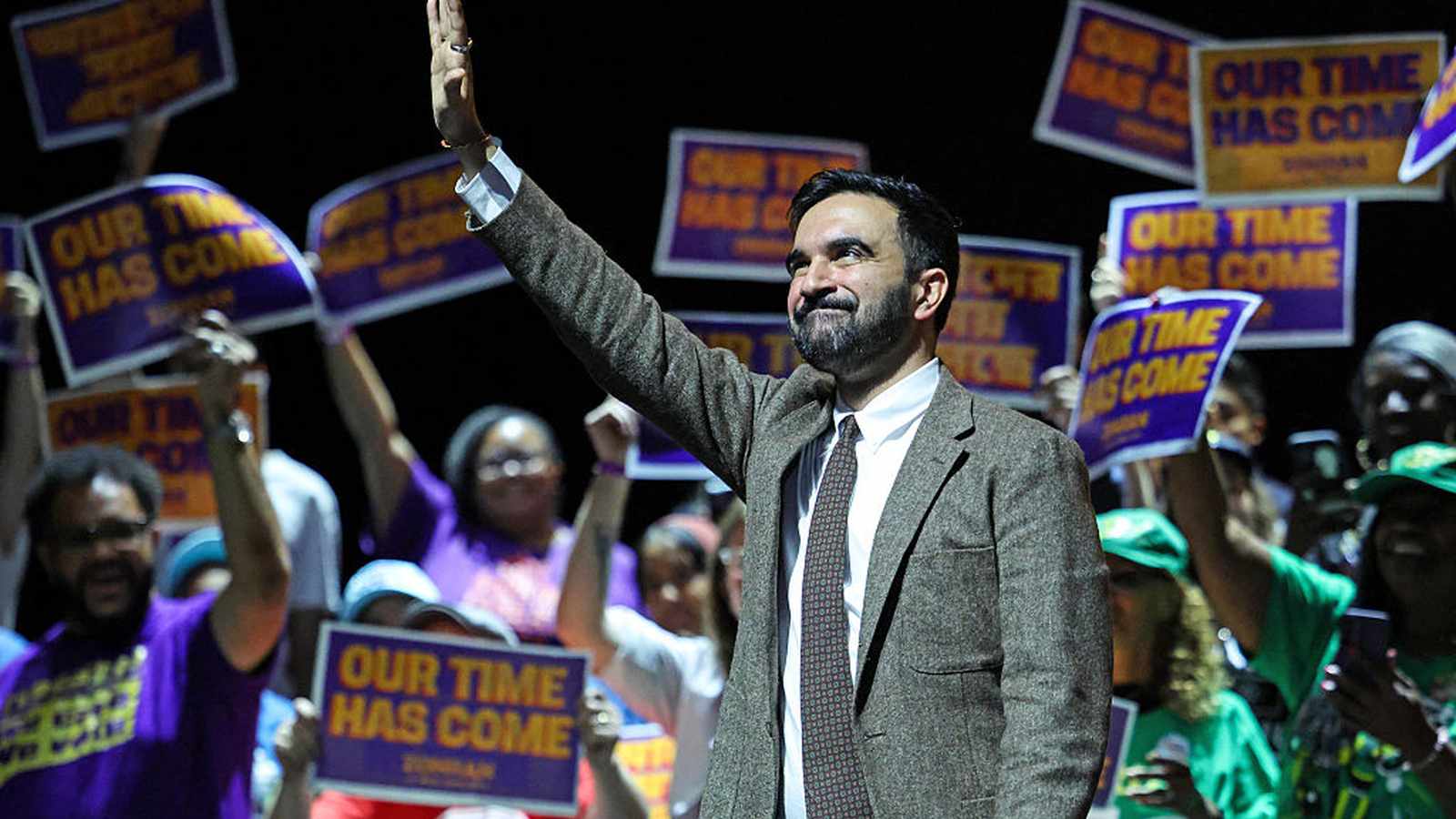
When Zohran Kwame Mamdani first emerged onto New York’s political stage, few could have predicted the resonance his story would have. As profiled by The New York Times and explored in Jacobin, Mamdani’s trajectory is anything but typical. Born to Indian and Ugandan parents, raised in a Muslim household, and shaped by the multicultural fabric of New York City, Mamdani embodies a composite identity that defies simple categorization. His mother, Mira Nair—a renowned filmmaker—brought global perspectives into their home, and Mamdani’s early interactions in places as diverse as South Africa and Queens have forged a worldview that stretches far beyond the city’s borders.
It’s this blend of experiences, and the challenges that come with them, that have informed Mamdani’s politics. His story, like those of other first-generation Americans, doesn’t fit neatly into the binary frameworks of American political tradition. Instead, Mamdani’s narrative is woven from threads of migration, faith, economic struggle, and a profound sense of solidarity with other marginalized communities.
Faith Under Fire: Cuomo’s Comments and the Politics of Identity
The 2025 New York mayoral race has brought Mamdani’s Muslim faith into sharp relief. In an interview with radio host Sid Rosenberg, rival candidate Andrew Cuomo openly questioned whether Mamdani’s religious identity should be a matter of concern for voters—a move that has drawn widespread criticism and reignited debates about tolerance and representation in city politics (CNN).
Cuomo’s remarks were not isolated. Rather, they fit into a broader pattern where candidates’ backgrounds become fodder for political attack, especially when those backgrounds challenge the city’s status quo. For Mamdani, the scrutiny is twofold: his faith is questioned not just as a private matter, but as a symbol of broader demographic changes in New York. Supporters argue that Mamdani’s Muslim identity is a strength, giving him a unique perspective on issues ranging from housing affordability to police reform. Detractors, however, use it to stoke fear and division—drawing on old prejudices even as the city’s electorate becomes ever more diverse.
Palestine, Progressive Politics, and the New Electorate
Mamdani’s position on Palestine has become a litmus test for his brand of politics. According to Jacobin, the issue is more than just a talking point for progressive youth; it’s a gateway for conversations about affordability, education, and healthcare. For Mamdani and his supporters, speaking up about Gaza is not optional—it’s foundational. As one Obama-era aide put it, “You don’t get to first base on the other things if you haven’t come out of the batter’s box on Gaza.”
This stance has helped Mamdani fashion a coalition that bridges immigrants, working-class voters, Muslims, students, renters, and debtors. While Palestine doesn’t unite all their interests, it signals a break with the politics of the old guard—figures like Andrew Cuomo, Hillary Clinton, and Chuck Schumer—whose approach often centers on incremental change and consensus. Mamdani’s progressive vision, by contrast, is rooted in the lived experiences of people who feel excluded by the system: those grappling with debt, high rents, and an uncertain future.
In debates and public forums, Mamdani has consistently highlighted how international issues like Palestine are linked to local struggles—drawing circuits of solidarity that connect New York’s neighborhoods to global sites of resistance. This approach reflects a new kind of cosmopolitanism, one that challenges the notion of politics as solely national or local, and instead insists on the relevance of global justice movements in shaping city policy.
The Struggle for Representation: A New Political Party?
As Mamdani’s profile rises, so too does the possibility of a political realignment in New York. Some observers see in Mamdani’s campaign the seeds of a new kind of party—one that is less tethered to the nation-state and more attuned to the realities of a global city. His coalition is young, diverse, and unabashedly progressive, reflecting the growing dissatisfaction among millennials and Gen Z with traditional party politics.
It’s not just about policy; it’s about story. Mamdani, like other democratic socialists, frames his personal struggles as emblematic of broader systemic issues. Where Barack Obama’s narrative ended with the promise of incorporation into the American mainstream, Mamdani’s refuses that resolution—insisting instead on a politics of difference, exclusion, and solidarity. The issues he champions—affordable housing, debt relief, and immigrant rights—are rooted in the everyday realities of his supporters, rather than abstract notions of national identity.
Yet, this transformation is not without resistance. The backlash against Mamdani’s faith, his stance on Palestine, and his immigrant background signals the anxieties of an older political establishment. Figures like Cuomo have sought to leverage these anxieties for electoral gain, but the city’s changing demographics suggest that such strategies may be increasingly out of step with voters’ priorities.
Debate and Division: New York’s Political Crossroads
The recent mayoral debate between Mamdani, Cuomo, and Curtis Sliwa was a microcosm of the broader tensions shaping the city. Mamdani’s unapologetic advocacy for marginalized groups stood in stark contrast to Cuomo’s appeals to tradition and order. The exchanges were heated, but they also revealed a city in transition—one where questions of faith, heritage, and global solidarity are no longer peripheral but central to the political conversation (CNN).
For many New Yorkers, the stakes are high. The outcome of this election could signal not just a change in leadership, but a shift in how the city understands itself—who gets to belong, whose voices count, and what issues deserve attention. Mamdani’s campaign offers a vision of inclusion and solidarity, but it also forces difficult conversations about identity, power, and the future of progressive politics in America’s largest city.
As Mamdani’s candidacy challenges old conventions, it exposes both the promise and the peril of a more pluralistic democracy. His story is not just about one man’s faith or background; it is a test case for whether New York—and by extension, America—can embrace the complexities of identity in its pursuit of justice and representation.