
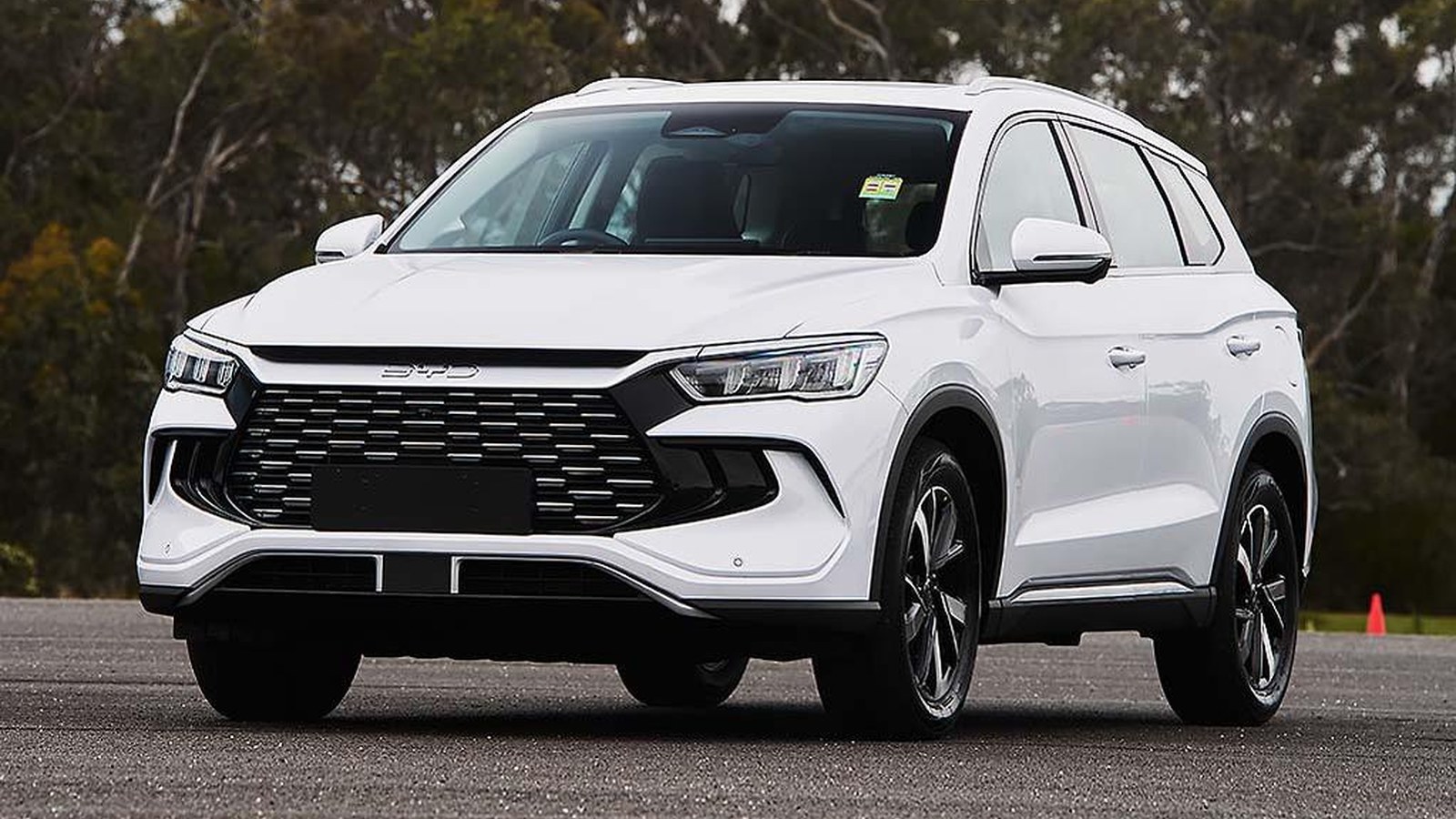
Quick Read
- The 2026 BYD Sealion 5 is expected to launch in Australia in early 2026, targeting the lowest price point for a plug-in hybrid SUV.
- Two variants—Essential and Premium—both use BYD’s DM-i Super Hybrid system with up to 100km electric-only range (NEDC).
- Estimated starting price is in the low-to-mid $30,000s, potentially undercutting current market leaders.
- Sealion 5 features a tech-rich interior, including a large touchscreen, app connectivity, and full driver assist suite.
- Charging is limited to AC (no DC fast charging), with recharge times of 4.5 to 6 hours depending on the model.
BYD’s Bold Move: Making Plug-In Hybrids Mainstream
It’s not every year a carmaker tries to redefine the baseline for affordable electrified driving in Australia, but that’s exactly what BYD is aiming for with the 2026 Sealion 5. Slated for release early next year, this mid-size SUV promises to be the cheapest plug-in hybrid electric vehicle (PHEV) on the market, outpacing rivals like the Chery Tiggo 7 Super Hybrid and GWM Haval H6 PHEV.
BYD’s rapid expansion strategy in Australia is no secret. The Chinese automaker has been steadily increasing its presence, and the Sealion 5 is a testament to its aggressive pricing and tech-first philosophy. While final pricing is yet to be confirmed, industry experts predict a starting point in the low-to-mid $30,000s—a figure that could undercut the current PHEV price leader, the Chery Tiggo 7 Super Hybrid, which sits at $39,990 drive-away (carsales.com.au).
Tech-Packed for Less: Features and Functionality
Despite its budget orientation, the Sealion 5 doesn’t skimp on technology. Standard features across both Essential and Premium variants include 18-inch alloy wheels, dual-zone climate control, vehicle-to-load (V2L) capability, and a 463-litre boot (expanding to 1410 litres with the rear seats folded). The Premium version steps up with a 12.8-inch touchscreen (wireless Apple CarPlay/Android Auto), an 8.8-inch digital instrument cluster, nine-speaker audio, app connectivity, wireless phone charging, a 360-degree parking camera, electric tailgate, and leather-appointed, power-adjustable front seats.
The cabin, tested at Victoria’s Lang Lang proving ground, impresses with its practical layout and quality materials. While BYD’s penchant for mismatched textures is still apparent, the abundance of physical buttons provides a refreshing counterpoint to the increasingly touchscreen-centric interiors found elsewhere. The tech suite extends to entertainment, with access to apps like Spotify, in-car karaoke, YouTube, Disney+, and Amazon Books available from launch.
Performance, Range, and Charging: The Details That Matter
Under the hood, both Sealion 5 variants are powered by BYD’s ‘DM-i Super Hybrid’ system—a combination of a 1.5-litre four-cylinder petrol engine and an electric motor producing a combined 156kW. The Essential variant gets a 12.9kWh battery, delivering an estimated 71km of electric-only range, while the Premium boasts an 18.3kWh pack good for up to 100km (all figures based on the NEDC test cycle).
Real-world numbers may vary, as Australian conditions tend to yield lower electric-only ranges than the more lenient NEDC cycle. Still, BYD promises a combined driving range around 1000km, positioning the Sealion 5 as a practical choice for both city commutes and longer trips.
Charging is strictly AC (up to 3.3kW), with no DC fast charging available. The Essential charges from 15-100% in 4.5 hours, while the Premium takes six hours. Interestingly, BYD’s battery management system keeps a minimum 25% charge to ensure the petrol engine isn’t solely relied upon, though hard driving can push the battery below that threshold. Recharge times are quoted from a 15% state of charge—an oddity given the battery’s design parameters.
Driving Experience: Comfort and Safety for Every Journey
On the road, the Sealion 5 feels composed and confident, blending petrol and electric power smoothly and quietly. Acceleration is brisk for a mid-size SUV, with the Essential variant hitting 0-100km/h in 7.7 seconds—slightly quicker than the heavier Premium at 8.1 seconds. The ride is sure-footed, soaking up bumps with MacPherson front and multi-link rear suspension, though some road noise is audible in the cabin.
Rear seat comfort is solid, with amenities like USB ports, air vents, and ISOFIX child seat points. Headroom is adequate for most adults, though those over 175cm may find it cramped. The boot is deep and practical, offering additional storage beneath the floor for charging cables and a tyre repair kit (though no spare wheel is included).
Safety is another strong suit. Every Sealion 5 comes with BYD’s full suite of driver assistance and safety tech, including Level 2 autonomous driving (hands-on required). The car’s hazard light system, which activates during moderate braking, stands out as a quirk—it engages earlier than expected, a detail noticed during the test drive but not considered a major issue.
Market Positioning: Standing Out in a Crowded Field
With competitors like the Chery Tiggo 7, GWM Haval H6, and Geely Starray EM-i all hovering around the $37,000–$41,000 mark, BYD’s pricing strategy is its ace in the hole. Traditional hybrids from Toyota, Hyundai, and Kia remain more expensive, reinforcing the Sealion 5’s position as the go-to option for buyers who want plug-in efficiency without breaking the bank.
Of course, not every aspect is perfect. The exterior styling is described as bland, and the steering lacks feedback. The large touchscreen, while packed with features, can be confusing with its many menus, though owners are likely to adapt over time. Some questions remain about the PHEV system’s battery management and real-world range, leaving room for further scrutiny when the vehicle launches officially.
Ultimately, the Sealion 5 isn’t trying to be everything to everyone. It’s a pragmatic, tech-forward, and competitively priced SUV designed for budget-conscious Australians who want the benefits of a plug-in hybrid, minus the premium price tag.
As BYD continues its rapid expansion and aggressive pricing in Australia, the 2026 Sealion 5 stands out as a credible contender for the country’s most affordable plug-in hybrid SUV. Its comprehensive equipment list and practical features make it an attractive proposition, though real-world performance and battery management will be key to its long-term success. The real test will come when buyers weigh its value against the established competition—and only time will reveal if BYD’s bold bet pays off.