

Quick Read
- The CDU has won the Rhineland-Palatinate state election, ousting the SPD after 35 years of governance.
- The AfD achieved its strongest result in western Germany, securing around 20% of the vote and positioning itself as a strong opposition force.
- Both the FDP and the Left Party failed to cross the parliamentary threshold, leading to a reduced representation in the state parliament.
MAINZ, GERMANY (Azat TV) – The Christian Democratic Union (CDU) has emerged victorious in the Rhineland-Palatinate state election, securing just over 30% of the vote according to projections. This outcome places them clearly ahead of the Social Democrats (SPD) and positions them to provide the next state premier. The election marks another significant setback for the SPD, which has governed the state for 35 years. Following their previous defeat in Baden-Württemberg two weeks prior, the SPD in Rhineland-Palatinate saw a sharp decline of approximately nine percentage points, falling behind the CDU.
AfD Records Strongest Result in Western Germany
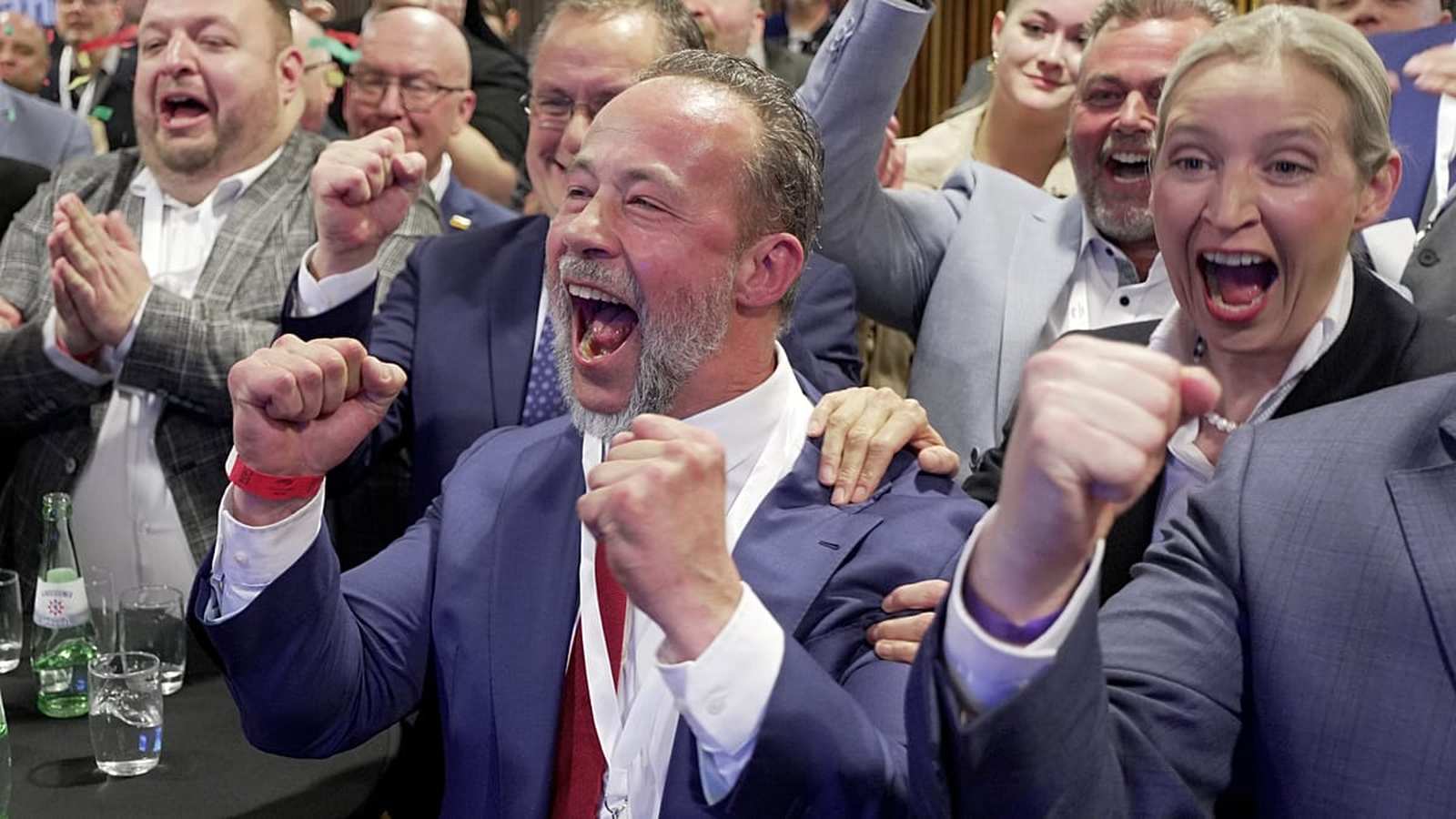
Projections from ARD and ZDF, conducted by Infratest dimap and Forschungsgruppe Wahlen, indicate that the CDU garnered 30.6% of the vote, while the incumbent SPD, led by State Premier Alexander Schweitzer, secured 25.7%. The most substantial gains, however, were made by the Alternative for Germany (AfD), which is projected to come in third with around 20% of the vote. This result is anticipated to be the right-wing populist party’s strongest performance in a state election in western Germany.
Governing Coalition Suffers Losses, AfD Strengthens Opposition
The election saw significant losses for all three parties in the ruling “traffic-light” coalition. While the CDU and the Left Party saw modest gains of two to three percentage points, the AfD’s increase of over eleven percentage points is particularly striking. The party’s co-leader, Alice Weidel, has already pledged to provide “excellent opposition work,” signaling their intent to be a formidable force in the state parliament.
Parliamentary Landscape Shifts, FDP and Left Party Miss Threshold
The Green Party secured fourth place with 7.9% of the vote. However, the Free Democrats (FDP), the third partner in the governing coalition, are projected to fall short of the parliamentary threshold with approximately 2% of the vote. Similarly, the Left Party, despite some gains, will also not enter the state parliament, having secured just over 4%.
The final outcome could still be influenced by a high number of postal votes, but current projections suggest only four parties will be represented in the new state parliament. A grand coalition, with the CDU as the senior partner, appears to be the most likely governmental configuration. This victory is seen as a clear success for Chancellor Friedrich Merz’s federal CDU, with parliamentary group leader Jens Spahn describing it as “historic” and hoping for a national political tailwind.
SPD Faces Internal Reckoning After Electoral Blow
Within the SPD, the election results have triggered deep shock. Party leader and Vice-Chancellor Lars Klingbeil has announced that personnel debates will follow as a consequence of the electoral defeat. The SPD’s general secretary characterized the outcome as a “bitter setback” for the party.
The AfD’s record performance in Rhineland-Palatinate underscores a continued trend of right-wing populist parties gaining traction in western German states, challenging established political forces and reshaping the opposition landscape.