
Quick Read
- Ali Larijani refuted US media claims he sought new nuclear talks with Washington after Khamenei’s death.
- Larijani posted on X, stating, “We will not negotiate with the United States.”
- The refutation followed reports by The Wall Street Journal regarding an alleged diplomatic push via Omani mediators.
- Supreme Leader Ali Khamenei was killed in a joint US-Israel attack on Saturday, March 1, 2026.
- US-Israel attacks on Iran are ongoing, with Iran retaliating against US assets; three US service members were killed.
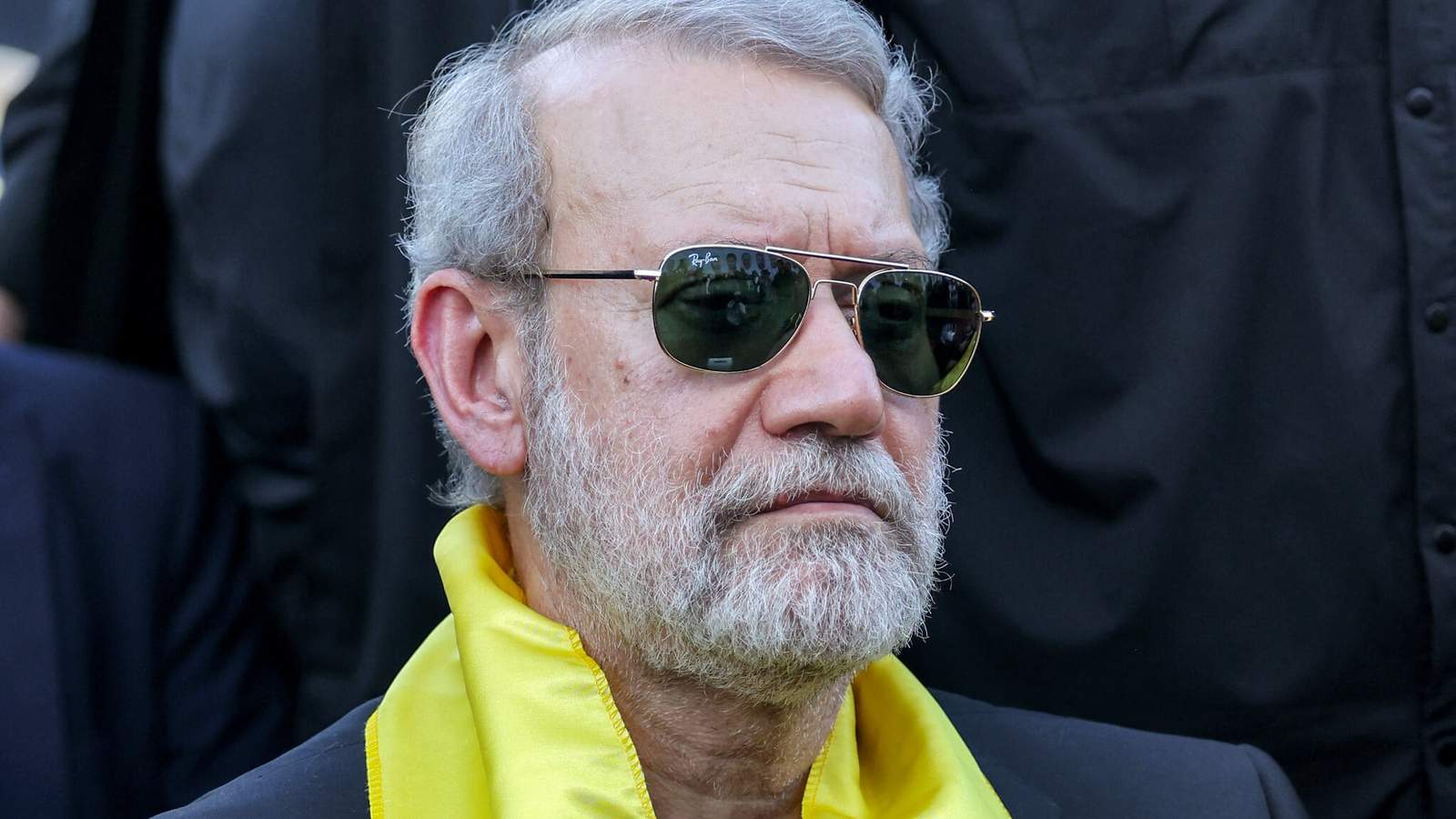
TEHRAN (Azat TV) – Ali Larijani, Secretary of Iran’s Supreme National Security Council, has publicly refuted claims by US media outlets that he initiated a diplomatic push to resume nuclear talks with Washington. His denial, made via a post on X on Monday, March 2, 2026, comes in the immediate aftermath of the killing of Iranian Supreme Leader Ali Khamenei and amidst escalating military hostilities between Iran, the United States, and Israel across the Middle East.
Larijani’s firm declaration, stating, “We will not negotiate with the United States,” directly contradicts reports, notably by The Wall Street Journal, which alleged he sought to engage Washington through Omani mediators following Khamenei’s death. The Supreme Leader was killed in a joint US-Israel attack on Saturday, marking a dramatic escalation in regional tensions that has since seen continuous US and Israeli attacks across Iran, as well as Iranian retaliatory strikes targeting US assets.
Larijani Rejects US Talks Amidst Escalating Conflict
The alleged diplomatic overture and Larijani’s swift denial are unfolding as the region grapples with the fallout from Khamenei’s death. US President Donald Trump has stated the ongoing military campaign aims to remove Iran’s government from power. Iran, in response, has launched drone and missile strikes, with the US Central Command (CENTCOM) confirming at least three American service members killed and five seriously wounded in an operation against Iran on Sunday. This ongoing conflict has heightened fears of a broader regional war, with Iranian Foreign Minister Abbas Araghchi decrying Khamenei’s killing as a “cowardly act of terror” in a letter to the United Nations.
Larijani also used his social media platform to criticize President Trump’s policies, stating that Trump had plunged the Middle East into chaos with ‘delusional fantasies.’ He further asserted that Trump had turned his ‘America First’ slogan into ‘Israel First,’ sacrificing American soldiers for ‘Israel’s power-hungry ambitions,’ and warned that American soldiers and their families would bear the cost. These statements underscore a hardening stance from a figure previously known for his pragmatic approach to international relations.
Ali Larijani’s Pragmatic Past and Current Stance
Ali Larijani, born in Najaf, Iraq, in 1958, has a long and prominent career within the Iranian establishment. Appointed Secretary of the Supreme National Security Council in August, he has managed a broad portfolio including nuclear negotiations, regional ties, and internal security. His career has been marked by loyalty to Khamenei and a reputation for pragmatic engagement with various factions and international powers. He served as Iran’s chief nuclear negotiator from 2005 to 2007 and was the speaker of the parliament from 2008 to 2020. During his tenure as speaker, Iran finalized the landmark 2015 nuclear deal with six world powers, an agreement from which the US later withdrew under President Trump.
Larijani’s past public statements on the nuclear issue often struck a pragmatic tone, acknowledging that concerns about Iran acquiring nuclear weapons ‘can be addressed.’ He has also been instrumental in high-level diplomacy, making several trips to Moscow to discuss security ties and advancing negotiations with China that led to a 25-year cooperation agreement in 2021. His current emphatic refusal to engage in talks with the US, therefore, signals a significant shift or a strategic posture in the wake of the leadership vacuum and intense military pressure.
Conflicting Signals from Washington and Regional Implications
Amidst Larijani’s explicit refusal, conflicting messages have emerged from the US administration regarding potential diplomatic off-ramps. Al Jazeera, reporting from Washington D.C., highlighted President Trump’s alternating suggestions of resuming negotiations with declarations that the military campaign would continue for weeks. US Secretary of Defense Pete Hegseth and Joint Chiefs of Staff Chairman Dan Caine are scheduled to address the press, and Secretary of State Marco Rubio is set to brief legislators, signaling efforts to clarify Washington’s objectives and the intelligence behind the decision to launch the offensive.
The current situation, characterized by intense military engagement and a hardening of diplomatic positions, complicates prospects for de-escalation. Oman’s Foreign Minister Badr Albusaidi stated on Sunday that “the door to diplomacy remains open,” even as President Trump indicated that ‘some of the people we were dealing with are gone’ after the ‘big hit’ on Iran’s leadership. This environment of high stakes and unclear paths forward underscores the gravity of Larijani’s public rejection of talks.
Ali Larijani’s categorical rejection of renewed talks with the US, particularly given his history as a pragmatic negotiator and the unprecedented context of Khamenei’s assassination, appears to signal a unified and unyielding front from Iran in the immediate aftermath of the leadership change and escalating conflict.