
Quick Read
- Andy Burnham reaffirmed his dedication to Greater Manchester amid Labour leadership rumors.
- He advocates for council tax reform, technical education, and scrapping the two-child benefit cap.
- Burnham criticized Reform UK for Brexit promises and immigration policies.
- He insists Labour needs strong policy, not just new personalities.
- Burnham’s national ambitions remain secondary to his local focus.
Burnham Faces Leadership Rumors, Stays Focused on Manchester
As the Labour Party conference looms, the air in Greater Manchester is thick with speculation. Andy Burnham, now in his third term as Mayor, finds himself at the center of national intrigue. Despite whispers of a possible leadership bid—some even floated by fellow Labour MPs—Burnham stands firm: his commitment, he says, is rooted in Manchester, not Westminster.
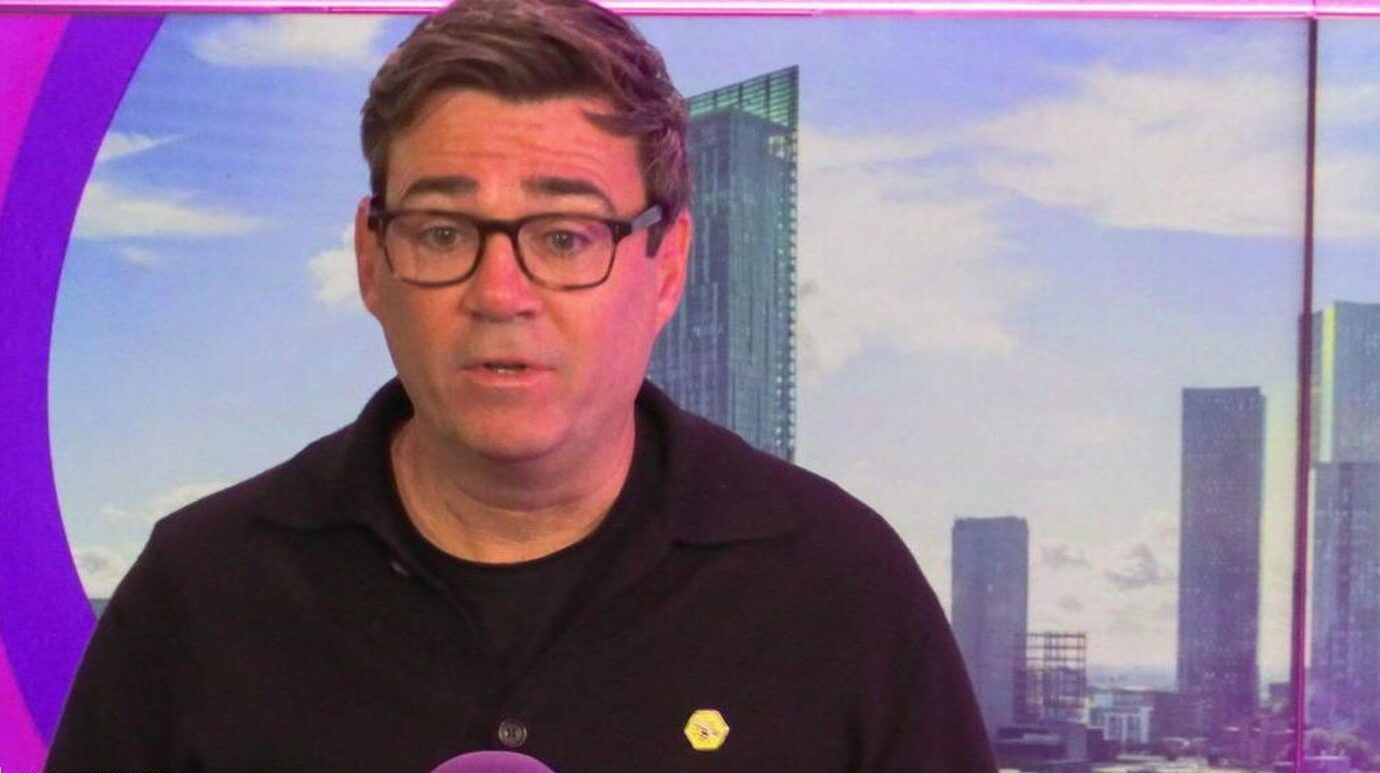
Speaking candidly on BBC Radio Manchester, Burnham acknowledged that Labour MPs had contacted him throughout the summer, nudging him towards a challenge to Keir Starmer. But he’s quick to clarify: “It’s not my decision.” He repeatedly refused to entertain hypothetical scenarios about stepping into Starmer’s shoes, instead redirecting attention to the need for a robust government plan that transcends personality contests.
Local Priorities: Burnham’s Policy Push
For Burnham, local issues remain paramount. During his weekly phone-in, callers pressed him on everything from bus routes to rail delays and the effects of national benefit caps. His responses reveal a politician deeply invested in the day-to-day lives of Mancunians. “My head is here,” he told listeners, “I want everyone to know that.”
He’s not just talking the talk. Burnham’s advocacy for rebanding council tax—making owners of the most expensive homes pay more—and reviving the 50p tax rate for top earners has drawn national attention. He argues that the current system unfairly burdens those in less affluent areas, particularly in the North, and that “where something is like that, it needs fixing.” (The Economist)
Burnham also pushes for tax cuts for lower earners, and calls technical education a cornerstone for regional development, touting his Greater Manchester Baccalaureate initiative as a model. His vision: a fairer tax system and more opportunities for ordinary people.
Labour, Reform UK, and the Real Challenge
Yet, national politics are never far away. Burnham’s criticisms of Reform UK—the party led by Nigel Farage—are pointed. He accuses them of “false promises” on immigration during Brexit, suggesting that their policies weakened Britain’s control and replaced short-term European migration with longer-term flows from elsewhere. “So here we are 10 years on,” he said, “immigration control is weaker because of what they proposed.” (The Guardian)
Burnham also condemned Reform UK’s plan to end indefinite leave to remain for settled migrants, calling it unfair and out of step with British values. His own family’s story—his wife is Dutch—adds a personal layer to his stance on migration and integration.
When asked about the Home Office’s spending on taxis for asylum seekers, as revealed by a recent BBC investigation, Burnham’s answer was blunt: “I don’t consider that acceptable because that isn’t obviously what’s available to everybody else. And I don’t understand why that would be done.”
Leadership Speculation: Personalities vs. Plans
Burnham’s recent media rounds have sparked debate about his national ambitions. He gave “an honest answer” to the Telegraph about MPs urging him to return to Parliament, but stressed repeatedly that Labour needs a plan, not just a new face. “Before you talk about any personality,” he said, “the party needs to show it is on people’s side.”
Steve Reed, the Housing Secretary, offered his own view on the BBC: “Andy is playing a great role already. He’s the mayor of Greater Manchester and he’s doing an incredible job there.” Reed, reflecting the mood among many Labour insiders, dismissed talk of a Burnham leadership bid as “tittle-tattle in the papers.” For Reed, Burnham’s place is in Manchester—at least until his term ends in 2028.
Nonetheless, the timing of Burnham’s interventions—just before a crucial party conference—has raised eyebrows in Westminster. Some government sources, as reported by BBC News, expressed frustration and confusion over Burnham’s willingness to stoke speculation now.
But Burnham, for his part, seems unfazed. “Whenever Westminster has gone into a moment, I’ve somehow been drawn into it,” he reflected, suggesting that his visibility is more a product of circumstance than ambition.
Manchester’s Mandate: Community Over Ambition
It’s easy to see why Burnham remains popular locally. His weekly radio phone-ins feel almost medieval—citizens bringing their petitions directly to their leader. Whether the issue is a disabled parking spot or a delayed train, Burnham responds with the same blend of empathy and expertise. As described in the New Statesman, callers care far more about practical issues than national drama.
Burnham’s critics, of course, point out that his prominence risks distracting from local governance. Some callers urged him to “stick” to his mayoral job, praising his achievements in Manchester but warning that “now is not the time” for national ambitions.
Burnham’s response is consistent. He insists that his presence on local radio, his attention to community issues, and his commitment to tackling poverty and infrastructure delays are proof of his focus. “I love everything about this job,” he told listeners, “I’m completely committed to it.”
The Road Ahead: Policy, Not Personality
As Labour approaches a pivotal moment, Burnham’s stance offers a reminder of the tension between local leadership and national ambition. He supports Labour “in whatever way I can,” but remains adamant that policy—not personality—must drive change.
Burnham’s calls for scrapping the two-child benefit cap, which he described as “absolutely abhorrent,” have put him at odds with some in Westminster. He advocates funding such reforms with targeted levies on online gambling, echoing proposals supported by former Prime Minister Gordon Brown and the Institute for Public Policy Research.
For now, Burnham’s head—and heart—are in Manchester. The speculation will likely continue, but his message is clear: local priorities come first, and real change requires more than a reshuffling of faces at the top.
Burnham’s ability to anchor himself in community concerns while shaping national debate makes him a rare figure in British politics. His refusal to be drawn into personality-driven power plays, insisting instead on substantive plans and fair policies, underscores the continuing relevance—and challenge—of balancing local leadership with national influence.