
Quick Read
- An annular solar eclipse, dubbed the ‘ring of fire,’ is set for February 17, 2026.
- The primary path of annularity will be over Antarctica, with partial visibility in southern South America and Africa.
- The ‘ring of fire’ effect will last approximately 2 minutes and 20 seconds at its peak.
- Online broadcasts will be the main way for global audiences to safely observe the event.
- The eclipse offers valuable scientific opportunities for studying the Sun’s corona and Moon’s orbit.
WORLD (Azat TV) – An annular solar eclipse, creating the dramatic ‘ring of fire’ effect, is poised to unfold on Tuesday, February 17, 2026, primarily visible from the remote expanses of Antarctica. This rare astronomical event, the first of its kind for 2026, is generating significant interest among scientists and skywatchers worldwide, who will largely rely on online broadcasts to witness the celestial spectacle.
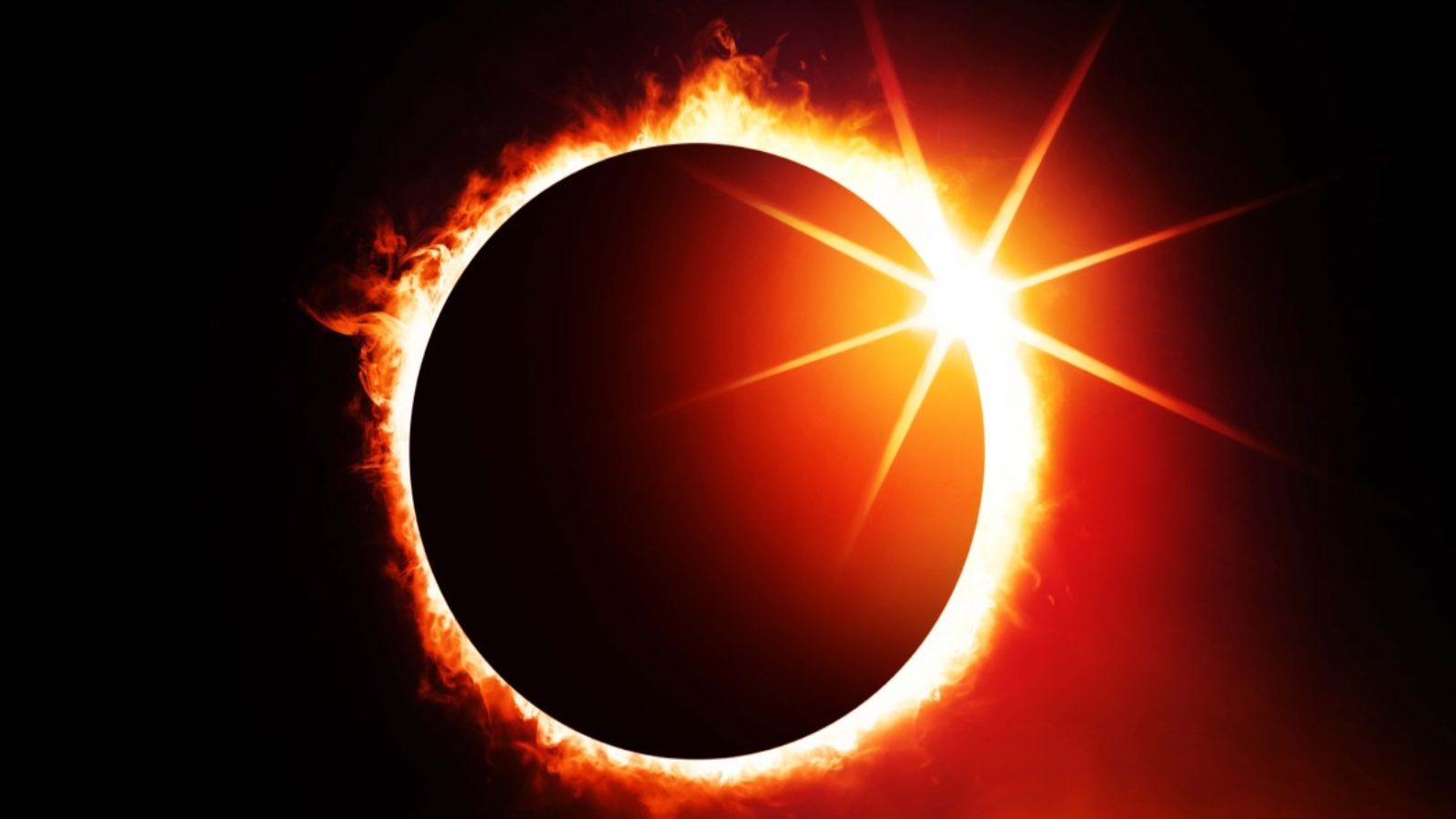
The phenomenon occurs when the Moon, positioned at its farthest point from Earth (apogee), passes directly in front of the Sun but does not completely obscure its disk. This leaves a brilliant, luminous ring of sunlight visible around the Moon’s silhouette, a sight that has captivated humanity for millennia. Experts emphasize the precise alignment required for such an event, making each occurrence a notable entry in the astronomical calendar.
Understanding the ‘Ring of Fire’ Eclipse
An annular solar eclipse distinguishes itself from a total solar eclipse because the Moon’s apparent size in the sky is smaller, preventing full coverage of the Sun. This specific configuration is why the iconic ‘ring of fire’ — or ‘annulus,’ from the Latin word for ring — forms at the peak of the eclipse. While the sky may darken during the partial phases, it never reaches the profound midday darkness experienced during a total eclipse, meaning stars and planets typically do not become visible.
For the February 17, 2026, event, the magnitude of the eclipse is projected to reach 0.963, indicating that 96.3% of the Sun’s disk will be covered at maximum annularity. The full phenomenon, including the partial phases before and after the ‘ring of fire,’ will span more than four hours. However, the true ‘ring of fire’ effect will last for approximately two minutes and twenty seconds at specific points along its central path, offering a brief but intense viewing opportunity for those in the prime observation zones, as reported by EarthSky.org and Indian Express.
Path of the February 2026 Eclipse
The narrow path of annularity will be concentrated almost entirely over Antarctica, making it a challenging event for direct human observation outside of scientific research outposts. Key research stations, including McMurdo (United States), Concordia (French-Italian), and Mirny (Russian), located across the icy continent, are expected to have some of the best views of the ‘ring of fire,’ provided weather conditions permit.
Beyond Antarctica, partial phases of the eclipse will extend to select regions of the Southern Hemisphere. Observers at the southern tip of South America, including parts of Argentina and Chile, will experience a partial solar eclipse. Similarly, southern portions of Africa and vast stretches of the Pacific, Atlantic, and Indian Oceans will also register partial visibility. Countries like Australia and New Zealand, however, will not witness any part of this particular phenomenon, according to Mixvale.com.br.
Safe Observation and Global Broadcasts
Given that at no point during an annular solar eclipse is it safe to look directly at the Sun without protection, safety remains paramount. Direct observation, even of the partial phases, requires specialized filters certified to ISO 12312-2 standards, used in eclipse glasses or optical equipment. Experts strongly caution against using ordinary sunglasses, radiographic films, or homemade filters, as these do not provide adequate protection against harmful solar radiation, which can cause permanent retinal damage.
For the vast majority of the global population, the most accessible and safest way to experience the February 17, 2026, annular solar eclipse will be through live online broadcasts. Platforms specializing in astronomy, such as Time and Date, along with collaborative projects involving space agencies, are expected to offer real-time streaming from Antarctic vantage points. These transmissions will feature expert commentary on orbital mechanics and the scientific significance of the event, democratizing access to this rare celestial display for millions worldwide, as noted by Space.com.
Scientific Insights from the Annular Event
Solar eclipses, particularly those occurring in remote regions like Antarctica, present invaluable opportunities for scientific research. They enable astronomers and physicists to conduct precise measurements of the Moon’s orbital parameters and to study the Sun’s corona under unique conditions. Data collected during annularity helps refine calculations of the Earth-Moon distance and orbital variations, contributing to broader climate models and geophysical research.
The February 17 eclipse belongs to Saros series 121, marking its 61st occurrence out of 71 eclipses in this cycle. These cyclical phenomena allow for consistent, long-term observation, reinforcing global interest in accurately predictable celestial events. This annular eclipse opens the 2026 calendar, with another total solar eclipse anticipated in August, visible across parts of Europe and the Arctic, further highlighting the ongoing scientific engagement with our solar system’s dynamics.
The remote location of the February 2026 annular solar eclipse underscores the vital role of modern technology in making astronomical phenomena accessible. While direct observation is limited to a select few, the widespread availability of online broadcasts transforms a geographically isolated event into a globally shared experience, fostering collective scientific curiosity and understanding.