
Quick Read
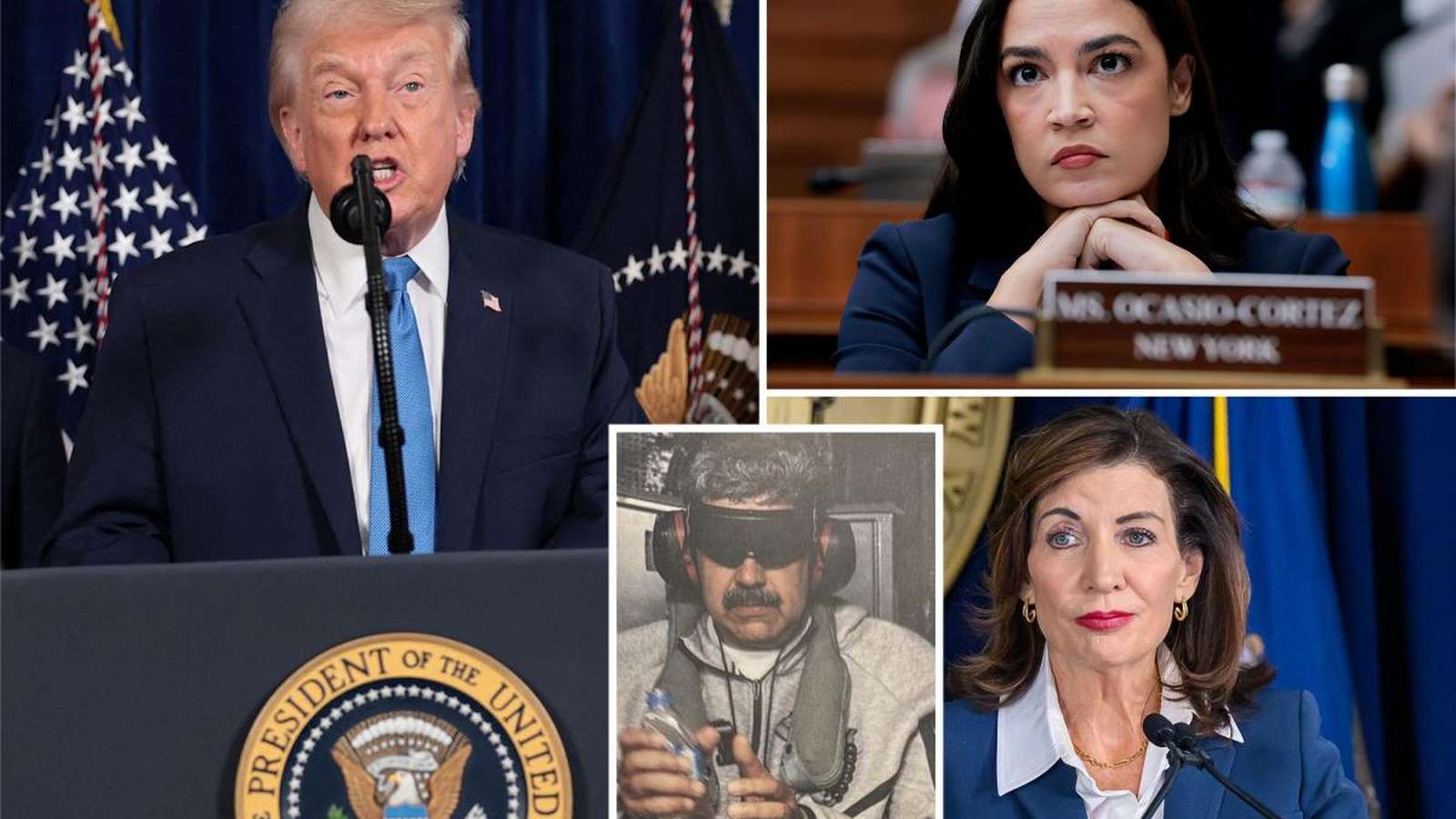
- U.S. operation captured Venezuelan President Nicolás Maduro and his wife, Cilia Flores, leading to their indictment.
- Democratic Rep. Alexandria Ocasio-Cortez (AOC) stated the operation was “not about drugs” but “about oil and regime change,” and a distraction from domestic issues.
- Republican Rep. Marjorie Taylor Greene echoed AOC’s skepticism, linking the operation to Venezuelan oil and questioning Trump’s inaction against Mexican cartels.
- Senator Ruben Gallego and Governor Kathy Hochul also condemned the operation, calling it an “unjustified war.”
- Colombia, Russia, and Iran denounced the U.S. action as an “act of armed aggression” against Venezuela’s sovereignty.
The recent capture of Venezuelan President Nicolás Maduro and his wife, Cilia Flores, by U.S. forces has ignited a firestorm of controversy, drawing sharp condemnation not only from international allies of Maduro but also from an unlikely bipartisan coalition within the United States. Leading the charge against the operation, Democratic Representative Alexandria Ocasio-Cortez (AOC) has forcefully rejected the official narrative, asserting that the true motives lie far beyond drug interdiction.
AOC’s Incisive Critique: Beyond the Drug War Narrative
From the moment news broke of Maduro’s capture, Representative Ocasio-Cortez, a prominent progressive voice, minced no words. In a social media publication, she unequivocally stated, “It’s not about drugs.” Her skepticism stems from the Trump administration’s recent actions, specifically pointing to the pardon of former Honduran President Juan Orlando Hernandez, who had been sentenced to 45 years in a U.S. prison for drug trafficking. “If it was, Trump wouldn’t have pardoned one of the largest narco traffickers in the world last month,” she argued, as reported by Latin Times.
For Ocasio-Cortez, the Venezuelan operation is a clear case of geopolitical maneuvering. “It’s about oil and regime change,” she claimed, suggesting a deeper, more cynical agenda at play. She further posited that the timing of the capture served as a convenient “distraction from Epstein + skyrocketing healthcare costs,” linking the foreign policy action to pressing domestic issues that have captivated public attention. This framing challenges the administration’s stated goals, portraying the intervention as a calculated move to secure resources and shift political power in the region, rather than a genuine effort to combat illicit drug trade.
An Unlikely Echo: Marjorie Taylor Greene’s Shared Skepticism
Perhaps one of the most striking aspects of the backlash has been the convergence of opinion between ideologically opposed figures like AOC and Republican Representative Marjorie Taylor Greene. Despite their frequent political clashes, Greene echoed remarkably similar sentiments, albeit from a distinct ideological vantage point. In a lengthy social media post, Greene slammed the operation, questioning its efficacy in countering drug trafficking. Drawing on her experience on the Homeland Security Committee, she asserted that most of the fentanyl, responsible for a staggering 70% of U.S. overdose deaths, “comes from Mexican cartels made with chemical precursors from China and trafficked across the U.S. Mexico border.”
Greene’s critique directly challenged the administration’s rationale: “If U.S. military action and regime change in Venezuela was really about saving American lives from deadly drugs then why hasn’t the Trump admin taken action against Mexican cartels?” she wondered. Like AOC, Greene also highlighted the recent pardon of Juan Orlando Hernandez, reinforcing the perception of a selective application of justice. She explicitly linked the operation to control over Venezuela’s vast oil reserves, claiming it was “a clear move for control over Venezuelan oil supplies that will ensure stability for the next obvious regime change war in Iran.” This suggests a shared, bipartisan distrust in the stated justifications for military interventions, particularly when resource control or geopolitical influence appears to be at play.
The Washington Military Machine: A Bipartisan Grievance
Both Ocasio-Cortez and Greene touched upon a broader, underlying frustration with U.S. foreign policy—what Greene termed “our own government’s never ending military aggression and support of foreign wars.” Greene articulated the disillusionment felt by many, particularly within the MAGA movement, who believed they had voted to end such interventions. “Boy were we wrong,” she lamented, highlighting a growing populist sentiment across the political divide that questions the financial and human costs of perpetual foreign engagements. She concluded that as the “baby boomers slip away both in votes and power, the electoral future will be decided for candidates that focus on American economic populism and promising prosperity for Americans only. As of right now, neither party is offering the solution.” This sentiment underscores a potential shift in voter priorities towards domestic well-being over international military endeavors, creating an unusual common ground for critics from different ends of the political spectrum.
Wider Domestic and International Rebukes
The condemnation extended beyond AOC and Greene. Democratic Senator Ruben Gallego also slammed the operation, calling the development a “second unjustified war” in his lifetime. He expressed profound embarrassment, stating, “This war is illegal, it’s embarrassing that we went from the world cop to the world bully in less than one year. There is no reason for us to be at war with Venezuela.” New York Democrat Governor Kathy Hochul also “forcefully pushed back” against the Trump administration’s actions, as reported by New York Post.
Internationally, the operation drew sharp rebukes from several governments. Colombian President Gustavo Petro rejected what he called “this aggression to Venezuela’s and Latin America’s sovereignty.” He emphasized that “Internal conflicts among peoples are solved by those people in peace” and, in anticipation of potential instability, deployed “public forces” at the border with Venezuela and “assistance forces” in case of a “massive refugee influx.” Maduro’s key allies, Russia and Iran, also condemned the action. Moscow labeled the development an “act of armed aggression against Venezuela,” adding, “This is deeply concerning and condemnable. The pretexts used to justify such actions are unfounded.”
The Administration’s Stance and the Unfolding Aftermath
In the face of this widespread criticism, the Trump administration largely brushed off concerns regarding the legality of the U.S. operations in Venezuela. Trump himself was quoted dismissing such questions as “the same old stuff that we’ve been hearing for years and years and years.” The operation culminated in the capture of both Nicolás Maduro and his wife, Cilia Flores, who were subsequently indicted in the U.S. after a reported $50 million bounty. Video footage captured Venezuela’s night sky “engulfed in flames” following U.S. strikes, underscoring the intensity of the intervention. With Maduro’s removal, Venezuelan opposition leader Maria Corina Machado, a 2025 Nobel Peace Prize winner, is now “poised to take the place of Nicolas Maduro,” signaling a clear intention for regime change and a shift in the country’s political landscape.
The capture of Nicolás Maduro has laid bare a profound crisis of trust in the stated motivations behind U.S. foreign policy actions. The rare alignment of critiques from figures as ideologically divergent as Alexandria Ocasio-Cortez and Marjorie Taylor Greene, coupled with widespread international condemnation, underscores a pervasive skepticism that transcends traditional political divides. This convergence suggests that, for many, the narrative of fighting drug trafficking or promoting democracy often serves as a thin veil for deeper geopolitical and economic interests, particularly control over vital resources like oil. Such widespread disbelief not only erodes America’s standing on the global stage but also fosters domestic cynicism, signaling a potential paradigm shift where voters increasingly demand transparency and accountability over interventions perceived as self-serving.