
Do Apes Have a “Theory of Mind”? New Study Suggests They Can Sense Ignorance in Humans
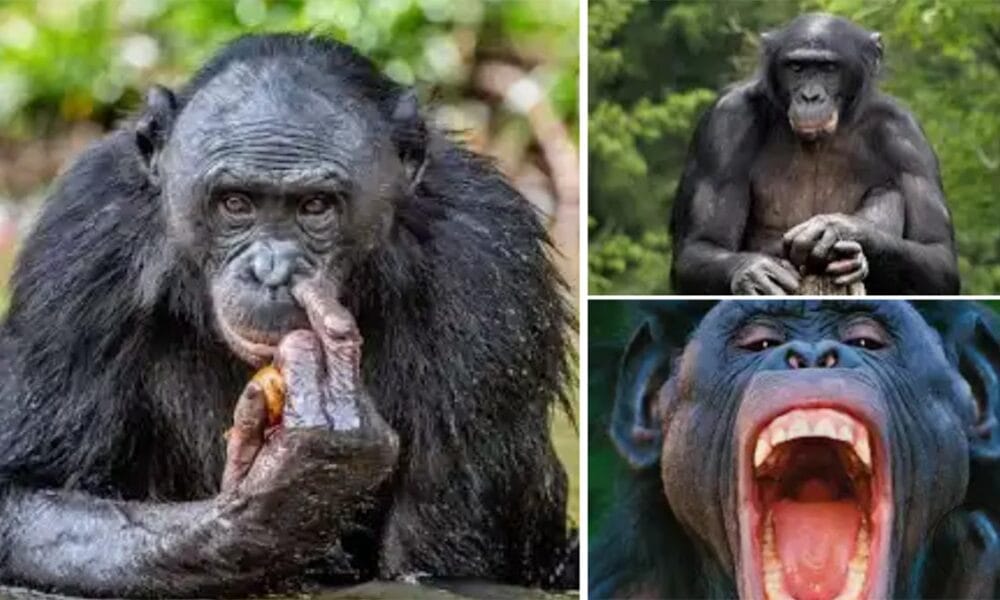
A fascinating new study reveals that apes possess a remarkable ability to understand when humans are missing information. In a series of experiments, bonobos readily pointed out hidden treats to human partners who were unaware of their location. This seemingly simple act demonstrates complex cognitive abilities previously thought to be unique to humans, raising profound questions about the evolution of intelligence and social behavior.
The Treat-Seeking Experiment: Unveiling Apes’ Communication Skills
Researchers from Johns Hopkins University designed an ingenious experiment involving three bonobos. The apes watched as a treat was hidden under one of three cups, while a human partner either saw the hiding process or didn’t. When the human partner was unaware of the treat’s location, the apes consistently pointed to the correct cup, demonstrating their understanding of the human’s ignorance.
Challenging Conventional Wisdom: Apes and the “Theory of Mind”
This study provides the clearest evidence to date that apes can intuit another’s ignorance, a capacity known as “theory of mind.” This ability, central to human cooperation, communication, and strategic thinking, was long believed to be absent in animals. The new findings challenge this assumption, suggesting that the mental foundations for these complex social behaviors evolved millions of years ago in our common ancestors.
“Their Fingers Would Point Right Through the Mesh”: The Apes’ Demonstrative Communication
The apes’ pointing behavior was not subtle. Researchers observed that the apes would point directly at the correct cup, sometimes quite demonstratively, even pointing their fingers through the mesh enclosure. This clear and insistent communication underscored their understanding of the human’s lack of knowledge.
Replicating Observations from the Wild: A Deeper Understanding of Animal Behavior
This work replicates, in a controlled setting, similar findings from the wild, where chimpanzees have been observed to vocalize warnings to group members unaware of potential threats. The controlled setting of this experiment strengthens the evidence and allows for more precise analysis of the apes’ cognitive processes.
Tracking Ignorance: The Key to Apes’ Communication
The researchers predicted that if apes truly understood ignorance, they would point more often and more quickly when their partners lacked knowledge. The results confirmed this prediction, providing strong support for the idea that apes are actively tracking their partner’s understanding of the situation.
Holding Conflicting World Views: A Sign of Advanced Cognitive Abilities
The study also suggests that apes can simultaneously hold two conflicting world views in their minds. They know where the food is hidden, while at the same time, they understand that their partner’s view of the same situation is incomplete. This ability to consider another’s perspective is a hallmark of advanced cognitive development.
Further Exploration: Unraveling the Mysteries of the Apes’ Minds
This research opens up exciting new avenues for exploring the cognitive abilities of apes. The team’s next steps will involve delving deeper into the apes’ motivations and investigating how they think about other individuals’ minds. A key question for future research is whether apes are pointing simply to change their partner’s behavior, or if they are also attempting to change their partner’s mental state or beliefs.