
Quick Read
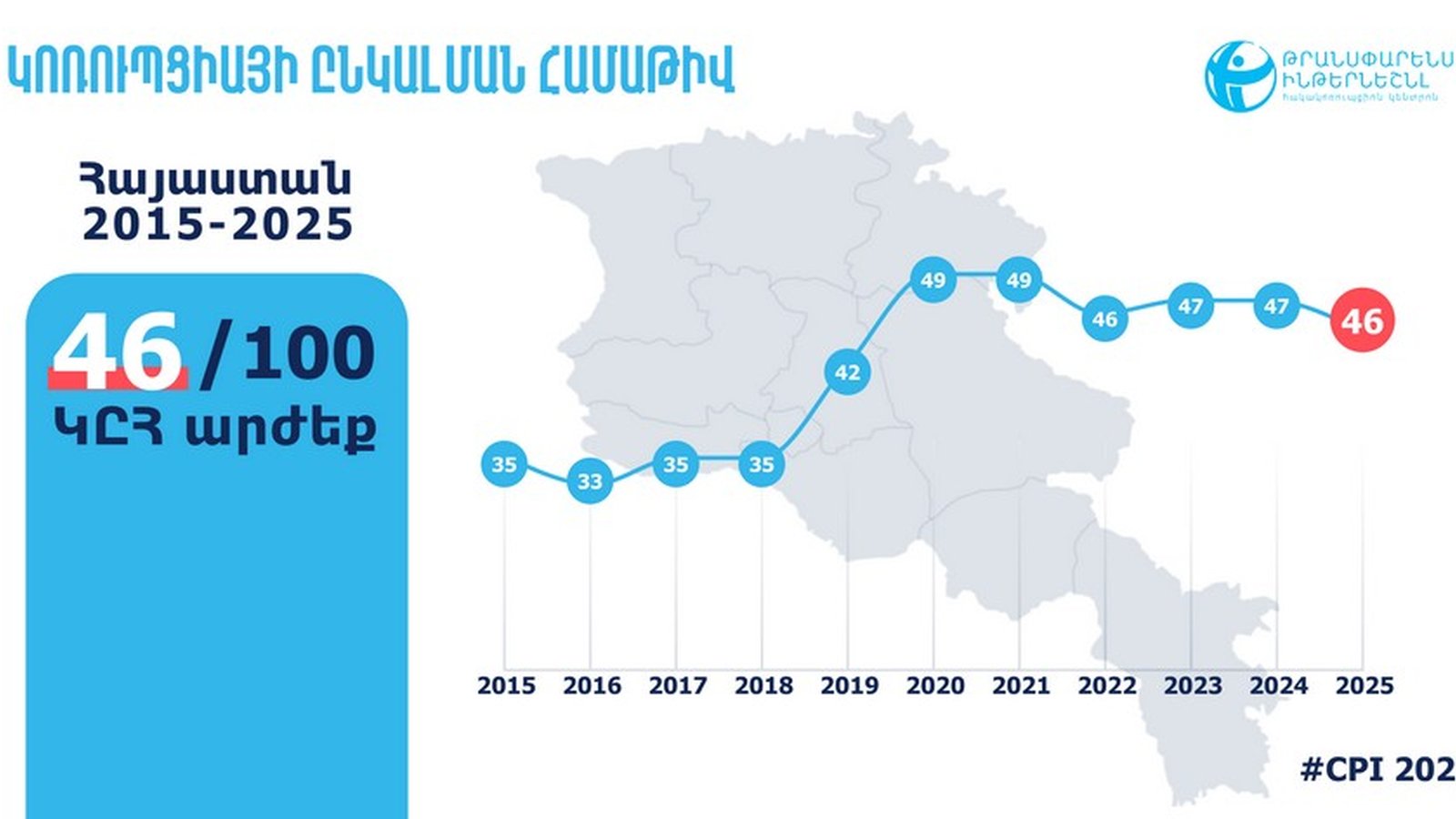
- Armenia’s 2025 CPI score drops to 46, down one point from 2024.
- The CPI measures perceived corruption in the public sector on a 0–100 scale.
- The report calls for renewed political leadership to advance anti-corruption reforms.
- Protection of civil space is identified as essential to progress.
Analysts emphasize that progress against corruption requires renewed political leadership capable of steering a broad reform agenda and delivering coherent actions across institutions. Beyond high-level promises, real progress depends on concrete steps such as improving transparency in public procurement, strengthening the independence of oversight bodies, and ensuring predictable, merit-based hiring and promotion within the civil service. An important part of the challenge, according to observers, is preserving civil space—the freedom of civil society groups, independent media, and legitimate watchdogs to organize, report, and advocate for accountability without fear of retaliation. In Armenia, as in many societies, the combination of policy commitments, robust enforcement, and a supportive civic environment is seen as essential to turn perception-based indicators into durable improvements. The 2025 CPI thus reinforces a common theme in international governance debates: reforms must be credible, verifiable, and capable of withstanding political cycles if they are to reshape public trust.
From a policy and governance perspective, the CPI’s 2025 figure highlights the practical questions faced by Armenian policymakers: how to translate commitments into enforceable rules, how to monitor progress transparently, and how to safeguard institutions from undue political influence. Observers suggest that progress will likely come from a mix of steps, including stronger budget transparency; clearer conflict-of-interest provisions for public officials; more robust whistleblower protections; and continued engagement with civil society and international partners to benchmark reforms. While the CPI does not measure the exact laws or enforcement actions, its trajectory informs discussions about risk, investment climate, and international reputation. In that sense, the 2025 score functions as a catalyst for a renewed, pluralistic debate about governance in Armenia, inviting policymakers to demonstrate tangible gains that go beyond rhetoric and that are visible to citizens and foreign partners alike.
FINAL ANALYSIS: Armenia’s 2025 CPI score signals a critical juncture: without renewed political leadership and a safeguarded civil space, incremental reforms risk stalling and public trust eroding further. The coming years will test the country’s ability to translate perception into tangible governance improvements, and sustained engagement from government, civil society, and international partners will be essential to building a more transparent and accountable state.