
Quick Read
- Astronomers recently discovered an exoplanetary system with an ‘inside-out’ configuration.
- Large gas giant planets in this system orbit unusually close to their star.
- Smaller, rocky planets are found further out, contradicting current planet formation theories.
- The discovery, confirmed in February 2026, challenges long-held scientific models.
- Scientists are now re-evaluating assumptions about planetary evolution and dynamics.
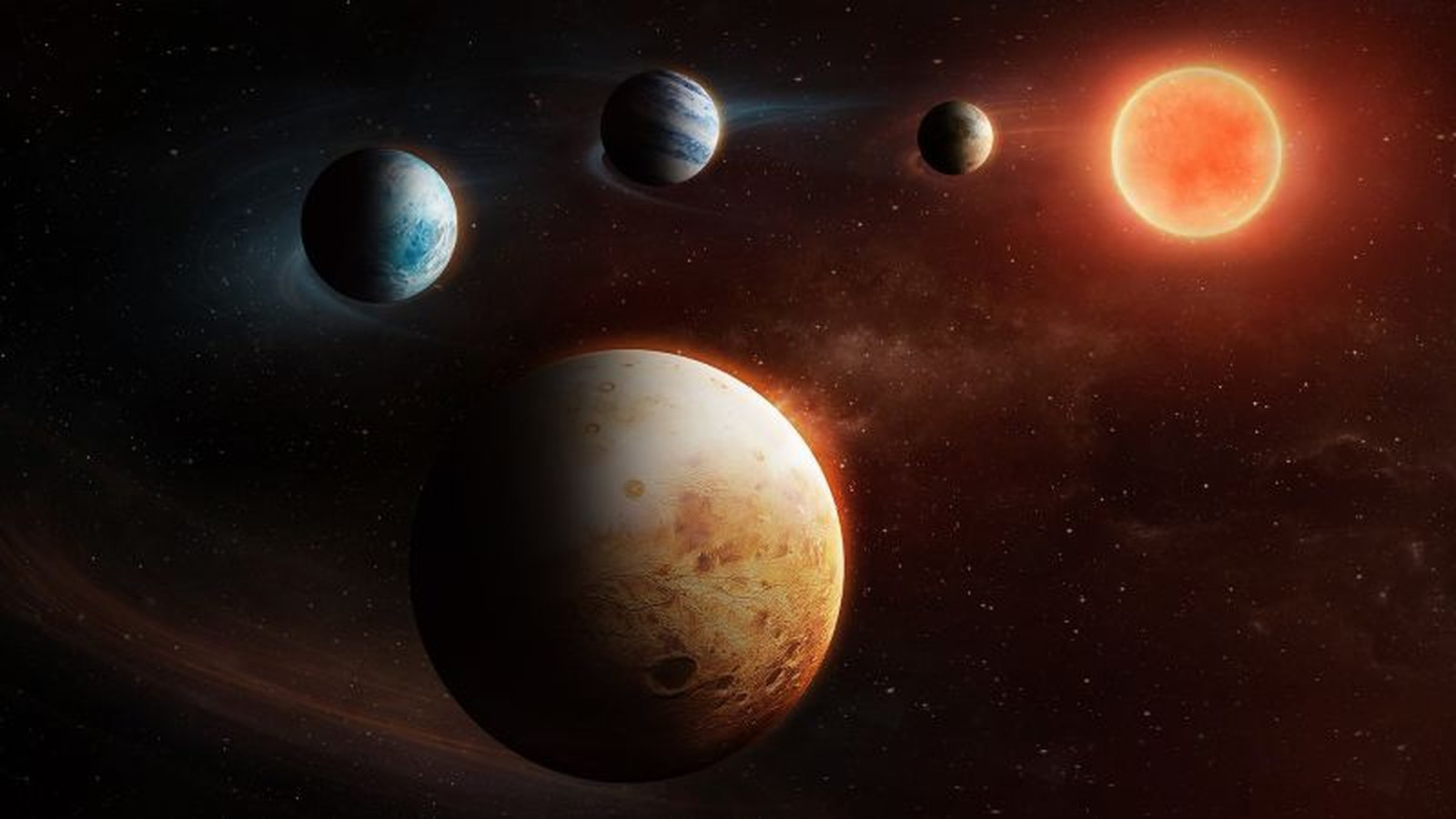
A newly identified exoplanetary system is challenging long-held scientific understanding of how planets form, with astronomers reporting the discovery of a distant star system configured in an unexpected ‘inside-out’ manner. This peculiar arrangement, featuring massive gas giants orbiting unusually close to their host star while smaller, rocky planets are situated further away, directly contradicts prevailing models of planetary evolution, according to reports from CNN and ScienceAlert.
The discovery, confirmed in mid-February 2026, marks a significant moment in the ongoing scientific exploration and study of solar systems beyond our own. It compels astrophysicists to re-evaluate fundamental assumptions about the conditions and processes that lead to the diverse array of planetary architectures observed across the galaxy.
Challenging Planet Formation Theories
For decades, the dominant theory of planet formation, largely informed by our own Solar System, posits that large gas giant planets, like Jupiter and Saturn, form in the colder, outer regions of a star system where lighter elements can condense. Conversely, smaller, denser rocky planets, such as Earth and Mars, are expected to form closer to the star where temperatures are higher. This new ‘inside-out’ system directly inverts this established order, presenting a significant puzzle for astronomers.
Scientists are now grappling with how such a configuration could arise. The presence of gas giants in the inner regions suggests either a different set of initial conditions during the system’s formation or complex migratory paths that saw these massive planets move inward after their initial formation. This challenges the idea that planetary positions are relatively static once formed and points to dynamic interactions within nascent star systems.
The ‘Inside-Out’ Exoplanet System Explained
The term ‘inside-out’ refers to the observed distribution of planetary masses relative to their distance from the central star. In this newly identified system, the largest planets, believed to be gas giants, are found in orbits much closer to their star than predicted by current models. Further out, where gas giants would typically reside, astronomers have detected smaller, rocky bodies. This arrangement is so unusual that it has been described as ‘breaking planet formation rules’ by The News.com.pk.
Understanding the exact mechanisms that led to this unique setup will require extensive further observation and theoretical modeling. Researchers will need to consider factors such as the initial mass and composition of the protoplanetary disk, the presence of other stellar bodies, and the role of gravitational interactions over billions of years. The data from this system could provide crucial insights into the broader diversity of planetary system formation across the universe.
Implications for Astronomical Study
The discovery of this ‘inside-out’ system underscores the vast and often unexpected complexity of exoplanetary science. Each new exoplanet discovery adds another piece to the cosmic puzzle, often revealing phenomena that push the boundaries of current scientific understanding. This particular system serves as a powerful reminder that our models, while robust, are constantly subject to revision as new empirical evidence emerges from deep space observations.
Astronomers will now focus on refining their observational techniques to gather more detailed data about the ‘inside-out’ system’s planets, including their precise masses, atmospheric compositions, and orbital dynamics. Such data will be vital for developing new theoretical frameworks that can account for this and potentially other similarly configured systems yet to be discovered. The ongoing study of these distant worlds continues to broaden our perspective on the cosmic landscape and the myriad ways in which planets can come into being.
The challenging nature of this discovery highlights that while our understanding of the universe has grown immensely, fundamental processes like planet formation still hold significant mysteries, emphasizing the continuous need for scientific exploration and the re-evaluation of established paradigms.