
Quick Read
- A highly active sunspot, AR4274, triggered multiple solar eruptions heading toward Earth.
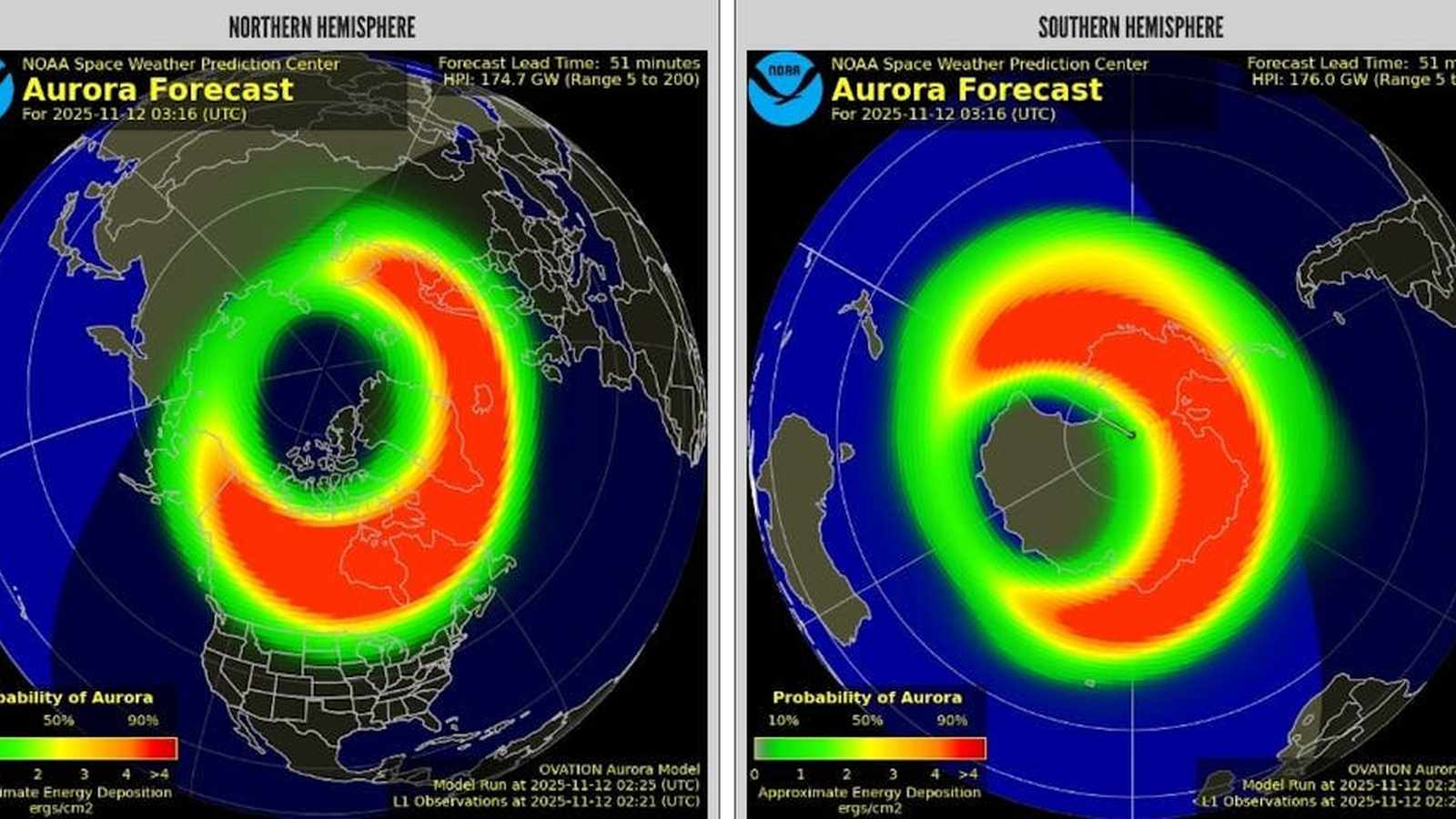
- A severe G4 geomagnetic storm was recorded on November 12, 2025, causing widespread aurora visibility.
- Auroras may be visible in Perth and other southern cities — a rare occurrence due to the storm’s strength.
- Experts recommend viewing from dark locations and using phone cameras with long exposure to capture the lights.
Solar Storms Ignite the Sky: Perth’s Unusual Aurora Opportunity
On November 12, 2025, the city of Perth and much of southern Australia found itself on the edge of a rare celestial event. Following a string of powerful eruptions from the sun, skywatchers were alerted to the possibility of seeing auroras — the dancing curtains of colored light typically reserved for high-latitude regions — much further north than usual. The excitement was palpable, with local astronomers and enthusiasts preparing for a night where the sky itself could become a canvas of cosmic color.
How Solar Flares Set the Stage for the Aurora
At the heart of this phenomenon was a particularly active sunspot, AR4274, which, over several days, erupted multiple times, sending waves of energized plasma hurtling through space. According to the NOAA Space Weather Prediction Centre and the Australian Bureau of Meteorology, the sunspot was positioned directly toward Earth, meaning the resulting coronal mass ejections (CMEs) were on a collision course with our planet’s magnetic shield.
These CMEs, essentially massive clouds of ionized gas, travel at breakneck speeds, but while the light from the eruptions reaches us in just eight minutes, the plasma itself takes hours or even days. This lag gave scientists a window to forecast the impact, and by 0200 UTC on November 12, the effects had become clear: Earth was experiencing a G4-level geomagnetic storm, classified as ‘severe.’ The first two CMEs were predicted to arrive around this time, with a third trailing approximately ten hours behind. Notably, another plasma burst was forecasted to hit Earth by 2100 UTC on November 12, potentially extending aurora visibility into November 13.
Geomagnetic Storms: More Than Just a Light Show
The consequences of these solar events go far beyond visual splendor. A geomagnetic storm of this magnitude disrupts Earth’s magnetic field, causing fluctuations that can have tangible effects on technology. Severe storms like G4 can compromise GPS and satellite navigation, degrade radio communications, and even disrupt electrical grids. There’s also the risk of satellites in low Earth orbit being forced to re-enter the atmosphere prematurely.
Yet, for most, the most immediate and awe-inspiring impact is the possibility of auroras appearing in unexpected places. During strong geomagnetic storms, the lights that typically grace the skies near the poles can dip much further south. Perth, alongside cities like Sydney, was listed as potentially within reach of the aurora’s glow — a prospect that drew crowds to parks and open spaces, hoping for a glimpse of nature’s grand spectacle.
Seeing the Aurora: Tips for Perth Skywatchers
Catching the aurora isn’t just a matter of luck; it’s also about preparation. Experts advised residents to seek out dark locations, far from the glow of city lights, and to look toward the southern horizon. The aurora’s colors — primarily green and red from oxygen, with occasional blues and purples from nitrogen — can be subtle to the naked eye. Modern phone cameras, however, equipped with long exposure settings, are remarkably adept at capturing these faint hues, revealing the sky’s hidden artistry.
Despite forecasts and anticipation, predicting exactly when and where the aurora will appear remains an inexact science. The interplay between solar wind, Earth’s magnetic field, and atmospheric conditions creates a dynamic, often unpredictable, display. As the geomagnetic storm unfolded, local groups and social media buzzed with real-time updates, photos, and shared excitement.
The Science Behind the Lights
Auroras occur when high-energy particles from the sun collide with atoms in Earth’s atmosphere. These collisions ‘excite’ the atmospheric particles, and as they return to their normal state, they emit photons — the light that we see as shimmering sheets and ripples across the sky. The color and intensity depend on the type of atom struck and the altitude of the interaction. Green, the most common color, is produced by oxygen molecules about 100 kilometers above ground; rarer reds and blues signal different atmospheric interactions.
For scientists, these events are not only beautiful but also instructive. Studying geomagnetic storms helps researchers understand both space weather and its impacts on our technological infrastructure. The November 2025 storm, driven by sunspot AR4274, offered a real-world laboratory for such research, with data pouring in from observatories and satellites worldwide.
A Moment to Remember: Perth’s Place Under the Aurora
For many in Perth, the chance to witness an aurora was a once-in-a-lifetime opportunity. Social feeds filled with images of faint green arcs and glowing clouds, while local radio stations fielded calls from excited skywatchers. The city, usually far from the aurora’s reach, was suddenly thrust into the center of an astronomical event that connected it with communities across the globe — all gazing skyward, united by wonder.
As the night wore on, the unpredictability of space weather kept anticipation high. Would the next plasma wave intensify the display, or would clouds roll in to obscure it? For now, all anyone could do was wait, watch, and hope.
In the end, Perth’s aurora moment was a vivid reminder of our planet’s place in a solar system teeming with energy and unpredictability. As powerful solar storms push the boundaries of natural spectacle, they also challenge us to stay curious and prepared — for both the beauty and the risks that come from living under an active sun.