


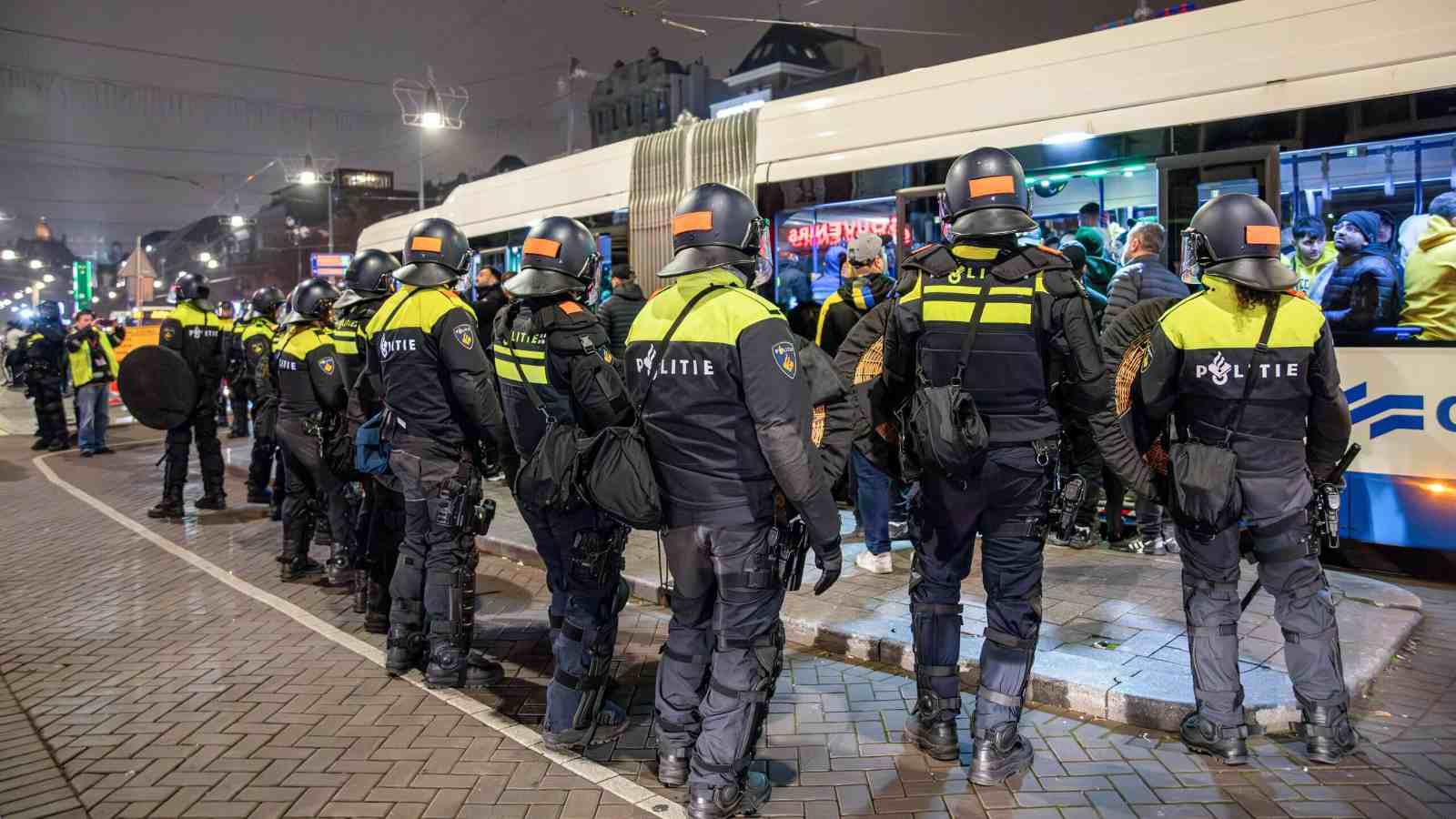
FREIBURG (Azat TV) – Maccabi Tel Aviv is set to play SC Freiburg in a Europa League match this Thursday under security measures described by Freiburg police as their largest deployment since Pope Benedict XVI’s visit in 2011. The extraordinary precautions underscore the heightened tensions and ‘high-risk’ classification surrounding matches involving the prominent Israeli club, with authorities citing the potential for emotionalization linked to the Middle East conflict.
Police press spokesman Michael Schorr confirmed that while there are ‘no concrete danger findings,’ the ‘fairly high abstract danger level’ necessitates an unprecedented response. Approximately 2,000 police officers are expected to be deployed across the city, supported by an extensive airspace protection concept that includes a no-fly zone, a drone defense system, and police drones. Concerns also extend to the broader threat of terrorism, with Schorr referencing an anti-Semitic attack in Sydney, Australia, in December.
Heightened Security Amid Geopolitical Tensions
The scale of the security operation reflects a growing apprehension in European football following a series of incidents. Notably, heavy clashes erupted in Amsterdam in November 2024 on the sidelines of a match between Ajax and Maccabi Tel Aviv, where pro-Palestinian actors reportedly attacked Israeli fans after online calls for a ‘hunt for Jews.’ Some Maccabi fans also engaged in violence, shouting anti-Arab slogans and tearing down Palestinian flags.
Similar security concerns arose during Maccabi Tel Aviv’s game in Stuttgart in early December. Following that match, the Stuttgart public prosecutor’s office began investigating alleged racist, anti-Arab chants by Maccabi fans, leading UEFA to sanction the club with a fine in mid-December. The ultra group ‘Fanatics’ is particularly known for its right-wing extremist positions within Maccabi Tel Aviv supporters, though police spokesperson Schorr noted it was uncertain if this group would even attend the Freiburg match, for which only slightly over 100 tickets were sold for the visiting block.
Club Stances and Fan Reactions to Maccabi Tel Aviv Match
The match has also drawn a demonstration from Freiburg’s Solidarity with Palestine alliance, which plans to protest against the game on the Platz der Alten Synagoge, a site with historical significance related to the Reichspogromnacht. This group had previously called for the exclusion of Maccabi fans, citing the actions of the Israeli government in Gaza and the presence of right-wing extremist ultras among Maccabi supporters.
Despite the calls for exclusion, SC Freiburg had rejected such measures months prior, asserting that ‘Football should always unite, never divide.’ However, the active Freiburg supporter scene has announced their non-attendance at the match, citing the extreme security measures and the accompanying restrictions on freedom. In a statement, they objected to any instrumentalization of their decision by political camps, affirming their opposition to ‘any form of discrimination, exclusion, and dehumanizing statements and practices, regardless of ideological origin.’
Competitive Landscape and Player Movements
Sportingly, the Europa League match holds more interest for the host, SC Freiburg, as Maccabi Tel Aviv currently occupies the penultimate place in the league standings. This contrasts with Maccabi’s more prominent standing in the EuroLeague, where the club frequently competes at a high level. For example, former Maccabi guard Levi Randolph, who played 29 EuroLeague games last season averaging 13.2 points, is now nearing a deal with rival Hapoel Tel Aviv, underscoring the dynamic player movements within Israeli basketball and the broader European circuit.
The extensive security efforts surrounding Maccabi Tel Aviv’s matches highlight how geopolitical realities increasingly intersect with international sports, transforming routine fixtures into complex events demanding significant governmental and sporting authority resources. These situations underscore the unique challenges faced by clubs from regions marked by ongoing conflict, where the sporting arena can become a flashpoint for wider societal tensions.